The State Commission on Judicial Conduct is accused of intentionally misinterpreting a recent decision by the Supreme Court of Texas in ongoing litigation.
Texas’ Supreme Court clarified in October that judges are not required to perform same-sex weddings, an issue that has been working its way through the courts. The order added a comment to Canon 4 of the Texas Code of Judicial Conduct.
Canon 4 concerns “Conducting the Judge’s Extra-Judicial Activities to Minimize the Risk of Conflict with Judicial Obligations.”
Some lower courts had interpreted the canon to be a requirement for judges to perform same-sex weddings if they were also performing heterosexual weddings.
The Texas Supreme Court’s comment clarified that “[i]t is not a violation of these canons for a judge to publicly refrain from performing a wedding ceremony based upon a sincerely held religious belief.”
However, the State Commission on Judicial Conduct (SCJC) is now claiming the comment only addresses judges who refuse to officiate weddings altogether.
Background
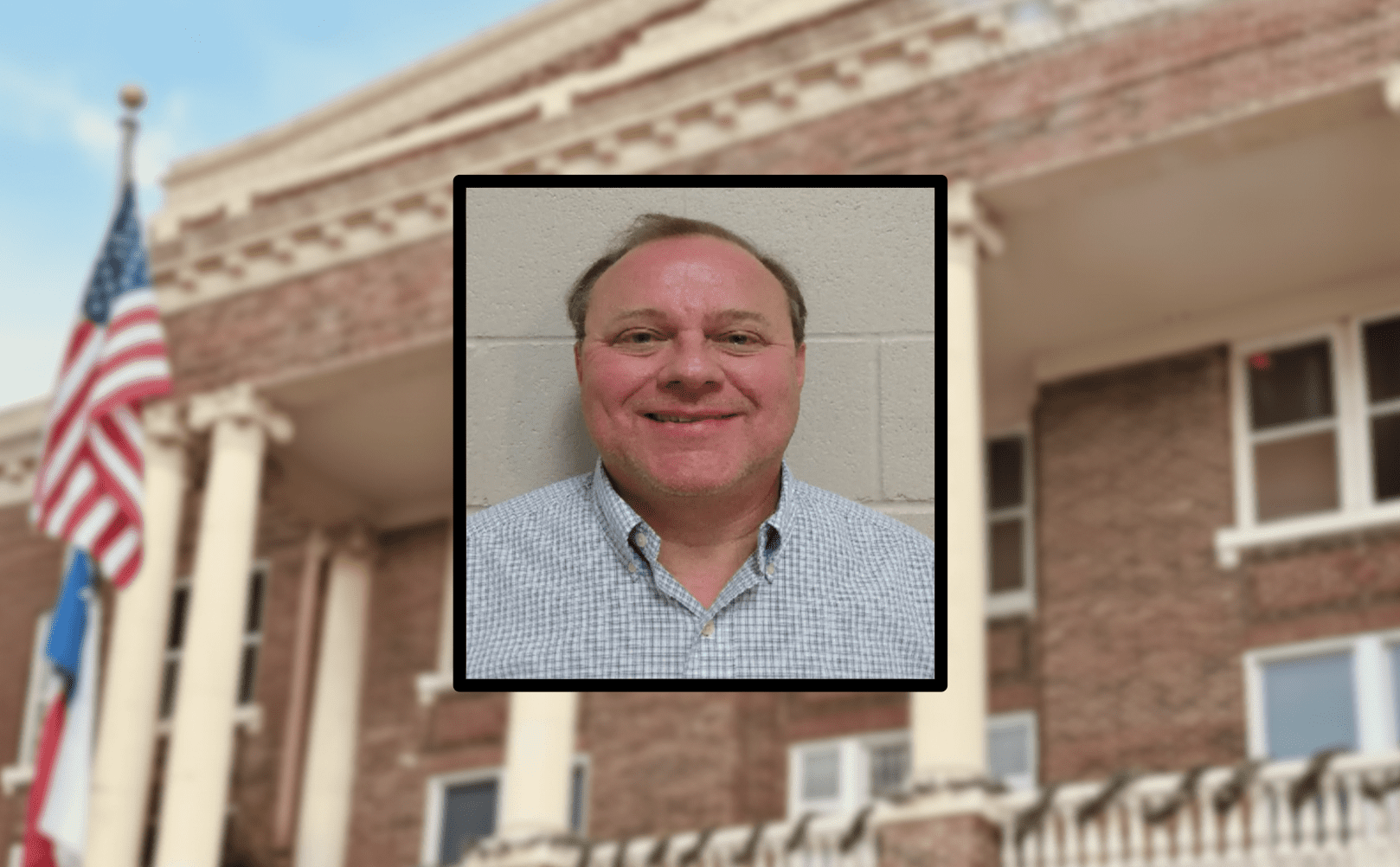
As previously reported, McLennan County Justice of the Peace Dianne Hensley was issued a public warning in 2019 by the SCJC for officiating heterosexual weddings while referring same-sex couples to a minister that would help them—citing her religious beliefs.
The commission found Hensley to be in violation of a section of Canon 4, which states, “A judge shall conduct all of the judge’s extrajudicial activities so that they do not cast reasonable doubt on the judge’s capacity to act impartially as a judge.”
Hensley filed a lawsuit against the SCJC, claiming its interpretation of Canon 4A(1) is incorrect and violates her rights under the Texas Religious Freedom Restoration Act. That state law declares a “government agency may not substantially burden a person’s free exercise of religion.”
The SCJC ultimately removed the public warning, but the case is still pending in the state courts.
A related case is working its way through the federal courts. Jack County Judge Brian Umphress is challenging the commission’s application of Canon 4 against Hensley, contending it is unconstitutional.
However, the U.S. Fifth Circuit Court of Appeals said it cannot decide whether this section of Canon 4 is unconstitutional because Texas law had not established whether the SCJC’s interpretation is correct.
The court therefore sent a certified question to the Texas Supreme Court in April, asking the state’s justices to provide a definitive answer on this unsettled issue of state law.
Rather than settling this issue through the certified question, the Supreme Court decided to issue the order in October that added comment to Canon 4 directly.
Interpreting the Clarifying Comment
Following the clarifying comment, Hensley filed a motion for summary judgement, asking for the case to be decided without trial because there is no dispute over the facts.
The SCJC then filed a response to the motion, claiming that many issues “are very much in dispute.” Included in the disputes are conflicting interpretations of the clarifying comment and its significance.
The commission contends that “the comment only states that judges may decide not to marry people based on a religious objection—it does not state they may also choose to marry other people if that decision results in apparent discrimination that could ‘cast reasonable doubt on the judge’s capacity to act impartially as a judge.’”
However, this interpretation—repeated throughout the SCJC’s brief—has drawn criticism for being illogical if the Supreme Court’s comment was intended to address Hensley and Umphress’ disputes.
State Rep. Briscoe Cain (R–Deer Park) told Texas Scorecard, “There is little doubt that the Supreme Court’s clarifying comment to Canon 4 was written with situations like Judge Hensley’s in mind. The liberals on the commission are doing word gymnastics in order to arrive at the outcome they want.”
The SCJC also downplayed the significance of the Supreme Court order.
“[Hensley] claims the recently added comment to Canon 4 ‘amends the judicial canons.’ However, that is demonstrably untrue—rather than adopting an amendment to Canon 4, the Supreme Court of Texas provided only a comment. Even if the comment applied to this case, it would not shed light onto how this Court should decide,” argued the commission.
The SCJC is being represented in the case by Douglas S. Lang and John P. Atkins of Thompson Coburn LLP—a law firm with a history of donating to left-wing causes.
In 2024, the firm donated $35,540 to Kamala Harris, $9,657 to DNC Services Corp, $7,613 to Gay & Lesbian Victory Fund, and $7,000 to Velvet Hammer PAC.
“The lawyers for the Commission on Judicial Conduct are so woke and tone-deaf that they wrote that motion less than a month after the people of Texas ratified a constitutional amendment designed to totally overhaul the commission,” said Cain. “The State Commission on Judicial Conduct needs to drop its politically motivated attacks on conservative judges.”
The commission is designed to be a nonpartisan state agency.
“The rights of religious conscience are at the core of the principles of religious liberty,” Cain continued. “In fact, the Texas Bill of Rights declares that, ‘No human authority ought, in any case whatever, to control or interfere with the rights of conscience in matters of religion.’”
Hensley’s lawsuit against the SCJC remains ongoing. The commission contends that the clarifying comment has no retroactive effect on Canon 4, and is therefore irrelevant to Hensley’s case.
The SCJC did not respond to Texas Scorecard’s request for comment before publication.
If you or anyone you know has information regarding court cases, please contact our tip line: [email protected].