Texas lawmakers heard testimony about alleged gaps in commercial-driver licensing and enforcement, including concerns that unqualified drivers may obtain licenses through weak training programs or fraudulent foreign credentials, putting Americans at risk on U.S. roads.
Personnel from several state agencies were invited to testify before the Senate Committee on Transportation during the Tuesday hearing.
Major Omar Villarreal, who oversees the commercial vehicle enforcement programs for the Texas Department of Public Safety, told the committee that one of the greatest public safety issues currently is “having qualified drivers behind the wheel.”
Villarreal highlighted the issue—the lack of qualified CDL holders—in two specific ways. First, Villarreal raised concerns about commercial-driver training schools that he described as “weak” or improperly run. He said some schools allowed students to pay additional fees for assistance passing licensing exams, potentially allowing unqualified applicants to obtain licenses.
According to Villarreal, several of these schools located outside of Texas have been shut down, including 148 in Florida.
He voiced concerns over “the volume of students that were processed through those schools that are truly unqualified,” and who “may have transferred that CDL to the state of Texas and may have a Texas CDL at present or in any other state of the United States.”
Secondly, Villarreal said the United States recognizes Mexican and Canadian commercial licenses to facilitate international freight movement. But he argued that those credentials were not intended to authorize intrastate hauling—moving freight solely within Texas—and said lawmakers could consider further enforcement options in that area.
Villarreal explained that prior to 2021 individuals could purchase physical licenses at venues such as flea markets for a couple hundred dollars. The cards were made out of realistic materials, but when the card number was checked, it would identify someone other than the person presenting it.
In 2021, Mexico began using a digital license, at which time Villarreal said “the level of fraud went through the roof.” He testified that Mexico’s transition to digital commercial licenses in 2021 created new opportunities for fraud. He said DPS has encountered drivers who obtained digital Mexican licenses after sending payment and a selfie to contacts in Mexico, sometimes using images that appeared altered.
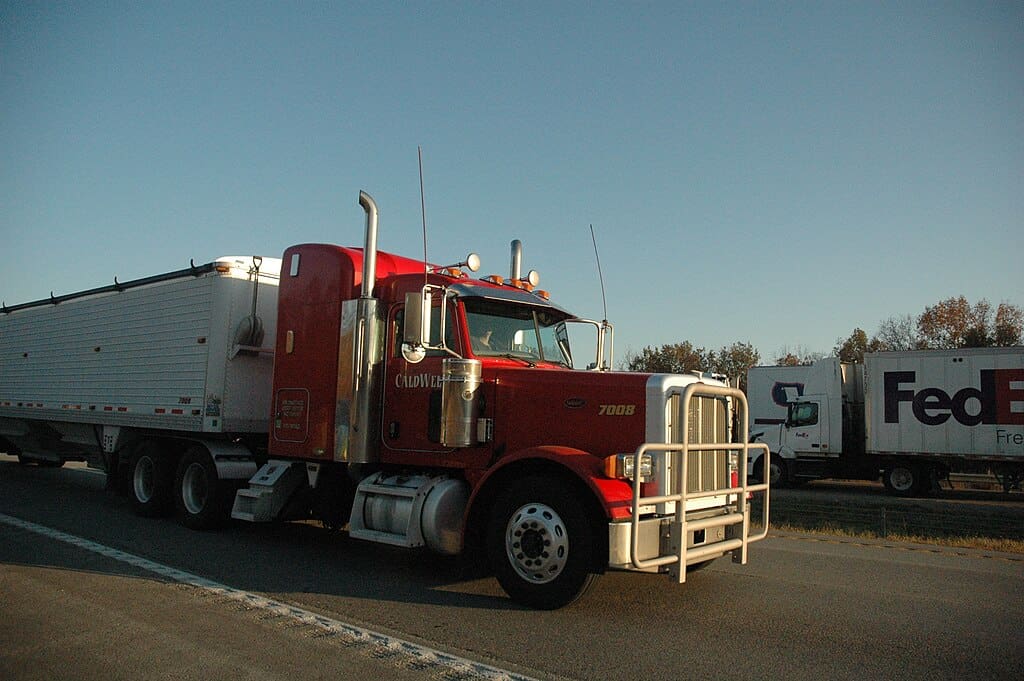
Villarreal said that the lack of qualifications was apparent to Texas officers when they would stop the drivers on the roadways. Drivers with Mexican CDLs often left their trailers sticking out into traffic lanes and repeatedly stalled when attempting to fully move their trucks off of the highway after being instructed by an officer to do so, according to his testimony. Officers would then interview these drivers and discover that most of the time they were from countries such as Colombia, El Salvador, and Panama.
“I know some of our counterparts in Oklahoma have stopped Russians with Mexican CDLs,” said Villarreal. “And what these drivers would tell us roadside was a friend of a friend gave him this number of somebody in Mexico to contact.”
Villarreal pointed out to lawmakers that this issue is becoming more prevalent across the U.S. and argued that the issue of fraud needs to be addressed, as he has seen U.S. residents “also utilize those credentials for fraudulent means.”
Villarreal used the example of the 2008 Texas Hold’em Initiative as a potential solution. He explained that “if you were stopped and arrested and convicted for smuggling narcotics in a commercial vehicle, human smuggling, human trafficking in a commercial vehicle, you would have your Texas commercial driver’s license permanently revoked” under that legislation.
“These owner-operators who are here in Texas would simply get a Mexican LFC and use that to circumvent the system and continue driving the trucks.” Villarreal warned.
During public testimony, many witnesses called for greater oversight of CDL schools and test centers, and for treating English proficiency as a real safety requirement.
“A CDL is not simply permission to drive a larger vehicle,” said Chris Russo, president of Texans for Strong Borders. “It certifies that an individual has the knowledge, skill, and ability to safely operate an 80,000-pound commercial vehicle alongside the motoring public.”