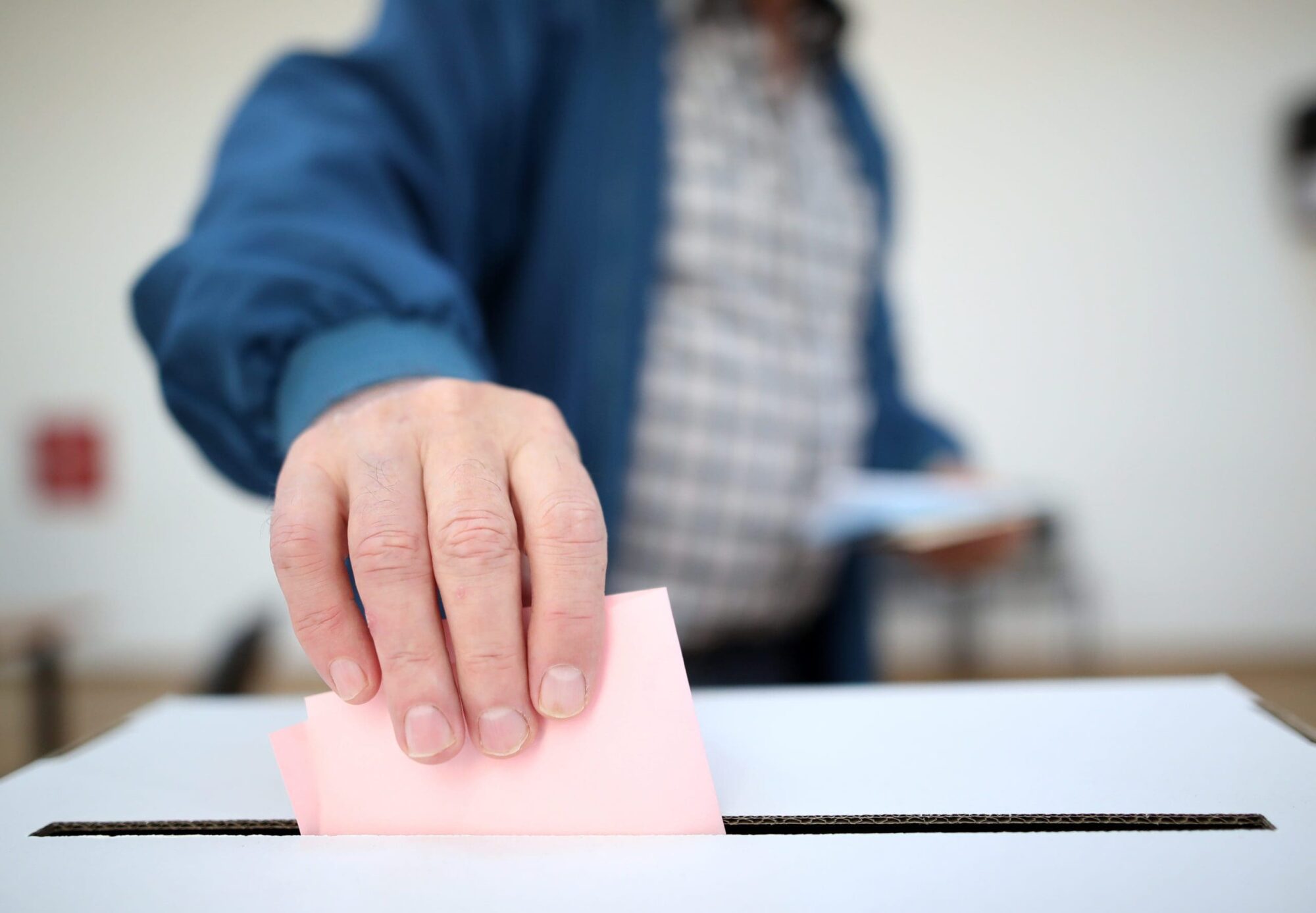
Texas’ law banning paid ballot harvesting has been upheld in the U.S. Fifth Circuit Court of Appeals in New Orleans. This decision reversed a district court ruling that had blocked the state from enforcing the ban, although that ruling had been stayed.
The state will continue enforcing the law for the upcoming 2026 primary elections, pending an appeal to the U.S. Supreme Court.
Background
Lawmakers passed the ban on paid vote harvesting in 2021 as part of a comprehensive election integrity measure known as Senate Bill 1. The law established three third-degree felonies for participating in a paid vote harvesting scheme under the Texas Election Integrity Act.
The law defines “vote harvesting services” as in-person interaction with voters “in the physical presence of an official ballot or a ballot voted by mail” that is “intended to deliver votes for a specific candidate or measure.”
Almost immediately, lawsuits were filed by a variety of left-wing plaintiffs seeking to block enforcement of the law. The suits were later consolidated into a single case challenging SB 1.
In the Fifth Circuit opinion, the plaintiffs were described as “a group of organizations engaged in get-out-the-vote efforts that could be construed as illegal vote harvesting” that “have attacked many aspects of S.B. 1.”
The opinion states that SB 1’s provisions were being “serially litigated before the district court for reasons that are not obvious considering the similarity of parties, issues, and witnesses.”
Notable plaintiffs include La Unión del Pueblo Entero (LUPE), League of Women Voters of Texas, Texas NAACP, and League of United Latin American Citizens (LULAC).
The plaintiffs argued that SB 1 is impermissibly vague under the Due Process Clause of the Fourteenth Amendment and an impermissible content-based restriction on political speech under the First Amendment.
District Court Judge Xavier Rodriguez agreed with the plaintiffs, blocking Texas from enforcing the law—or even investigating potential violations—in September 2024.
Texas Attorney General Ken Paxton immediately appealed the order to the Fifth Circuit and secured a temporary stay of Rodriguez’ order on October 4, 2024.
Two weeks later, the Fifth Circuit granted a full stay pending appeal—allowing the state to enforce SB 1 while the litigation proceeds.
The Opinion
On Thursday, a three-judge panel of the Fifth Circuit finally released its opinion, reversing the district court judgement—effectively upholding SB 1.
“The district court erred in facially striking down this provision and entering an injunction against state officials in violation of their sovereign immunity. Accordingly, the district court’s judgment is REVERSED,” read the order.
Written by Judge Edith Jones, the opinion provides a powerful argument in defense of Texas’ right to ban paid ballot harvesting.
Jones cited the Federalist Papers, noting that the Framers of the U.S. Constitution were deeply concerned about “the vicious arts by which elections are too often carried,” therefore aiming to erect “every practicable obstacle … to cabal, intrigue, and corruption.”
“In accordance with a constitutional design that aspires to maintain free and secure elections, Texas enacted S.B. 1 in 2021,” wrote Jones. “The statute curtails various activities that incentivize vote fraud and intimidation.”
She proceeded to cite statistics highlighting issues with voter fraud.
“Unsurprisingly, mail-in voting is a rich field for fraud,” wrote Jones. “Between 2004 and 2021, 72% of all election prosecutions undertaken by the Texas Attorney General involved mail ballot fraud.”
Attorney General Ken Paxton released a statement in response to the decision, labeling it a “major victory for election integrity.”
“Texas will not allow our election system to be exploited with paid ballot harvesting schemes that threaten ballot secrecy and invite coercion and fraud,” said Paxton. “This is a huge win for Texas voters and for secure, honest elections. We fought hard to keep common-sense protections in place, and I will continue to do everything in my power to defend the integrity of our elections.”
Gov. Greg Abbott took to X to celebrate the ruling.
“I signed a law criminalizing paid in-person ballot harvesting in elections. A trial court ruled against me,” wrote Abbott. “Today the Federal Court of Appeals overturned that erroneous ruling and allowed the law to take effect.”
“Ballot harvesting is a crime in Texas. We will win the fight to stop illegal voting & cheating at the ballot box,” he continued.
If you or anyone you know has information regarding court cases, please contact our tip line: [email protected].