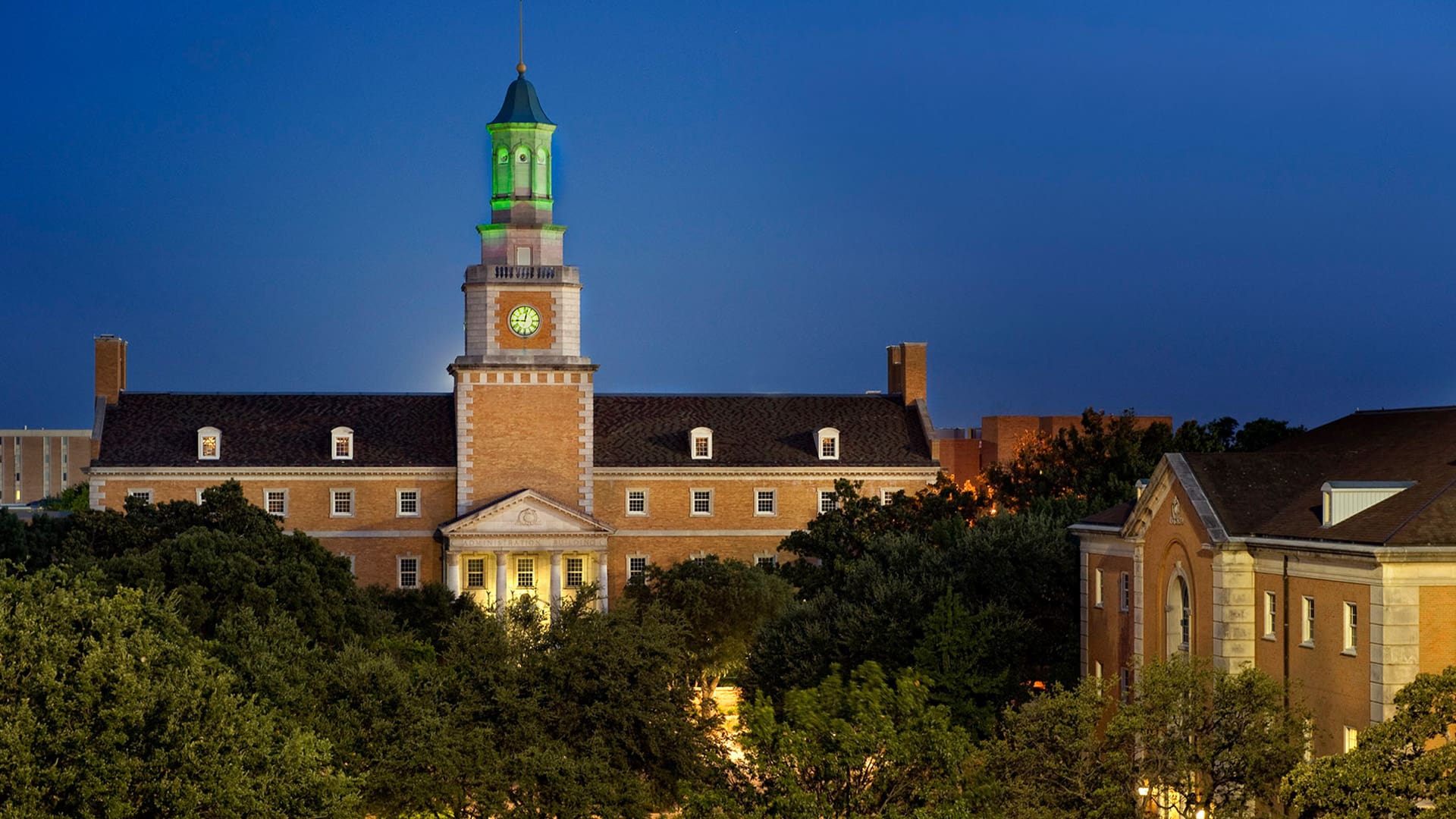
At the University of North Texas, courses such as “An American Demonology” and “Introduction to LGBTQ Studies,” are part of the Women’s and Gender Studies program.
For Fall 2025, the university approved 53 undergraduate courses withing this program, including seven core classes, covering topics like LGBT advocacy, feminism, and demonology. Multiple of these courses count towards the university’s Women’s & Gender Studies and LGBT minors.
Dr. Joanna Davis-McElligatt’s An American Demonology course at the University of North Texas examines “witchcraft, vodou, shamanism, and conjure” in American culture. While it’s part of the Women’s & Gender Studies program (WGS), this is also an English course.
The course explores Puritan, Hoodoo, and Ancestral Magic through provocative texts and films, including the 2025 vampire thriller Sinners, and the 2015 horror movie The Witch, where the daughter of a Puritan family becomes a witch, and Maryse Condé’s I, Tituba, Black Witch of Salem, a novel about an accused witch in 1692.
Davis-McElligatt assigned students to read Maggie Rosen’s 2017 piece A Feminist Perspective on the History of Women as Witches. Rosen, from State University of New York’s Brockport College, calls Eve from Genesis “the first witch” for disobeying God and becoming “Satan’s first human ally.”
She concludes by embracing the “witch” identity, stating, “queering the witch can prospectively change the way women understand its meaning… an identity for empowerment.”
UNT’s WGS program also contains the university’s LGBTQ+ Studies Program, which explores “sexualities and genders” through a queer lens, per its website. As such, explicitly pro-LGBT courses are offered in the WGS program.
One of those classes, a core WGS course, is Dr. Katherine Ritter’s Introduction to LGBTQ Studies. The course counts towards UNT’s LGBT minor. In the syllabus, Dr. Ritter wrote the class aims to help students “understand gender and sexuality” through “lesbian, gay, bisexual, and trans studies” and “queer of color critique,” linking the field to “counter cultural protest and political organizing.”
The required reading, I Keep My Exoskeletons to Myself by Marisa Crane, follows Kris, a lesbian mother grieving her partner while trying to raise a baby. Kris says of the child, “I’m her other mother.” Crane also describes Kris’ friend teaching her to “use the word family when identifying a queer stranger in public.”
For the first day of class, Dr. Ritter assigned Judith Lorber’s The Social Construction of Gender. Lorber, a feminist scholar from Brooklyn College, writes of “Agnes,” a 19-year-old male who secretly took hormones to present as female, to argue that gender is a “performance” shaped by social validation.
Lorber claims transgender experiences, along with drag performers and cross-dressers, show that “gender is not natural or fixed,” sparking debate over the course’s challenge to traditional gender norms.
Dr. Ritter also teaches Feminist Foundations, which is another core WGS course and counts towards UNT’s Women’s & Gender Studies minor. Per the syllabus, this course examines “gender equity, reproductive rights, and political participation” through second and third-wave feminism. A key outcome is understanding the impact of “women of color and queer persons” on feminist movements.
Assigned readings include Cheryl Clarke’s Lesbianism: An Act of Resistance, which calls lesbianism a rebellion against a “male-supremacist, capitalist, misogynist, racist, homophobic, imperialist culture” and a rejection of the “servitude implicit in Western, heterosexual relationships.”
Dr. Ritter also assigned Alan Sears’ Queer Anti-Capitalism, where Sears wrote his aim is to develop a “queer marxist feminism” for “sexual liberation politics.”
In the Feminist Foundations syllabus, Dr. Ritter wrote to students, “Your voice matters and we need to hear it.”
But recently, questions have arisen about UNT’s willingness to protect the voice of one of its female students.
Mary-Catherine Hallmark, a UNT student, confronted a classmate for celebrating Charlie Kirk’s assassination in class, only to be asked to leave while the other student faced no repercussions, per Hallmark’s account. She reports ongoing harassment and threats, claiming university police have failed to protect her.
UNT’s College of Liberal Arts & Social Studies houses the Women’s & Gender Studies program. Dr. Albert Bimper is the executive dean of the college.
The University of North Texas did not respond to a request for comment before publication.
As part of Texas’ reform of university governance, Gov. Greg Abbott signed Senate Bill 37 in June 2025, which requires university boards of regents to review all general education curricula every five years to ensure they “are foundational and fundamental to a sound postsecondary education, are necessary to prepare students for civic and professional life; equip students for participation in the workforce and in the betterment of society; and ensure a breadth of knowledge in compliance with applicable accreditation standards.”
The University of North Texas is governed by the UNT System Board of Regents, whose members are appointed by the governor and confirmed by the Texas Senate.
If you are a student, parent, or professor, partner with us to ensure transparency in Texas higher education. Email our tipline at scorecardtips@protonmail.com.