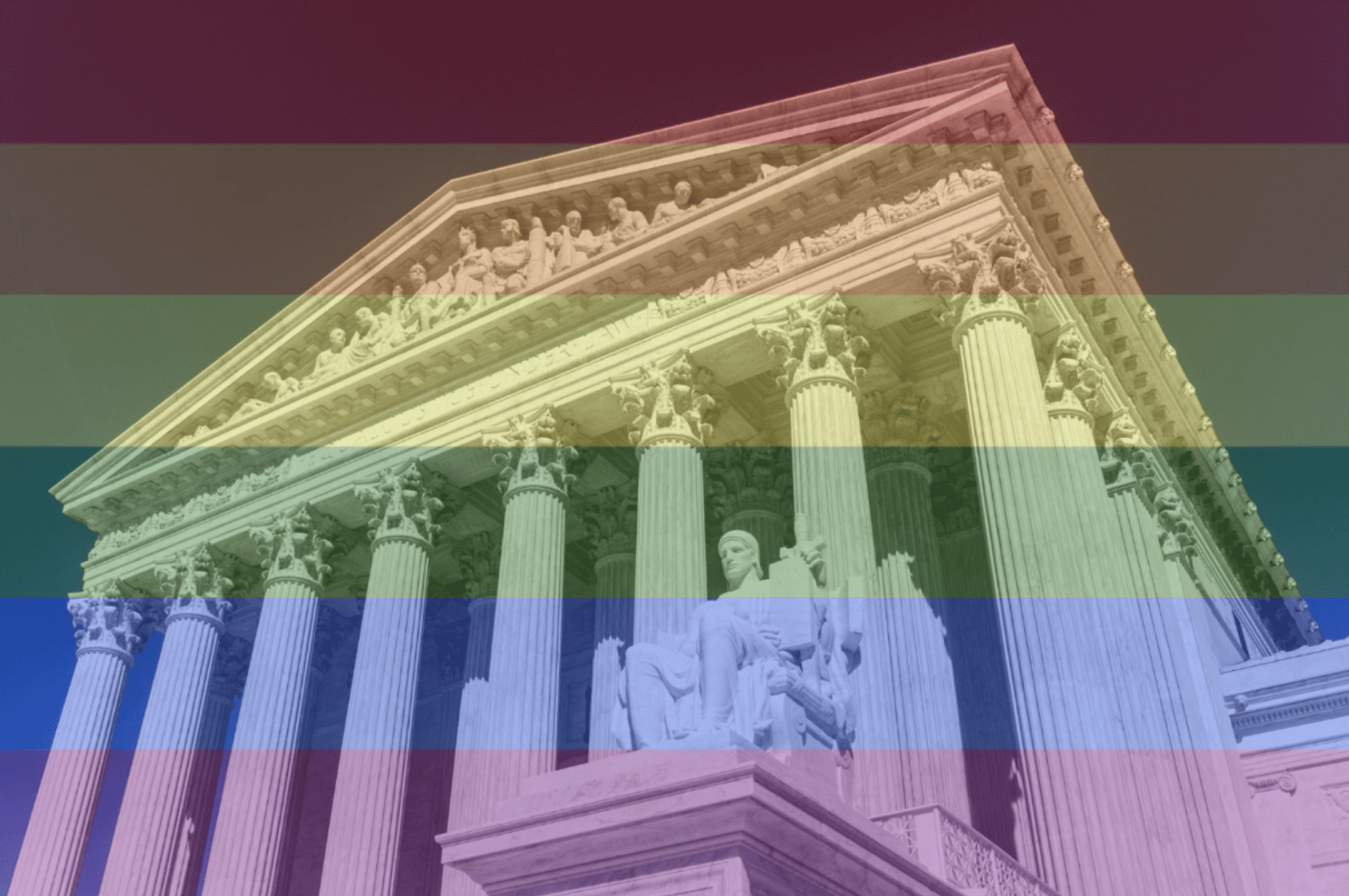
A Waco judge has filed a federal lawsuit seeking to overturn the U.S. Supreme Court’s 2015 Obergefell v. Hodges ruling, which legalized same-sex marriage in all 50 states.
The case stems from McLennan County Justice of the Peace Dianne Hensley refusing to officiate homosexual weddings while continuing to perform heterosexual weddings, citing her religious beliefs.
The lawsuit was filed on Friday in the United States District Court for the Western District of Texas, Waco Division, by attorney Jonathan Mitchell. Defendants include the State Commission on Judicial Conduct and its commissioners.
Background
As previously reported, Judge Hensley was issued a public warning in 2019 by the SCJC for officiating heterosexual weddings while referring homosexual couples to other officiants who would help them.
The commission found Hensley in violation of a section of Judicial Canon 4, which states, “A judge shall conduct all of the judge’s extrajudicial activities so that they do not cast reasonable doubt on the judge’s capacity to act impartially as a judge.”
Two lawsuits resulted from the commission’s action: Judge Hensley filed a state lawsuit, while Jack County Judge Brian Umphress filed a federal one. Both are challenging the SCJC’s interpretation of Canon 4.
In response to this litigation, the Supreme Court of Texas added a clarifying comment to Canon 4 in October of this year, adding that “[i]t is not a violation of these canons for a judge to publicly refrain from performing a wedding ceremony based upon a sincerely held religious belief.”
However, the SCJC is now claiming the comment only addresses judges who refuse to officiate weddings altogether. The commission has since been accused of intentionally misrepresenting the Texas Supreme Court order.
Mitchell then filed a federal lawsuit on Judge Hensley’s behalf, with a greater ambition than the previous suits.
The Lawsuit
In addition to seeking monetary damages, a declaration that Hensley’s actions are lawful, and blocking the SCJC from punishing Hensley further for her actions, Mitchell is asking the court to reconsider the Obergefell decision and declare gay marriage is not a constitutional right.
Mitchell began by arguing that nothing in Obergefell or the Constitution requires Judge Hensley to perform same-sex weddings. Even if there were a constitutional right to same-sex marriage, he contended that would not then license the state to violate judges’ freedom of religion and speech.
Mitchell also argued that Obergefell was decided on faulty reasoning.
He wrote that “there is nothing in the language of the Constitution that even remotely suggests that homosexual marriage is a constitutional right, and the Obergefell opinion failed to identify any provision of constitutional text that establishes this supposed constitutional right to homosexual marriage.”
Because the Supreme Court’s judicial composition is now more conservative, Mitchell wrote that “it is far from clear that five members of the current Supreme Court will endorse Obergefell.”
“The members of the Obergefell majority may have believed very strongly that samesex marriage should be allowed in all 50 states as a matter of policy, but that is not a basis on which a court may enjoin the enforcement of a duly enacted statute,” wrote Mitchell.
A more recent Supreme Court ruling—Dobbs v. Jackson, which overturned abortion-legalizing Roe v. Wade in 2022—prohibited judges from recognizing “fundamental rights” that are unmentioned in the constitutional text unless those rights are “deeply rooted in this Nation’s history and tradition.”
“Dobbs did not purport to overrule Obergefell, but its rationale is incompatible with the idea that homosexual marriage is a ‘fundamental right,’” wrote Mitchell.
“The court-invented right to homosexual marriage—like the court-invented right to abortion—is not ‘deeply rooted in this Nation’s history and tradition,’ so Obergefell had no constitutional justification for imposing same-sex marriage on all 50 states,” he continued.
Texas law continues to define marriage exclusively as the union of one man and one woman, as the state refused to amend its marriage laws in light of Obergefell.
Mitchell argued that this further justifies Hensley’s actions and puts more pressure on the court to reconsider the precedent.
He concluded by highlighting the practical effect of Obergefell on judges’ religious liberty.
“When the court pronounced gay marriage a constitutional right, anyone who opposes homosexual marriage is therefore an enemy of the Constitution,” he wrote. “This has emboldened activists and politicians to embark on a campaign of intimidation against individuals and institutions who dare to express the belief that marriage is between one man and one woman.”
In November, the U.S. Supreme Court denied review in a case that explicitly asked it to overturn Obergefell, leaving the 2015 same‑sex marriage precedent in place. Mitchell is hopeful for a different outcome with Hensley’s case.
If you or anyone you know has information regarding court cases, please contact our tip line at [email protected].