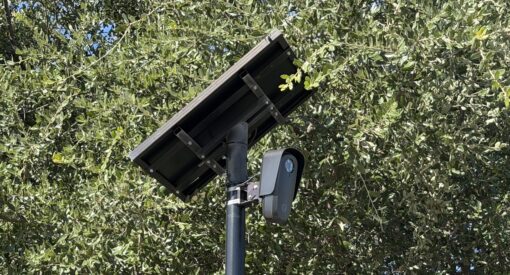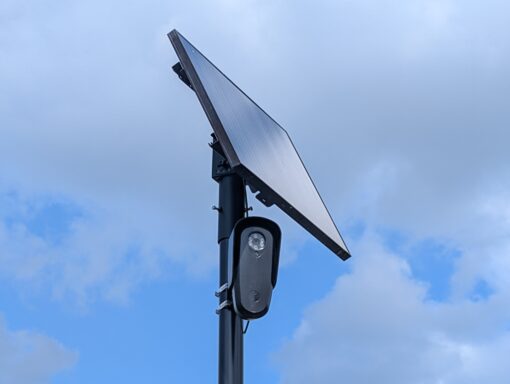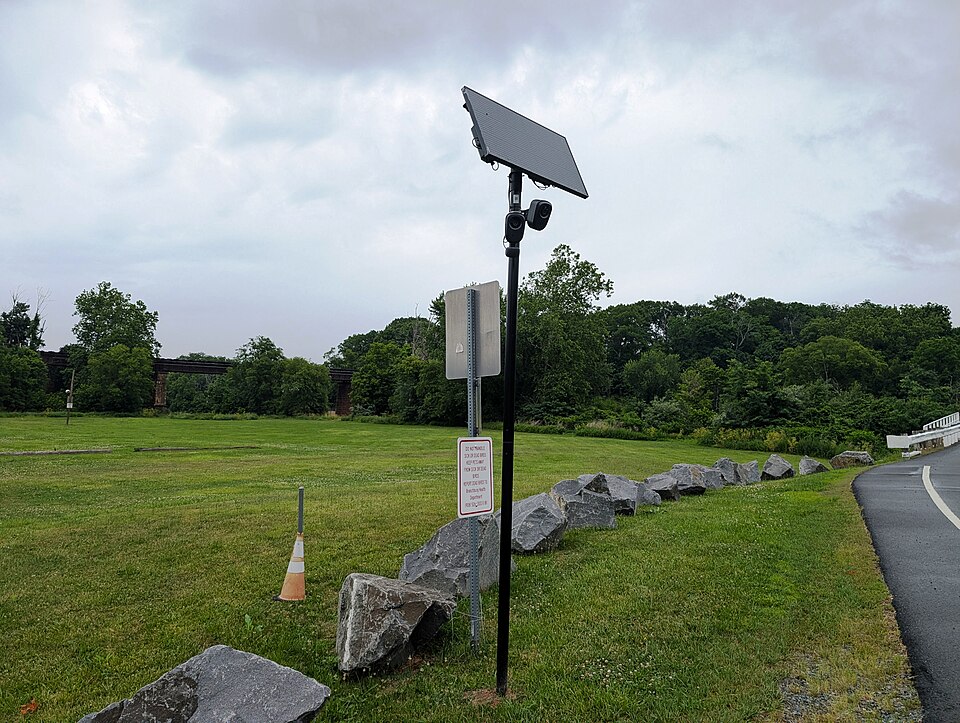
The Waller County Republican Party has passed a resolution requesting state lawmakers restrict the use of Flock cameras and other mass surveillance technologies without a warrant. The resolution calls for guardrails to be placed on automatic license plate readers, AI-powered drones, stingray technologies, and more.
Flock cameras remain a hotly debated topic across the United States.
The company manufactures AI-powered license plate readers that can record information about vehicles such as make, model, color, cosmetic damage, and aftermarket parts. Law enforcement officials do not need a warrant to access the Flock automatic license plate reader (ALPR) database.
However, the resolution is not solely focused on Flock, but mentions other ALPR technologies such as drones and AI-powered surveillance cameras.
Additionally, the resolution warns of stingray technology. A stingray can mimic a cellular signal, to which nearby phones connect. Once connected, data is transmitted from the individual’s phone into a server where it is then processed. Texas DPS purchased several Chevrolet Tahoes equipped with stingray technology.
The Waller County GOP’s view is that Flock and similar technologies clearly violate the Fourth Amendment and Article I, Section IX of the Texas Constitution since camera data is accessed without a warrant.
The resolution cited a recent Supreme Court Decision in Chatrie v. United States, which held that law enforcement officers must obtain a warrant to access data regarding an individual’s location.
“The Waller County Republican Party stands firmly with our law enforcement officers, and we have a deeply vested interest in their success as they work tirelessly to protect our community,” said Cyndi Lawrence, chairwoman of the Waller County Republican Party.
“We unequivocally want our officers equipped with the absolute best tools and modern technologies available to solve crimes and keep us safe. However, true leadership requires that we deploy advanced technology in harmony with our foundational principles. By establishing clear, constitutional guardrails, Waller County can show the rest of Texas how to empower law enforcement to excel while steadfastly defending the constitutional rights and privacy of every citizen.”
Key policy recommendations in the resolution include:
- Immediate Real-Time Cross-Referencing & Data Purges: Requiring ALPR data that does not match an active law enforcement “Hot List” to be instantaneously deleted at the point of capture, preventing the creation of historical location logs.
- Warrant Requirements for Stored Records: Mandating judicial search warrants based on probable cause before law enforcement can query or search any legally retained records.
- Closing Privatized Surveillance Backdoors: Prohibiting government agencies from circumventing public oversight by integrating live feeds or data pools from private commercial entities or Homeowners Associations.
- Banning Warrantless Drone and Cellular Tracking: Prohibiting the use of automated aerial drone networks and mobile cell-site simulators (IMSI catchers/stingrays) to monitor citizens without individual warrants.
- Public Transparency & Fiscal Accountability: Requiring public hearings, recorded votes, and monthly public audits disclosing raw performance metrics before surveillance hardware is deployed or funded.
The resolution urged local law enforcement to implement its own guardrails as well as state officials to prioritize the protections during the next legislative session.
The Texas House Committee on Delivery of Government Efficiency is set to meet on August 19 in order to study data privacy and security.
Josh Posey, a Waller County Republican Party precinct chair, urged concerned citizens to testify on the issue before state lawmakers. Citizens can attend in person or submit testimony online.