The Manor Police Department decided Thursday to end its relationship with Flock Safety cameras while nearby the Leander City Council unanimously voted to freeze its use of the technology.
These two towns in Central Texas are the latest in a small but growing group of local governments and agencies in the state opting out of a contract with the automated license plate reader (ALPR) company.
Manor Police Department announced the decision via a Facebook post Thursday evening.
“Effective today, September 3 2026, the Manor Police Department has decided to end our relationship with Flock Safety,” reads the post. “Although we see benefits in the use of License Plate Readers (LPRs) to solve crime, we value the trust of our community more.”
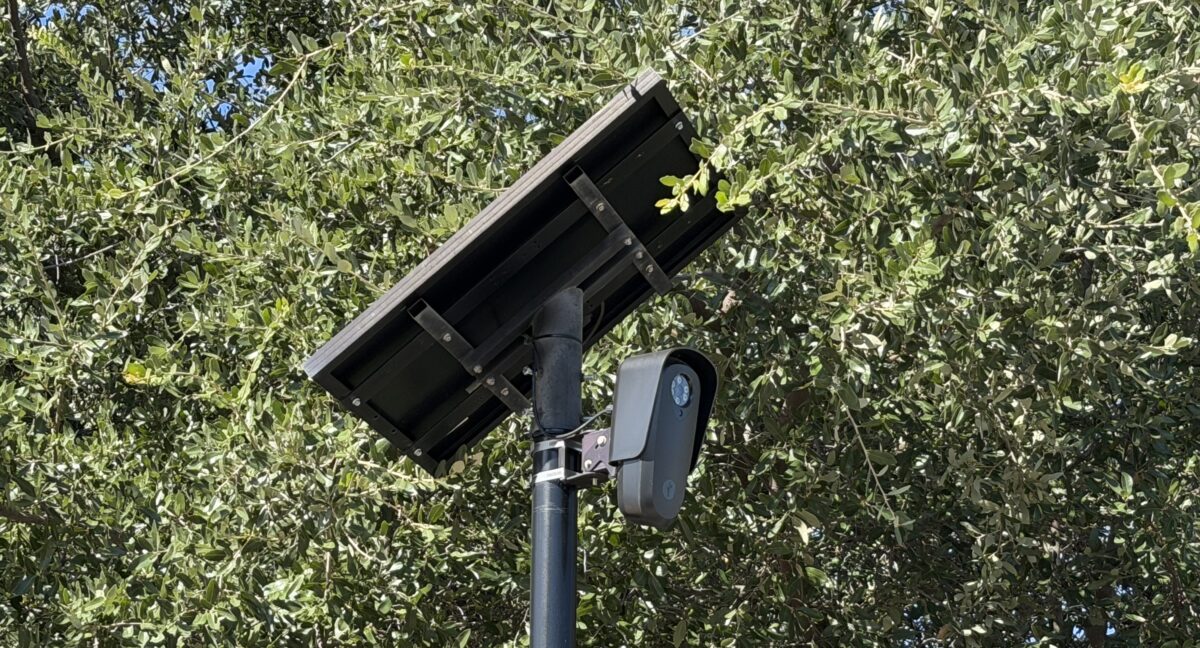
Flock’s automated license plate readers use AI to scan license plates and save information about a vehicle, such as make, model, color, and other identifiers like cosmetic damage or bumper stickers.
Flock allows law enforcement officers to access its database without a requiring warrant. This has raised concerns over potential violations of citizens’ Fourth Amendment rights.
The Leander City Council unanimously voted to freeze the city’s Flock cameras at a Thursday meeting.
Residents expressed overwhelming dissent to the cameras even after a presentation by Police Chief Greg Minton, who noted its benefits to law enforcement.
Residents noted that their complaint was not with the Leander Police Department, but rather with the lack of transparency and privacy concerns regarding Flock Safety itself, as well as its potential for abuse.
One resident compared the technology to monitoring that would normally require a warrant, while another expressed concern over the ease with which a skilled hacker could access the data.
“This is not a conversation directed at [the Leander Police Department],” said Mayor Na’Cole Thompson at the city council meeting. “But I do understand the public’s concern about Flock as an organization, as a company, some of the things that have come out in the public about how they operate their business and how other cities are responding to the things that they’re doing.”
An admin for DeFlock Leander celebrated the decision on Facebook.
“We did it!” reads the post. “Across party lines, against all odds (at first), and with pure grassroots energy! Thank you ALL! Now let’s keep Leander de-Flocked!”
A growing number of Texas localities have either rejected, cancelled, or deactivated their Flock contracts or cameras.
The El Paso Police Department also announced Thursday that it had halted its use of Flock cameras following Gov. Greg Abbott’s pause on state funding for the technology.
“While ALPRs serve as a critical tool that enhances investigative speed and public safety efficiency, EPPD has always operated this technology under strict oversight, limited access, and rigorous privacy safeguards,” said El Paso Police Chief Peter Pacillas.
Bastrop City Council members unanimously voted to cover the city’s Flock cameras earlier this week, while the Elgin Police Department paused its use of the ALPRs.
Wylie City Council members unanimously voted against renewing its Flock contract late last week to praise from local residents.
“By the night of the vote, more than 700 residents had signed the petition, people packed the chamber, and the case was made in Flock’s own words,” stated DeFlock Wylie in reference to the council meeting.
“No lawyers. No budget. No outside money. Just Wylie residents who decided their privacy was worth showing up for.”
A recent Overton Insights poll showed that over 63 percent of Texans opposed Flock cameras, with 51 percent stating they “strongly opposed” the technology.
Texas lawmakers are expected to evaluate potential guardrails for the technology in the upcoming legislative session.