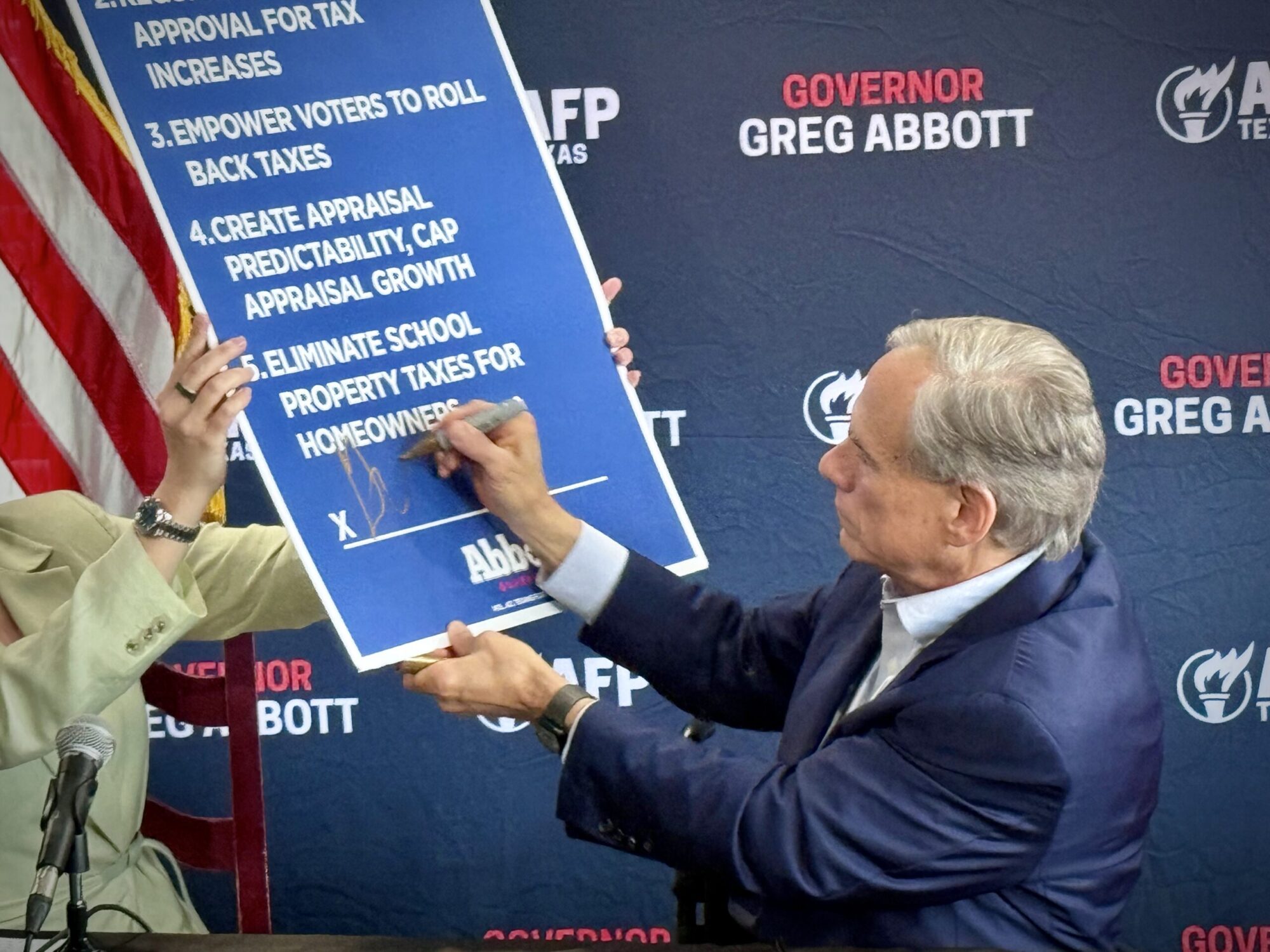
Gov. Greg Abbott is continuing a series of “Taxpayer Empowerment” events across Texas to build support for his proposed overhaul of the state’s property tax system, urging lawmakers to sign a pledge backing the plan.
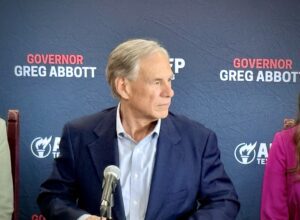
Abbott held one such event this week in Manor, where he appeared alongside State Reps. Stan Gerdes and Caroline Harris-Davila, as well as Genevieve Collins, the Texas director of Americans for Prosperity.
During the event, Abbott touted previous property tax relief efforts passed by lawmakers but argued they have not gone far enough.
“[One] thing that we will do … to ensure everybody in this room, everybody in the state of Texas, is going to be able to afford to stay in their home forever, is to drive a stake to the heart of property taxes in Texas,” said Abbott.
He noted that when he first became governor, the state’s homestead exemption was $15,000.
“The fact of the matter is, you needed more relief,” Abbott said. “After what we did last year, your homestead exemption is now the first $140,000 of your homestead you do not pay school district property taxes on.”
“But the fact of the matter is this—and that is exactly zero Texans have come up to me and said, ‘Governor, I’m perfectly happy with my property tax bill,’ because no one is.”
Abbott’s proposal includes several structural changes to the property tax system. Among them are limiting local government spending growth to the rate of population growth plus inflation or 3.5 percent—whichever is lower—requiring two-thirds voter approval for local property tax increases, and allowing taxpayers to trigger rollback elections with signatures from 15 percent of registered voters. The plan would also change the appraisal system by moving to five-year appraisal cycles and lowering the homestead appraisal cap from 10 percent to 3 percent while extending that cap to all property types.
Abbott has also called for a constitutional amendment allowing voters to eliminate school district property taxes for homeowners.
As part of the push, Abbott has circulated a pledge for lawmakers to sign committing to support the plan.
However, several Republicans currently serving in the Texas House—or expected to serve in the chamber in 2027—have not yet signed the pledge.
Those members include Jeff Barry, Greg Bonnen, Dustin Burrows, Angie Chen Button, Tom Craddick, Caroline Fairly, Charlie Geren, Brian Harrison, Todd Hunter, Brooks Landgraf, Will Metcalf, Morgan Meyer, and Terry Wilson. Incoming member Kristen Plaisance, who won the race for House District 3, has also not signed the pledge.
Some lawmakers have already expressed reservations about the proposal. Harrison and Plaisance have both suggested they are hesitant to sign onto the plan because it does not go far enough to eliminate property taxes entirely.
“Texans are sick of rhetoric. They deserve action. Now,” Harrison told Texas Scorecard. “While there appear to be some good elements, including policies I’ve been pushing for years, it is nowhere near bold enough. We should be fighting for FULL ELIMINATION, not mere ‘reform.’”
Harrison also argued the Legislature should move immediately to address the issue.
“If the politicians cheering this were serious, they’d join my call for a special session to pass them this month,” he added. “We could’ve passed these last year, and there is no excuse for further delay.”
State Rep. Caroline Fairly said she supports Abbott’s push for property tax relief but is still reviewing the details of the proposal.
“I fully support Governor Abbott’s leadership on property tax relief,” Fairly said. “I have taken the time to engage with the Governor’s team to discuss what the legislation might ultimately look like. As a young legislator, it is important for me to take the time to fully understand how legislation will affect my constituents. I appreciate the Governor’s commitment to delivering meaningful property tax relief for Texans.”
State Rep. Terry Wilson also expressed support for Abbott’s effort but said he has not yet signed the pledge while he reviews the details of the proposal.
“Fixing the property tax in Texas has been at the top of my priority list since I first decided to run for public office,” Wilson said. “Seeing people taxed out of their homes and businesses is unacceptable and we must find a better option.”
Wilson said he appreciates Abbott’s leadership on the issue but wants more time to examine the plan before signing the pledge.
“My signature is something I take very personally, and I do not attach it until I have had a chance to go into the details myself and understand the full ins-and-outs,” he said. “I am in communication with the Governor’s staff and look forward to getting together with them soon to do just that.”
Wilson added that he would also like to see additional provisions included in the proposal, including giving property owners a vote in all bond elections that could raise their taxes.
Notably, none of the lawmakers who have agreed to sign the pledge so far are members of the Texas Senate.
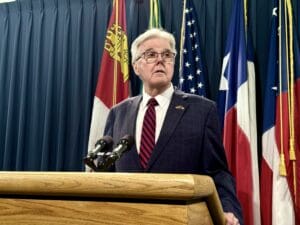
Lt. Gov. Dan Patrick has previously responded to Abbott’s proposal with a narrower plan focused primarily on expanding exemptions rather than restructuring the property tax system.
Patrick’s proposal would increase the homestead exemption by an additional $40,000, extend senior-style tax freezes to homeowners beginning at age 55, and cap city and county budget growth at 3.5 percent.
Patrick has argued his proposal is more affordable—projected to cost less than $4 billion per biennium—and politically achievable, noting that voters have repeatedly approved increases to the homestead exemption. He has also warned that eliminating school district property taxes could require a significant increase in the state sales tax to replace the lost revenue.
When asked by Texas Scorecard about lawmakers who have yet to sign his pledge, Abbott said he believes the proposal is gaining support.
“We have great momentum. We’re adding more House members every day,” Abbott said. “I feel very confident we’re going to get over 76. As you know the math—if you get 76 that’s the majority in the Texas House, and you get it passed.”
Abbott also acknowledged that parts of the proposal could ultimately require a constitutional amendment.
“That’s going to require not just every Republican House member, but also some Democrat House members,” Abbott said. “I defy any Democrat or any Republican to come out against my law that will slash property taxes and look their fellow Texans in the eye and say they are not going to adopt Abbott’s plan to reduce and slash property taxes in Texas.”
When asked whether any senators had yet expressed interest in signing the pledge, Abbott stated that the focus remains on the House for now.
“Haven’t heard about that yet,” Abbott said. “We’ll get to them after we get to the House.”