A federal appellate court has cleared the way for the Delfin LNG deepwater port in the Gulf of America, rejecting a legal challenge by three left-wing environmental organizations. The groups had sought to vacate the project’s federal license.
The organizations failed to demonstrate that a single one of their members had suffered or faced an injury traceable to the project. The ruling is being touted as a win for President Donald Trump’s energy dominance agenda.
Background
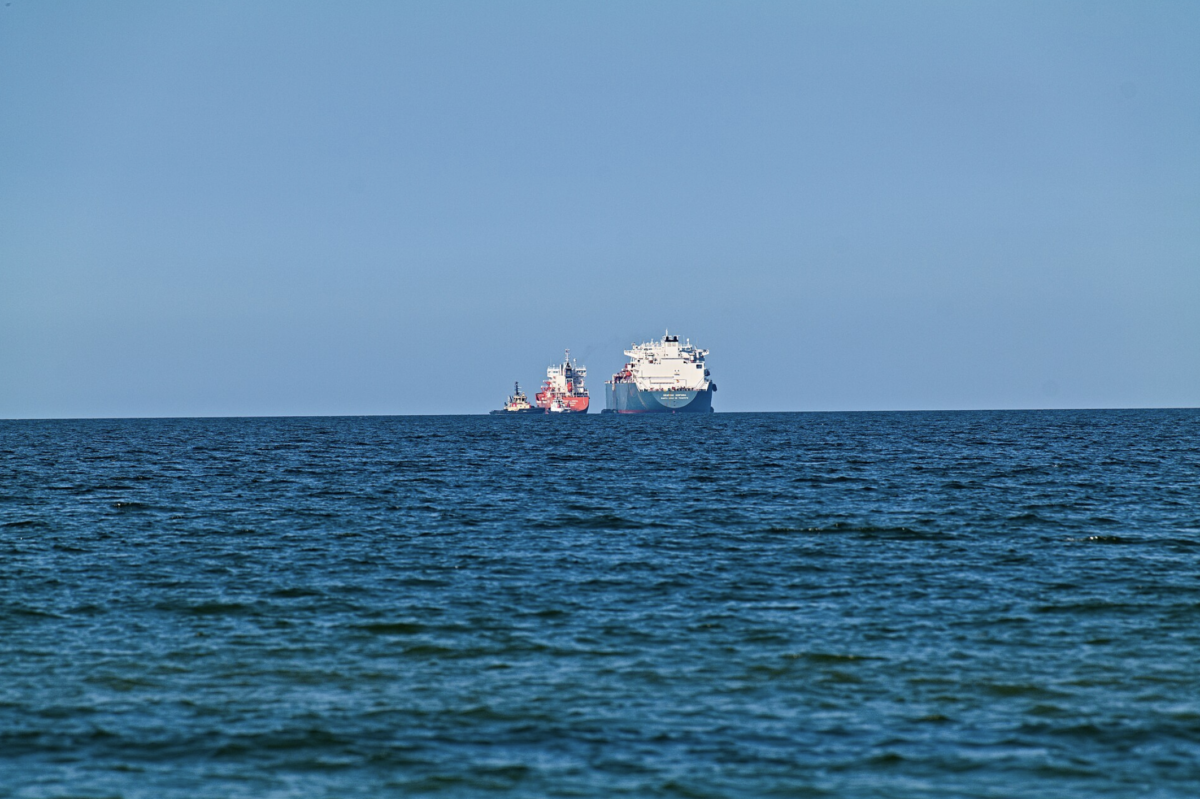
Delfin Liquefied Natural Gas (LNG) had proposed a project to build a deepwater port in the Gulf of America. The port would feature a cluster of floating vessels moored miles offshore, liquefying natural gas and loading it onto tankers bound overseas.
The company asked the Department of Transportation’s Maritime Administration (MARAD) and the U.S. Coast Guard for approval.
In compliance with the Deepwater Port Act (DPA), MARAD notified Texas and Louisiana—as adjacent states—so their governors could approve, disapprove, or conditionally approve the project. Neither governor responded.
MARAD then published five federal register notices, held six public hearings in the two states, invited public comment four times, and prepared a 2016 environmental impact statement (EIS) exceeding 1,800 pages—analyzing the project’s effects on the environment, socioeconomics, transportation, and air quality.
In 2017, MARAD approved Delfin’s application and tentatively authorized issuance of a license once Delfin satisfied several additional conditions. This decision was never challenged.
By 2024, Delfin had changed various aspects of its plan, leading the Biden administration to declare that MARAD’s 2017 decision no longer supported the modified plan. Delfin would need to submit a new application and start the process over.
This led President Trump to sign an executive order in 2025, directing MARAD to decide within thirty days whether the post-2017 modifications were likely to result in adverse environmental consequences that “substantially differ from those associated with the originally evaluated project.” If not, the order directed MARAD to issue the license.
MARAD concluded that the modifications reduced the Project’s environmental effects and issued the license in March 2025.
Litigation
This led three left-wing environmental groups—the Center for Biological Diversity, Sierra Club, and Habitat Recovery Project—to file a federal lawsuit seeking to have the licensing decision vacated.
They argued that MARAD violated the DPA by declining to require an amended application, reconsider the statutory environmental criteria, and reopen public comment. The suit also contended that MARAD violated the National Environmental Policy Act (NEPA) by declining to prepare a supplemental EIS, and the Administrative Procedure Act (APA) by issuing a license after previously determining that the 2017 record of decision no longer supported the modified project.
Because the lawsuit was appealing an order made by a federal agency, it was filed directly in a federal court of appeals—in this case falling within the jurisdiction of the U.S. Fifth Circuit Court of Appeals in New Orleans.
Before the court could consider the petitioners’ claims on the merits, it needed to determine whether they had standing to sue under Article III of the U.S. Constitution. This meant the petitioners needed to demonstrate they have suffered, or face, “a concrete and particularized injury.”
Regarding the case at hand, only one of the petitioners needed to show that one of its many members had suffered or faced such a concrete injury. In environmental cases, courts must also distinguish between general injuries to the environment and injuries to the petitioners themselves.
The Ruling
Last week, the Fifth Circuit released its decision, concluding that the petitioners had failed to demonstrate any concrete and particularized injury existed for a single one of its members.
As the court reasoned, “Generalized concern for wildlife, greenhouse-gas emissions, and environmental quality cannot itself establish standing.”
“And MARAD considered those environmental concerns before issuing the license,” wrote Judge Don Willett. “Delfin, moreover, made changes to the Project that MARAD concluded would reduce environmental externalities.”
“No identified member has standing in his or her own right … None has shown a concrete, particularized injury fairly traceable to the challenged license,” Judge Willett continued. “Petitioners have not established associational standing. That jurisdictional failure ends the case before we reach the DPA, NEPA, or APA.”
The U.S. Department of Justice quickly released a statement celebrating the decision and highlighting its significance.
“This commonsense ruling ensures that this vital energy infrastructure project won’t be derailed by Far Left climate activists,” said Maritime Administrator Stephen M. Carmel. “Under the President’s directive, the Maritime Administration is proud to support the Delfin LNG Deepwater port’s operations and the good-paying jobs it’ll create while unleashing America’s energy dominance.”
“This project is an important part of the President’s energy dominance agenda, as evidenced by the President’s directives to the Maritime Administration about this project in his Unleashing American Energy Executive Order,” said Principal Deputy Assistant Attorney General Adam Gustafson of the Justice Department’s Energy and Natural Resources Division (ENRD). “The Fifth Circuit’s ruling will make it harder for environmental groups — who have no stake in important energy projects — to challenge projects that will bring jobs and prosperity to Americans.”
The petitioners have yet to seek rehearing or file an appeal with the U.S. Supreme Court. They would have 90 days from the July 7 ruling to do so.
If you or anyone you know has information regarding court cases, please contact our tip line: scorecardtips@protonmail.com.