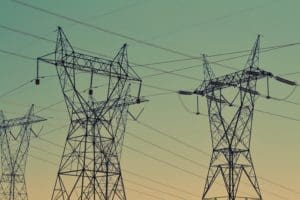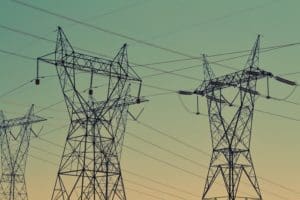
A federal appellate court has upheld Texas’ authority to protect its electrical grid from Chinese-owned companies, rejecting a challenge from an energy developer whose parent company acquired more than 130,000 acres near Laughlin Air Force Base.
The U.S. Fifth Circuit Court of Appeals concluded that federal oversight of foreign investment does not prevent Texas from imposing its own safeguards on access to the state’s power grid.
Background
The Committee on Foreign Investment in the United States (CFIUS) is the federal task force that reviews foreign-facing financial transactions for national security and economic strategic risks.
In 2015, the committee received an application from Guanghui America Investment Group (GH America), a subsidiary of the Chinese oil and gas company Xinjiang Guanghui Industry Investment Co., to acquire assets of several U.S. companies.
CFIUS delegated this proposal to the Department of Defense, which determined that the transaction posed a national security risk. GH America was therefore required to enter a mitigation agreement.
From 2016 through 2018, Xinjiang and GH America bought over 130,000 acres of land in Val Verde County. In 2018, they formed GH America Energy as a new subsidiary for renewable energy projects, which began investing in “wind and solar resources as well as electric grid-connection consulting studies, intending to sell their energy into Texas.”
However, the Department of Defense, which was still delegated oversight, objected to some of the renewable energy projects because of the proximity to Laughlin Air Force Base. The mitigation agreement was later updated to provide for expanded oversight.
The Lone Star Infrastructure Protection Act
The Texas Legislature passed the Lone Star Infrastructure Protection Act (LSIPA) in 2021, prohibiting foreign owned companies or citizens of Russia, Iran, North Korea, and China from investing in Texas’ critical infrastructure. This includes Texas’ electrical grid, which is managed by the Electric Reliability Council of Texas (ERCOT).
When it took effect, GH America Energy had pending ERCOT interconnection requests for several renewable energy projects, including Blue Star Solar Project.
Douglas Fohn, ERCOT’s assistant general counsel, notified GH America Energy in October 2022 that it was noncompliant with LSIPA and that ERCOT was therefore canceling the Blue Star Solar Project’s interconnection application. The company asserts that this decision caused it to sell two other renewable energy projects “at a substantial loss.”
In 2023, the Texas Legislature passed a law specifically commanding ERCOT not to register or provide interconnections to a business entity “unless the business entity attests that [it] complies with” LSIPA.
The Lawsuit
In June 2024, GH America Energy sued Fohn, ERCOT, and other ERCOT-associated individuals in federal court, asserting that LSIPA violates the federal Supremacy Clause and is preempted by the responsibilities granted to the CFIUS.
The company claims that LSIPA “violates the Equal Protection Clause on account of race, ethnicity, alienage and national origin.” It also contends that LSIPA is unconstitutional under the Dormant Commerce Clause, which allegedly restricts states from passing laws that excessively burden commerce from other states.
In part, GH America Energy asked the U.S. District Court for the Western District of Texas to declare LSIPA unconstitutional and preempted by federal law, permanently block ERCOT from enforcing LSIPA against the company, and reward damages.
Following the defendants’ motion to dismiss, GH America Energy amended many of its claims. This included dropping its claims against ERCOT itself to focus on Fohn in his official capacity.
In September 2025, Judge Robert Pittman granted Fohn’s motion to dismiss the case. He ruled that LSIPA is not preempted by the CFIUS regime or the Dormant Commerce Clause and dismissed the remaining Equal Protection claims.
Pittman reasoned that “LSIPA did not impair CFIUS’s goals—first, because CFIUS applies only to a limited set of transactions such that LSIPA was generally outside its scope, second, because Texas has a strong state interest in protecting ERCOT, and third, that access to that grid is an intrastate activity particularly germane to state regulation.”
The Appeal
GH America Energy appealed this decision to the U.S. Fifth Circuit Court of Appeals in New Orleans. The company only challenged Pittman’s dismissal of the preemption claim.
The appeal was considered by a three-judge panel consisting of Judges Jerry Smith, Catharina Haynes, and Kurt Engelhardt. The panel explained that it must begin with a presumption against preemption.
“Preemption analysis begins with the assumption that the historic police powers of the States are not to be superseded by the Federal Act unless that was the clear and manifest purpose of Congress,” wrote Judge Smith.
The Court ultimately agreed with Pittman that LSIPA is not preempted, affirming the district court ruling dismissing the case.
“CFIUS, as explained above, wields limited authority—and that limited authority does not reflect a Congressional desire to exclusively control all foreign-investment screening,” wrote Smith. “Where Congress has been silent, and where we do not see any clear conflict or field preemption, Texas has a free lane to enact and enforce LSIPA.”
“If states can impose their own environmental standards or health and safety standards without triggering field preemption in any area of economic regulation, it follows that they can protect their energy grids from data theft and computer viruses,” the ruling continued.
If you or anyone you know has information regarding court cases, please contact our tip line: tips@texasscorecard.com.