The Uvalde County Underground Water Conservation District has warned that the route regulators approved for a 765-kilovolt transmission line “could have a catastrophic effect” on multiple aquifers.
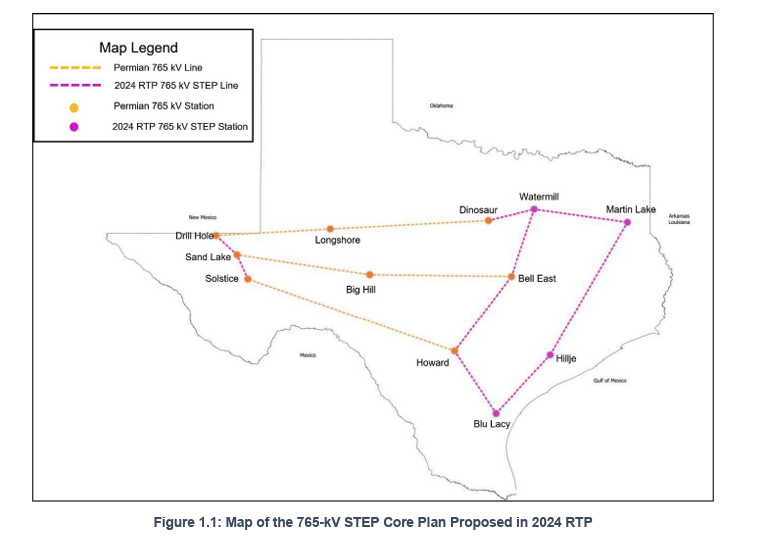
This regards AEP Texas’ and CPS Energy’s proposed Howard to Solstice transmission line, stretching approximately 370 miles in South and West Texas from the San Antonio to Fort Stockton areas.
It is part of the Strategic Transmission Expansion Plan (STEP) Permian, a key part of the Permian Basin Reliability Plan (PBRP). STEP-Permian proposes three 765-kV transmission lines spanning more than 1,200 miles to move power from East Texas to the natural gas-rich Permian Basin. Howard to Solstice is the southernmost line.
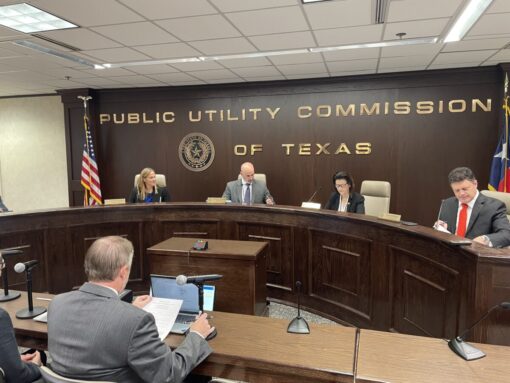
The Public Utility Commission of Texas (PUCT) approved Howard to Solstice on September 11. Vic Hilderbran, Uvalde County Underground Water Conservation District’s (UWCD) general manager and board member, told Texas Scorecard he only heard about this project from citizens and the local newspaper. No one from AEP Texas or CPS Energy consulted him.
Regarding their due diligence on the 765-kV line, Hilderbran indicated that as far as he is aware, AEP Texas and CPS Energy have not contacted anyone. “I can’t say that they have and they haven’t [done due diligence], but I haven’t seen any indication of it,” he said. “I don’t know what their research has shown, if they’ve done any research, but I don’t think they’re looking at the bigger picture of what it could lead to long term.”
He added, “it could affect the drinking water (or lack of) for a big area around here,” and that “everybody downhill from here is subject to be impacted by it too.”
PUCT’s order listed each line link the commissioners approved. Uvalde County UWCD’s October 2 letter to PUCT and State Rep. Don McLaughlin (R–Uvalde) raised concerns about link 81B.
Hilderbran wrote that 81B crossing the county is “a very bad idea,” because it would cross “a high recharge zone for the Edwards Aquifer, the Buda Aquifer, the Austin Chalk Aquifer and the alluvial Leona Aquifer.”
“The construction of Utility line 81 B could have a catastrophic effect on the above-mentioned aquifers due to the karstic nature of the terrain. Conduits and caves contribute to the recharge of the above-mentioned [aquifers],” he wrote. “This recharge occurs anywhere from ground level and below and can affect the vegetation under the power line and the 200-foot easement.”
He continued in the letter that “[i]ll-advised construction over this area could result in reduced recharge” to Uvalde County’s Carrizo-Wilcox Aquifer and counties southward, because the listed above aquifers recharge Carrizo-Wilcox.
Hilderbran continued that “there are several major fault lines that impact” these aquifers where Highway 90 and the Nueces River intersect.
“The Nueces River recharges from Edwards County all the way to where the river discharges to the Gulf. The Frio River and Sabinal River, which are east of the Knippa Gap, contribute to the Edwards Aquifer which impacts the area south and east of Uvalde County. This includes the city of San Antonio,” he wrote.
Hilderbran said he had consulted with a retired hydrologist who had advised moving the line further north along Interstate 10.
State Rep. McLaughlin thinks the district elevated “some valid concerns.”
“Our water comes through crevices, tunnels, or whatever [is] underground up here, and that area that they’re going to be going through could very easily disrupt those tunnels and could affect the flow of water that we depend on in the city, the county, and so forth,” he told Texas Scorecard.
“[PUCT] told me, ‘Well, this is for the good for your community and your district.’ I said, ‘Well, how’s it good for my district when you’re coming through, just pillaging our landowners, taking the land and doing this, and we don’t benefit from it at all? There’s no substation coming off that line from one end to the other that benefits any county in between,’” McLaughlin said.
Concerns about STEP Permian’s impacts on water have been raised elsewhere.
As previously reported, Travis Huey of the Fort Clark Municipal Utility District warned about potential damage to Kinney County’s aquifer system because of the lack of data on the system’s size and how rainwater flows into it.
The Middle Trinity Groundwater Conservation District filed a rehearing motion in Oncor’s Dinosaur to Longshore line, asking PUCT to require the utility to consult and coordinate with it for the purpose of protecting its aquifer system from potential contamination.
“I just don’t think this has been thought out properly. I think it should have been put on hold ‘till we got back to the legislature and looked at it,” McLaughlin said.
Critics have argued that PUCT, ERCOT, and Oncor transformed a regional reliability directive for the Permian Basin into a de facto statewide 765‑kV grid plan without state lawmakers’ authorization. The Texas Public Policy Foundation estimates the lifetime cost of all STEP projects ERCOT approved through December 2025 at nearly $100 billion to be borne by ratepayers.
In June, 43 state lawmakers asked PUCT to pause STEP Permian. In July, Lt. Gov. Dan Patrick and State Sen. Charles Schwertner (R–Georgetown) urged PUCT to reject applications for all pending 765-kV projects.
After PUCT approved the first line in August, Patrick said he was “very disappointed,” and doesn’t like it “when any major agency takes action only four months before session.”
As the 2027 legislative session approaches, should PUCT continue moving forward with Howard to Solstice, McLaughlin shared how he and some fellow House members intend to respond.
“I think the PUC gets their authority from the legislature,” he said. “They’re appointed by the governor, but I think the authority they get comes from the legislature. I think we’re going to have to take a hard look at that authority that they have going forward.”
Water is a statewide concern.
The Texas Water Development Board in July gave initial approval to its 50-year, $174 billion plan for the state’s future water needs. The TWDB has stated it does not evaluate transmission line impacts on water sources. Each of Texas’ 16 regional water planning groups is responsible for its own regional water plan.
Uvalde County is in the Region L Planning Group. Uvalde County UWCD is a member of Region L. Hilderbran said he had not heard of anyone contacting it. “I would have liked for them to ask us what we thought about it, but apparently they didn’t think that was necessary,” he said.
Region L, AEP Texas, CPS Energy, and PUCT did not respond to a request for comment before publication.
Multiple intervenors have filed rehearing motions for the Howard to Solstice line. State law requires that if commissioners do not act within 55 days from the date of a PUCT order, rehearing motions are overruled. Commissioners may, in a written order, extend the deadline as much as 100 days after the PUCT order.
On Thursday, PUCT extended time to consider rehearing motions in Oncor’s Dinosaur-Longshore and Longshore-Drill Hole segments “to the maximum extent allowed by law.”