After taking control of the Texas House and governorship in the midterm election, Democrat lawmakers wasted no time in prefiling bills for the 90th Legislative Session that aim to repeal the Texas Education Savings Accounts program.
Lawmakers passed Senate Bill 2 in 2025 to create the Texas Education Freedom Accounts and provided $1 billion in funding for the inaugural year.
Democrat State Rep. John Bucy (D–Austin) and State Sen. José Menéndez (D–San Antonio) filed their bills, (HB 164) and (SB 106), on the first day of prefiling last week.
Two companion bills to SB 106 were filed in the House, with State Rep. Mary González (D–Clint) filing an identical bill, HB 646, which would repeal the pertinent Education Code provisions, abolish the program fund, and manage the wind-down of existing accounts. State Rep. Zach Herbert (D–Richardson) filed a very similar bill, HB 675.
Bucy has long called Texas Education Savings Accounts a “scam.” “Voucher scams will lead to larger classes, lower teacher pay and worse educational outcome for millions of Texas kids. There’s no accountability, no transparency, no legal protections for students with disabilities,” Bucy said during a February 2025 press conference. “Plain and simple, public tax dollars do not belong in private schools.”
Bucy’s comments echo fellow Austin-area Democrat lawmaker and Governor-elect Gina Hinojosa, who, on the campaign trail, repeatedly called the school choice program a “voucher scam” and a “payout for the privileged.” She promised to fire Education Commissioner Mike Morath, end the program, and ensure taxpayer dollars go to neighborhood schools.
In her victory speech on election night, Hinojosa reiterated those goals: “In case you have not heard, on day one, I will fire Mike Morath,” she said. “And we will work tirelessly to repair the damage of the Texas voucher scam.”
Hinojosa cannot repeal the education savings accounts by executive order. Any legislation the Democrat-controlled House passes would need the approval of the Republican-controlled Senate.
Hinojosa can use the line-item veto power on future appropriations to trim down the program.
Democrats know they have an ally with incoming comptroller Sarah Eckhardt, who will oversee TEFA administration.
She has criticized rapid expansion of the program and who benefits from it. Eckhardt said in an April post on X: “As Texas Comptroller, I will rigorously audit the voucher scheme and make clear the costs of refusing to fully fund our public schools.”
Texas public schools are primarily funded by local property taxes. According to the National Center for Education Statistics, “in the 2023–2024 school year, the most recent year of available data, about 47.7% of Texas public school funding came from local sources like property taxes. Another 38.6% came through state programs, and the federal government provided the remaining 13.7%. Altogether, public schools in Texas received $89.4 billion in funding, or $16,200 per student.”
In a February X post, Eckhardt wrote: “I’m standing with my @txsenatedem colleagues against GOP hypocrisy in the private school voucher scheme. This massive $1B transfer of public wealth into private hands was sold as ‘choice,’ but it’s clear that the only ones choosing are party bosses who want to enforce state-sanctioned discrimination.”
Reaction has been swift from proponents of educational freedom and parents whose children are benefiting from the education savings accounts.
Mandy Drogin of the Texas Public Policy Foundation founded the Parent Empowerment Coalition, which is made up of 40 partners and educational freedom advocates.
“These parents are ready to fight for their God-given right to have their child in the best learning environment,” Drogin told Texas Scorecard. “There are 116,500 families that are funded in utilizing education freedom accounts. There are over 100,000 families that are on the waitlist from application, where we had over 274,000 apply. And then we know that there are multiple lists, including those being driven by the comptroller’s team of what’s called ‘interest lists.’”
Drogin says thousands of families will gather at the Capitol in January during National School Choice Week to voice their opposition to lawmakers’ efforts to repeal TEFA.
“It’s going to be a powerful force when mothers and fathers show up at the Capitol and are very vocal and active,” she said.
Several parents contacted Texas Scorecard with their stories and concerns.
Anne McGuire is a certified teacher from Converse with children in 3rd grade and kindergarten. Her youngest child has a speech disorder. McGuire says his current school gives him direct, individualized attention in a calm, small-classroom setting.
“It is heartbreaking to hear the program labeled as a ‘scam’ or to see efforts, bills, or line-item veto threats aimed at eliminating its funding,” she said. “Taking away a vulnerable or structured child’s success to force them back into pure chaos and a forced transition is devastating for families. For working families like ours who sacrificed so much to pay for a structured environment out of pocket until getting this help—especially when coming from a 1-rated neighborhood school footprint—TEFA isn’t a political maneuver or a luxury. It is a lifeline.”
Army veteran Hector Soto from Copperas Cove shared how TEFA helped his son Adam, who is diagnosed with autism spectrum disorder, level 2. Adam wakes up at 5:00 a.m. every morning to make the one-hour trip to a private school specializing in children with special needs. A generous teacher picks him up in Cedar Park.
“The financial burden was overwhelming,” Soto said. “Between tuition and Adam’s additional therapies, we struggled to make ends meet. Our financial situation became so difficult that we sometimes had to borrow money from family members just to cover his educational and therapeutic expenses.”
TEFA, he says, has made something that was financially impossible manageable.
Kristin Camp from southeast Texas has two children in a Catholic school, which she says would not have been possible without TEFA funding. Camp’s 14-year-old daughter has been diagnosed with dyslexia, has big goals to go to college, and was struggling under the special education system in public school.
“One of my favorite things when the year started was when she told a friend that she is ‘not dyslexic’ at her new school,” Camp said. “While she understands she still has dyslexia, she’s not treated differently here because of it. Her needs are met, but she’s truly in a class with her peers.”
Camp said while private schools do not issue individualized education programs (IEPs), they make accommodations, like a quiet environment for testing, and do not change the actual work.
“They are learning to think critically, not watch a video and answer a few questions. They are applying their knowledge of an event to think through why it is important to know. That’s something that we have not seen in public middle and high school before … But I have three older kids who graduated from public school and none were ready for college. They all tried, but it’s been an incredible struggle. So when the opportunity came for my girls, we took it.”
Joe Hernandez is a single parent in San Antonio. His 12-year-old son has been attending Catholic school since he was in the first grade. Both father and son have been diagnosed with dyslexia. “[My son] started having trouble this year and TEFA has allowed me to get him the extra intervention he needs that I otherwise would not be able to afford myself,” he said.
Hernandez says his son “was watching the news and saw the incoming governor calling TEFA a ‘scam.’”
“It really angered him,” Hernandez said. “I assured him that I will keep him there even if she takes away the money because… I will sacrifice like I did before.”
“TEFA is not about politics, parties, or being against public schools,” Soto said. “I believe every family deserves access to an education that works for their children. Public schools serve an important purpose, but families whose children have special needs should not be left without alternatives when the system cannot adequately meet those needs.”
National School Choice Week is January 24-27, 2027. The 90th session of the Texas Legislature will convene on Jan. 12. Lawmakers will continue filing bills through March 12.
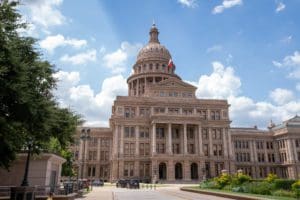
Hinojosa will take the oath of office at noon January 19, 2027, on the south steps of the Texas State Capitol.