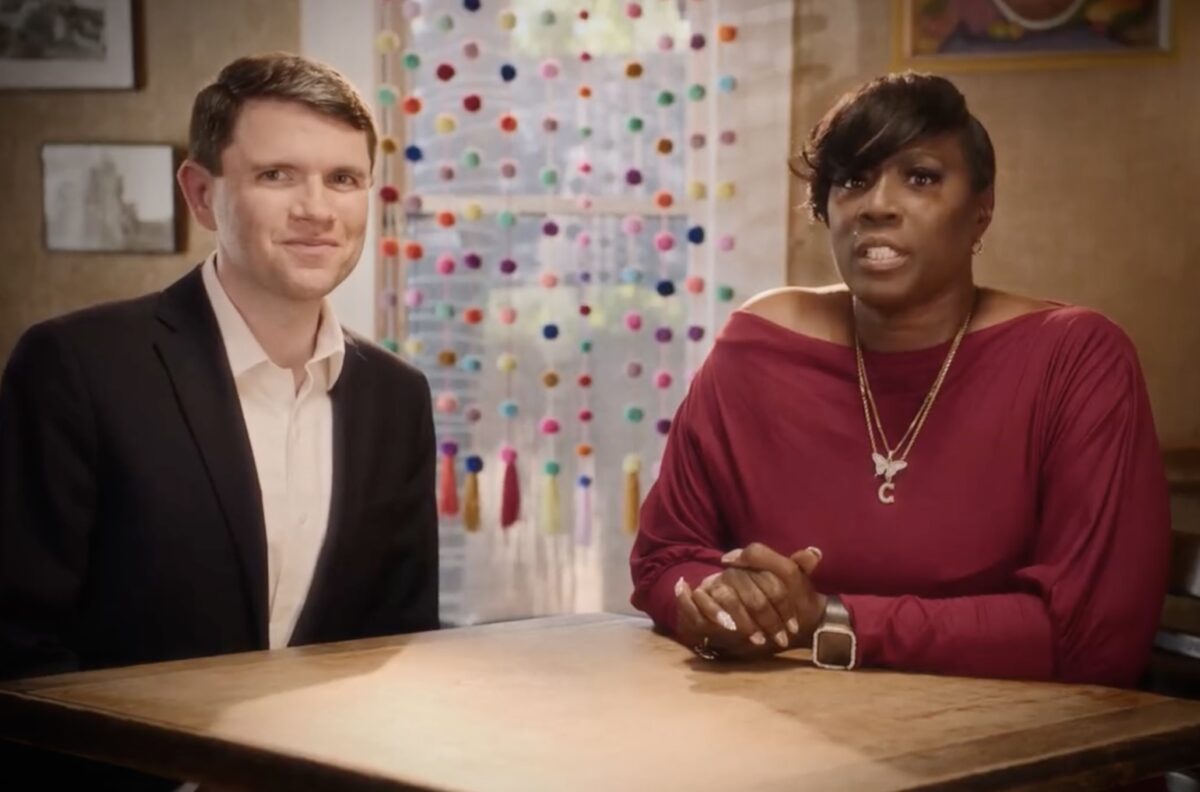
Democrat U.S. Senate candidate James Talarico is blaming Attorney General Ken Paxton for the prosecution of a woman convicted of illegal voting, despite the case having been brought by local prosecutors rather than Paxton’s office.
The new campaign ad features Crystal Mason, a Fort Worth woman who was sentenced to five years in prison after casting a provisional ballot in the 2016 election while still serving federal supervised release for a previous felony conviction.
“Crystal was sentenced to five years in prison because of Ken Paxton’s crackdown on voters of color, putting politics before people,” Talarico says in the 30-second advertisement.
But Mason’s prosecution was brought in 2017 by then-Tarrant County District Attorney Sharen Wilson, not Paxton.
A Tarrant County judge sentenced Mason in 2018, and local prosecutors continued pursuing the case through the appeals process. Paxton’s office was not a party to the case before the Texas Court of Criminal Appeals.
The ad also omits another politically inconvenient detail: Mason’s eventual acquittal was aided by a provision in a Republican-backed election integrity law that Talarico opposed.
In 2021, the Texas Legislature passed Senate Bill 1, a sweeping election reform measure that Democrats fiercely opposed.
Talarico joined other House Democrats in leaving Texas to deny Republicans a quorum during the debate over the legislation. He subsequently voted against the bill and publicly denounced it as a “voter suppression bill.”
However, the legislation included language clarifying that a person could not be convicted of illegal voting solely for signing a provisional ballot affidavit without additional evidence that the person knowingly committed the offense.
In 2022, the Court of Criminal Appeals cited that provision in ordering a lower appellate court to reconsider Mason’s conviction.
The Second Court of Appeals ultimately acquitted Mason in March 2024, finding that prosecutors had failed to prove she knew she was ineligible to vote. The state’s highest criminal court allowed that decision to stand last month, ending the nearly decade-long legal battle.
Four judges dissented from the decision to dismiss the state’s appeal.
Mason’s original legal troubles stemmed from a federal tax fraud conspiracy. She pleaded guilty in 2011 to participating in a scheme involving fraudulent tax returns that included fictitious businesses and dependents.
She was ordered to pay approximately $4.2 million in restitution and served nearly three years in federal prison.
Her criminal history also includes a 1998 felony forgery conviction and an earlier arson case that resulted in deferred adjudication.
When Mason attempted to vote in November 2016, she was still serving federal supervised release and was therefore ineligible to vote under Texas law.
She signed a provisional ballot affidavit that required individuals with felony convictions to affirm they had completed their sentences, including any period of parole, probation, or supervision.
Mason maintained that she did not know she was ineligible. Her provisional ballot was never counted.
Although the appellate courts ultimately ruled that prosecutors had failed to establish the knowledge required for a criminal conviction, the case became a national rallying point for voting rights activists.
Now, Talarico is featuring Mason in his closing campaign message against Paxton.
“In 2016, I cast a provisional ballot. I didn’t do anything wrong, and the ballot never counted,” Mason says at the beginning of the advertisement.
“For almost 10 years, I lived in fear of losing my freedom,” she adds.
The ad concludes with Mason endorsing Talarico and encouraging Texans to vote early.
Texas Scorecard asked the Talarico campaign why the advertisement attributes Mason’s prosecution to Paxton and how the candidate reconciles his opposition to Senate Bill 1 with the law’s role in her eventual acquittal.
The campaign had not responded by publication.