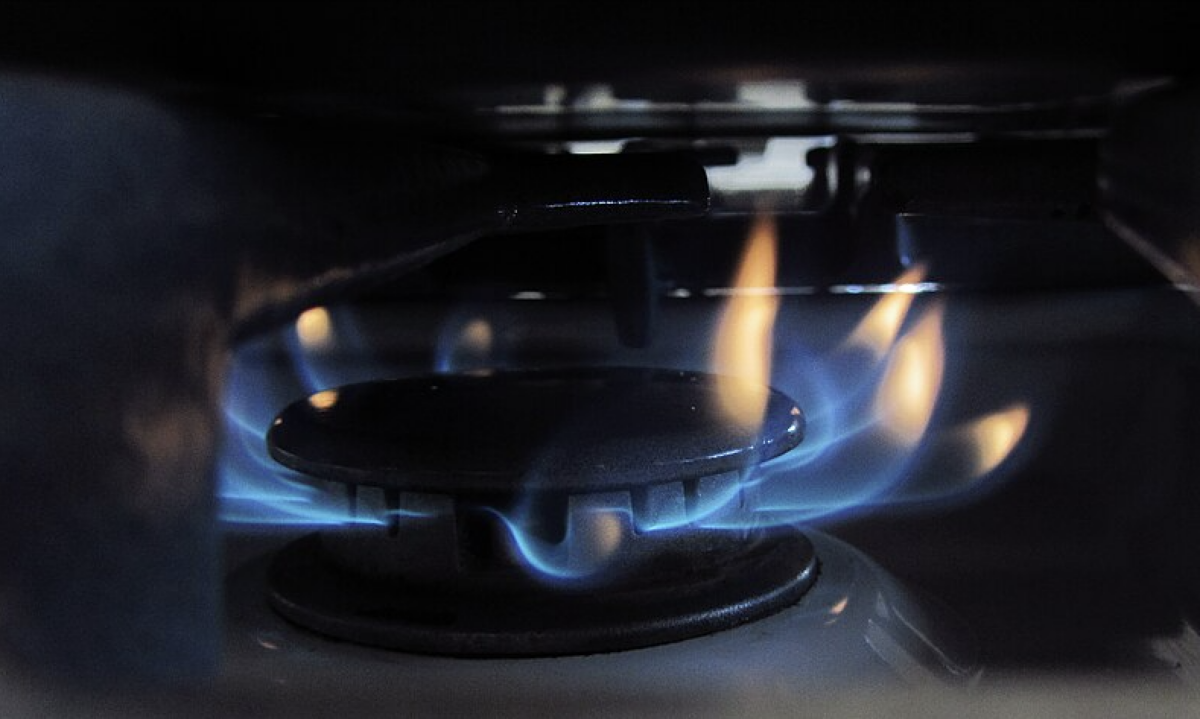
A federal appellate court has rejected the Biden Department of Energy’s attempt to bypass public advance notice in instituting regulations on gas stoves in 2024.
Several states, including Texas, had filed comments objecting to the regulations, which the department rejected. The states sought judicial review and won—with a court concluding that the rules should have been dismissed. The matter is being remanded to the department for further proceedings consistent with the court’s opinion.
A Direct Final Rule
In February 2024, the Department of Energy published a direct final rule (DFR), creating new regulations on home appliances, including gas stoves. The rule prohibited manufacturers from selling new conventional gas cooking tops that consume more than 1,770 thousand British thermal units (kBtu) per year.
By issuing a DFR, the administration avoided giving the public advance notice or the opportunity to comment—while instituting a policy that had been heavily criticized.
The department traditionally utilizes notice-and-comment rulemaking, as do the vast majority of other agencies. This includes publishing a notice of proposed rulemaking, soliciting comments from interested parties, responding to those comments in the proper manner, then releasing a final rule.
As a secondary option, the department may promulgate a “direct final rule,” which may be done without advance notice. In this case, the department must then obtain a statement recommending an energy conservation standard that is “submitted jointly by interested persons … fairly representative of relevant points of view.” If the department finds the proposal to be in accordance with the seven energy-efficiency factors, it may issue a final rule.
Importantly, because DFRs dispense with foundational guardrails on rulemaking, the Energy Policy and Conservation Act (EPCA) places limits on the process.
The department must solicit public comment for a period of at least 110 days with respect to the DFR. If the DFR receives one adverse comment, it must be withdrawn within 120 days of its issuance. That is, if the department determines the comment provides a reasonable basis for withdrawal under the seven energy-efficiency factors. After withdrawal, the department must publish its reasoning and may proceed with ordinary notice-and-comment rulemaking.
Background
In this case, the department initially tried to utilize notice-and-comment rulemaking, but received significant backlash.
It had tried to implement new efficiency standards for consumer cooking appliances and proposed efficiency requirements that would have effectively banned gas stoves and ranges—but was forced to abandon both due to “a veritable avalanche of adverse comments from a variety of industry groups.”
The department then decided to bypass the notice-and-comment process, instead opting for a DFR that set many of the same energy-efficiency requirements it had already attempted.
On the final day of the 110-day comment period, in June 2024, several states filed comments objecting to the DFR. In August, the department filed a confirmation notice, declaring that it found none of the states’ comments provided a reasonable basis for withdrawing the rule.
In October 2024, the states—Texas, Mississippi, Montana, Louisiana, Nebraska, Tennessee, and Utah—filed a petition for review with the U.S. Fifth Circuit Court of Appeals in New Orleans.
The Department of Energy filed a motion to dismiss, arguing that its decision should not be subject to judicial review. It argued that the states should have filed their adverse comments and petition for review at the same time.
The Ruling
On August 11, 2026, the Fifth Circuit released its decision—granting the states’ petition for review and remanding the matter back to the Department of Energy.
The court highlighted two of the states’ points that it found reasonable enough to have required the department to withdraw its DFR under the EPCA.
First, the states had argued that the joint “statement” preceding the DFR failed to include “interested persons that are fairly representative of relevant points of view” as required by law. Second, they highlighted allegations that the DFR’s ban on linear power supplies failed to account for decreased product lifespan and was not economically justified.
“Thus, goes the argument, the Department erred in refusing to withdraw the DFR after these comments provided ‘a reasonable basis’ for doubting the DFR’s legality. We agree and grant the States’ petition,” wrote Judge Andrew Oldham.
The opinion went further, highlighting how the Biden Department of Energy was wrong to utilize a DFR to pass an already unpopular policy that had failed in the notice-and-comment process.
“The previous administration’s gas-stove measures were among its most controversial energy proposals,” wrote Oldham. “The idea that all that controversy could be elided using the DFR—a mechanism designed for consensus rulemaking—is untenable.”
The court also dismissed the department’s motion to dismiss, finding that the states’ petition for review would have been unripe had it been filed before a final decision.
The matter is therefore “REMANDED to the department for further proceedings consistent with this opinion,” reads the opinion.
If you or anyone you know has information regarding court cases, please contact our tip line: scorecardtips@protonmail.com.