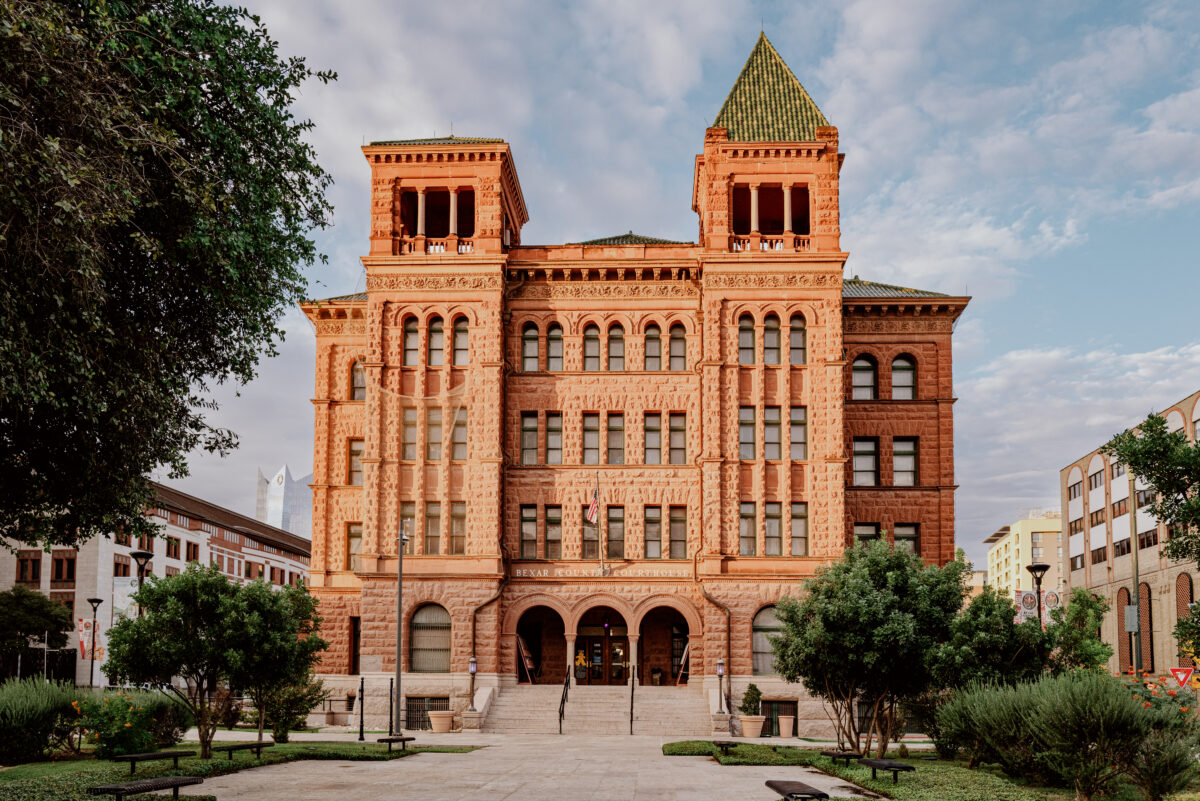
A federal jury has found Bexar County liable for its surveillance-driven traffic stop scheme.
Alek Schott filed a federal civil-rights lawsuit against Bexar County, Sheriff Javier Salazar, and two deputies in 2023. He alleged that the deputies stopped him without a valid traffic basis, unlawfully prolonged the stop, used a K-9 sniff to justify a search, and searched his truck without probable cause.
He also alleged that the events reflected a county policy or practice, not merely individual officer conduct.
According to the Institute for Justice (IJ), which represented Schott, the scheme had five steps:
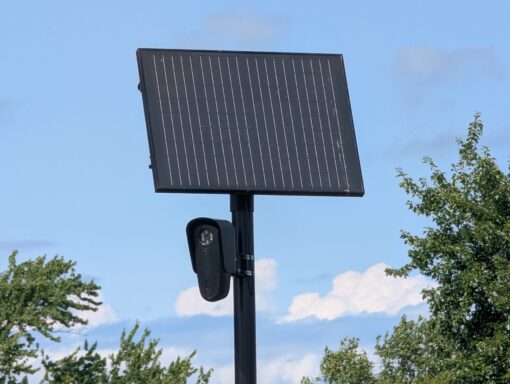
- Automated License Plate Readers logged when and where cars went.
- Analysts and anonymous tipsters flagged ordinary travel as suspicious.
- Bexar County police created traffic violations to pull over the flagged vehicle.
- Officers questioned drivers and asked to search their car.
- If the driver refused the search, a false K-9 alert provided probable cause for a search.
Records show that the operation occurred for four years.
Earlier this week, the jury found that the scheme violated Schott’s Fourth Amendment rights.
According to the filing, Bexar County Deputy Joel Babb stopped Schott on his way home from a business trip because a network of cameras allegedly flagged his truck as suspicious.
“Because Schott had traveled a great distance and dropped a female colleague off at the hotel, the trip had been flagged as arousing suspicion of human trafficking,” reported the San Antonio Current.
Deputy Babb reportedly waited for the truck and stopped Schott on the premise that he had crossed the fog line.
Schott did not cross the fog lines according to dash camera footage shown in court.
During the 76-minute traffic stop, Schott was allegedly interrogated and had his car searched after a drug dog alerted.
According to the filing, Babb assured Schott that “nine times out of 10, this is what happens” upon not finding anything in his vehicle. Schott’s lawyers claimed the statement showed the sheriff’s department often does not find anything suspicious in its searches.
Bexar County allegedly received the tip about Schott’s truck from a WhatsApp group chat named “Northwest Highway Group.”
Deputy Babb said he believed the tip came from a man working at a federal fusion center in Laredo.
AP News obtained over 70 pages of the group chat from June and July: “Trading tips about vehicles’ travel patterns — based on suspicions about little more than someone taking a quick trip to the border region and back. The chats show how thoroughly Texas highways are surveilled by this federal-local partnership and how much detailed information is informally shared.”
“This is what mass surveillance looks like when it reaches the shoulder of the highway,” said IJ Attorney Senior Josh Windham. “An AI-powered camera flagged Alek’s plate. An anonymous law enforcement agent decided his completely ordinary trip looked suspicious. And a deputy went out and found a violation that never happened.”
“This unit ran thousands of drivers through that routine—humiliating, invasive interrogations and searches of people who had done nothing wrong,” Windham continued. “It all rests on the idea that if you watch enough innocent people closely enough, criminals will fall out. That’s wrong, it’s unconstitutional, and now, a jury has said so.”
The jury awarded Schott $76 for each minute he was detained. According to IJ, the case was about upholding the Constitution, not about money.
“This is a huge win, and not just for Alek,” said IJ Attorney Christie Hebert. “Motorists across this country are being watched by local, state and federal agents, flagged by AI-powered cameras, and then pulled over for a bogus offense that exists only as a cover story for an interrogation and a search. The Fourth Amendment does not permit this.”
AI-powered ALPR cameras have come under intense scrutiny in Texas.
In August, Gov. Greg Abbott paused state funding of Flock cameras, and in September he directed the Texas Department of Transportation to stop issuing new permits for Flock cameras and other ALPRs on state-owned roads.
Multiple Texas cities have rejected, canceled, or deactivated their Flock cameras, including Bastrop, El Paso, Elgin, and Wylie.
Concerned Texans have been able to express their opinions and concerns about Flock via city council meetings, including in Amarillo.
However, cities such as College Station renewed their Flock Camera contracts amid public disapproval.
Texas lawmakers are expected to evaluate possible guardrails for the technology during the 2027 legislative session.