Thirteen U.S. representatives are asking U.S. Attorney General Todd Blanche to review an administrative law judge’s decision in a case related to advertising specifically to H-1B visa holders.
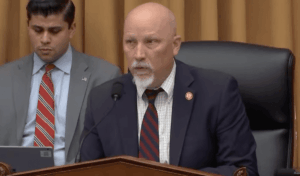
U.S. Reps. Chip Roy (R–Austin), Keith Self (R–McKinney), Randy Weber (R–Friendswood), Brian Babin (R–Woodville), and other representatives throughout the country wrote that the Office of the Chief Administrative Hearing Officer’s (OCAHO) decision “may significantly limit protections against discriminatory advertising and recruitment.”
The Friday letter addressed the recent dismissal of a 2024 case involving the U.S. Tech Workers (USTW) and Boston Consulting Group (BCG). In its August 12 dismissal order, the judge found that U.S. Tech Workers had not alleged sufficient facts to support its discrimination claims.
USTW describes its mission as “[fostering] a movement that unites tech workers, pressures the federal government for visa program reform and ensures companies hire U.S. tech workers first before recruiting abroad,” while BCG helps to integrate artificial intelligence into various industries and companies.
“The case involved allegations that BCG participated in ‘P-33 Chicago H-1B Connect,’ an initiative designed specifically to recruit H-1B visa holders in the Chicago area,” the representatives wrote. “[USTW] alleged that the initiative discouraged U.S. citizens from applying and therefore violated the citizenship-status protections of Section 274B of the Immigration and Nationality Act (INA).”
The INA section referred to by the letter addresses unfair immigration-related employment practices and notes that a person or entity cannot discriminate in hiring on the basis of citizenship status.
“The decision suggests that Section 274B does not provide a cause of action for discriminatory advertising and that the advertising designed to prioritize nonimmigrants on the basis of national origin or citizenship does not discriminate against American workers,” the signers wrote.
The letter goes on to explain government actions that would seem to contradict the OCAHO decision.
The Immigration Reform and Control Act of 1986 states that it is “not an unfair immigration-related employment practice to hire a U.S. citizen or national over an equally qualified alien,” and reaffirms anti-discrimination on the basis of citizenship status. The signers stated that the 1986 act had the intention of protecting “U.S. workers from discrimination based on citizenship status and national origin.”
“If employers can expressly target foreign workers while discouraging Americans from applying, those protections are substantially weakened,” the signers wrote.
In addition to the legislative act, the letter notes the recent settlement secured by the Justice Department’s Civil Rights Division with OpenAI addressing allegations of “discriminating against U.S. workers and instead [preferring] workers with temporary employment visas.”
The hiring allegedly took place during a program that “allows employers to sponsor workers for permanent resident status if the companies perform good-faith recruitment, but cannot find qualified U.S. workers.”
“We believe those efforts should be applied consistently,” the signers wrote. “Companies should not be permitted to avoid federal anti-discrimination protections simply by structuring recruitment through third-party platforms or advertising positions in a manner that excludes or discourages American workers.”
USTW praised the letter in a post to X on Monday, noting that “the Attorney General has until the middle of this week to decide whether he will review the case. We certainly hope he will.”
Roy also expressed his pride in signing the letter, stating that “it’s time to end widespread H-1B abuse once and for all.”
BCG and Blanche’s office have not yet responded to requests for comment on the letter.