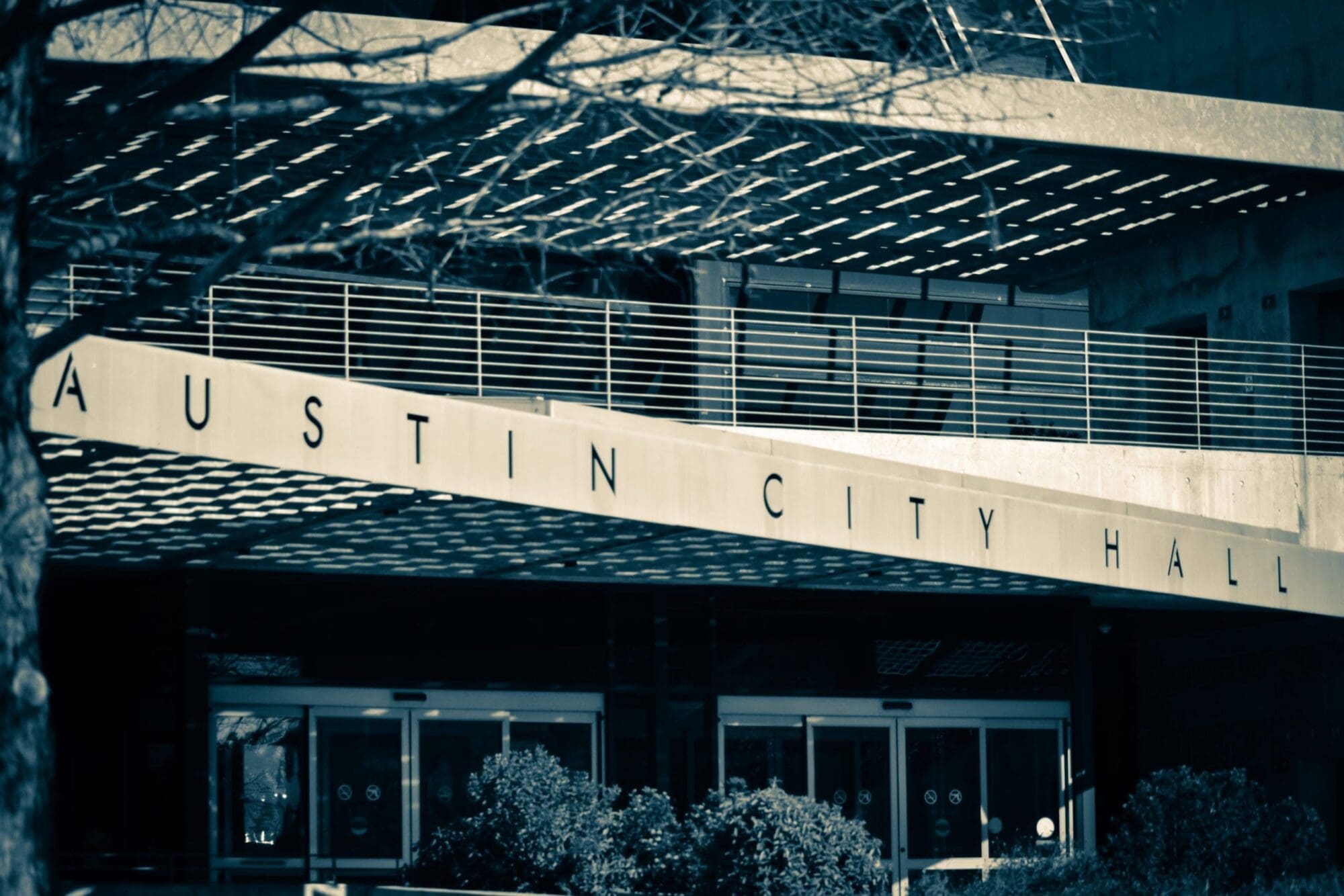
Austin City Council members honored the local chapter of a group that state officials have designated a “foreign terrorist” organization while rejecting a key taxpayer protection.
On Thursday, council members passed a resolution designating January as an annual “Muslim Heritage Month” and issued a proclamation honoring the Council on American-Islamic Relations’ Austin chapter.
The resolution states the council’s intent to “to celebrate Muslim communities and promote greater public understanding of their contributions.” It further promotes “the value of recognizing Muslim Heritage Month and in uplifting the many communities that make Austin a welcoming place for all.”
The resolution was primarily sponsored by Councilmember Zohraib Quadri (District 9 – Central), and was co-sponsored by Mayor Kirk Watson, Mayor pro tem Vanessa Fuentes (District 2 – Southeast), and Councilmembers Krista Laine (District 6 – Far Northwest) and Mike Siegel (District 7 – North Central).
Several members of the local Islamic community testified in favor of the resolution before it passed as part of the consent agenda.
Prior to the meeting, several council members issued a proclamation honoring the local chapter of the Council on Islamic-American Relations (CAIR).
Gov. Greg Abbott declared CAIR and the Muslim Brotherhood as “Foreign Terrorist and Transnational Criminal Organizations under the Texas Penal and Texas Property Codes” in November.
A press conference to explain this proclamation was hosted by Laine, who condemned “recent rhetoric and actions from higher levels of government.”
“We, here in Austin, remain steadfast in our commitment to be an inclusive, welcoming, and safe city for all,” Laine continued.
As part of this press conference, the council members were joined by Shaimaa Zayan, a local CAIR representative.
Zayan praised the council’s commitment to “justice, inclusion, and mutual respect.”
State officials were quick to condemn the council’s actions.
“The City of Austin just recklessly thumbed its nose at Texas law and the clear threat CAIR presents,” State Rep. Cole Hefner (R–Mount Pleasant) stated on social media. Hefner called the council’s activities “blatant defiance of our state’s efforts to protect Texans from extremist influence.”
“[O]rganizations tied to terrorism and radical ideologies have no place in Texas,” Hefner continued.
During the same meeting, council members approved a new office spending policy after removing a key taxpayer protection.
At issue was a proposed reform that would have capped at $50,000 the amount of unused funds council offices could roll over to future budget years. The proposed policy had passed the council’s Audit and Finance committee and had the support of Mayor Watson.
However, on Thursday the full council substituted an alternative proposal that created an option for the council to vote to send unused funds to other departments.
The changes are the result of a public outcry following 2025 revelations that council members had used city credit cards to purchase a variety of personal items, including expensive dinners and concert tickets.
This development follows the landslide defeat of Proposition Q last fall. Had it passed, Proposition Q would have represented the largest tax increase in city history.
The office spending scandal is believed to have contributed to Prop Q’s defeat.
Prop Q’s failure prompted a coalition of citizen groups to launch a petition drive to amend the city charter, requiring an independent audit of municipal finances before any future tax increases. If successful, this petition drive would place the proposed charter amendment on the May 2026 ballot.
Activist group Save Austin Now stated in a January 25 social media post that the coalition had thus far collected over 15,000 signatures.
Organizers need to collect 20,000 valid signatures before a February 13 deadline to place an item on the ballot.
Legislation that would have abolished the Austin City Council received a committee hearing from state lawmakers in 2025 and is expected to return in 2027.