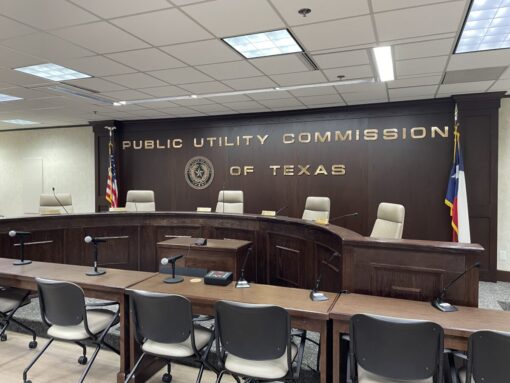
An Oncor Electric analysis projects that residential ratepayers could save approximately $1.2 billion over 10 years under the Public Utility Commission’s new transmission reforms. However, American Energy Institute CEO Jason Isaac cautions that the projected savings depend on assumptions about future growth.
The analysis examines the residential impact of ERCOT’s 2024 Regional Transmission Plan, associated electricity demand growth, and proposed Public Utility Commission of Texas ratemaking reforms under Project No. 58000. These reforms would require large-load consumers to pay transmission costs when the capacity is available rather than only when it is used, and shifting transmission cost calculations to reflect usage during the entire year rather than at peak summer periods.
Isaac supports these changes but argues that additional safeguards are needed.
“The PUC is right to move large loads onto take-or-pay contracts and to spread transmission costs across all twelve months, but those contracts need real collateral behind them,” Isaac told Texas Scorecard. “The surest way to protect families is to let data centers and other large loads bring their own power and pay their own way.”
Oncor modeled both a high- and moderate-growth estimate. Under the former scenario, 60 gigawatts of new large load would yield savings of about $35 per customer per year in residential transmission costs. The latter scenario, which assumes 35 gigawatts of new large load, yields savings of about $15.50 per customer per year.
“Focusing only on the cost of new transmission does not account for the additional customers who will use and pay for the new infrastructure,” Oncor Regulatory Policy Vice President Brian Lloyd stated in the announcement. “By accounting for the benefits of growth along with the PUCT’s proposed ratemaking reforms, this analysis shows how Texas can put downward pressure on residential rates while simultaneously upgrading our grid.”
Oncor said the regional plan identified transmission needed to serve a system reaching approximately 150 gigawatts of peak demand. Under the proposed reforms, the utility expects new large-load customers to cover the entirety of the modeled plan’s costs, holding other factors constant.
The plan includes the Permian Basin Reliability Plan, the 765-kV Strategic Transmission Expansion Plan, and other transmission projects and system upgrades.
Isaac questioned whether the anticipated large-load growth would materialize after the infrastructure is built.
“A utility that earns a regulated return on every dollar of transmission it builds has every incentive to conclude that more building is good for families,” said Isaac. “The analysis assumes 60 gigawatts of new large load arrives and pays its share, and it leaves out the scenario that matters most to ratepayers: projects that are delayed, downsized, or cancelled after the wires are built. That risk lands on residential customers.”
Oncor also modeled a lower-growth scenario, but Isaac’s criticism raises a separate question: how residential customers would be affected if anticipated projects were delayed or canceled after transmission investments were made.
The utility cautions that its analysis is “not a rate forecast.” It isolates the effects of the regional transmission plan, associated growth, and proposed ratemaking reforms while holding other factors unchanged.
“[The analysis] does not account for other transmission investment underway or in planning, additional future system needs or other changes that could affect customer bills nor does it account for the benefit of upgrading older infrastructure that would be needed anyway,” Oncor stated.
“Oncor’s own analysis says it is ‘not a rate forecast,’ and Texans should read it that way,” Isaac wrote.
The burden of transmission costs on ratepayers has been of particular concern to some Texans in recent months.
The Texas Public Policy Foundation published a study in May that called for a pause on the building of three 765-kV transmission lines after it was estimated that the projects would have a lifetime cost of $100 billion.
“Under current cost allocation rules, the average residential ratepayer would pay over $150 per year for these projects alone, which represents a 7-8% increase to the average bill,” TPPF’s Brent Bennett stated before the state senate in July.
Bennett acknowledged efforts to change how transmission costs are allocated but argued that limiting construction should remain a priority.
“While TPPF applauds the Legislature’s requirements to reassess transmission cost allocation and the PUC’s efforts to minimize the costs imparted to residential ratepayers, spreading transmission costs around does not make them go away. The first and best approach is to minimize how much transmission is built in the first place,” Bennett added.
The analysis comes as TPPF recently reported that Texans could face “multiple days of outages and billions of dollars in increased cost” during the winter months unless ERCOT reforms its electrical pricing mechanisms.