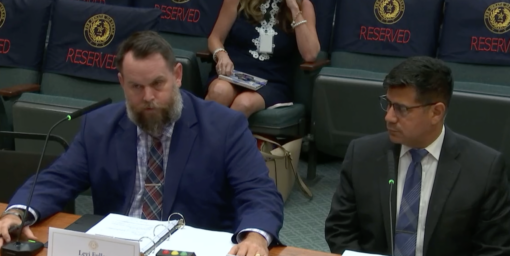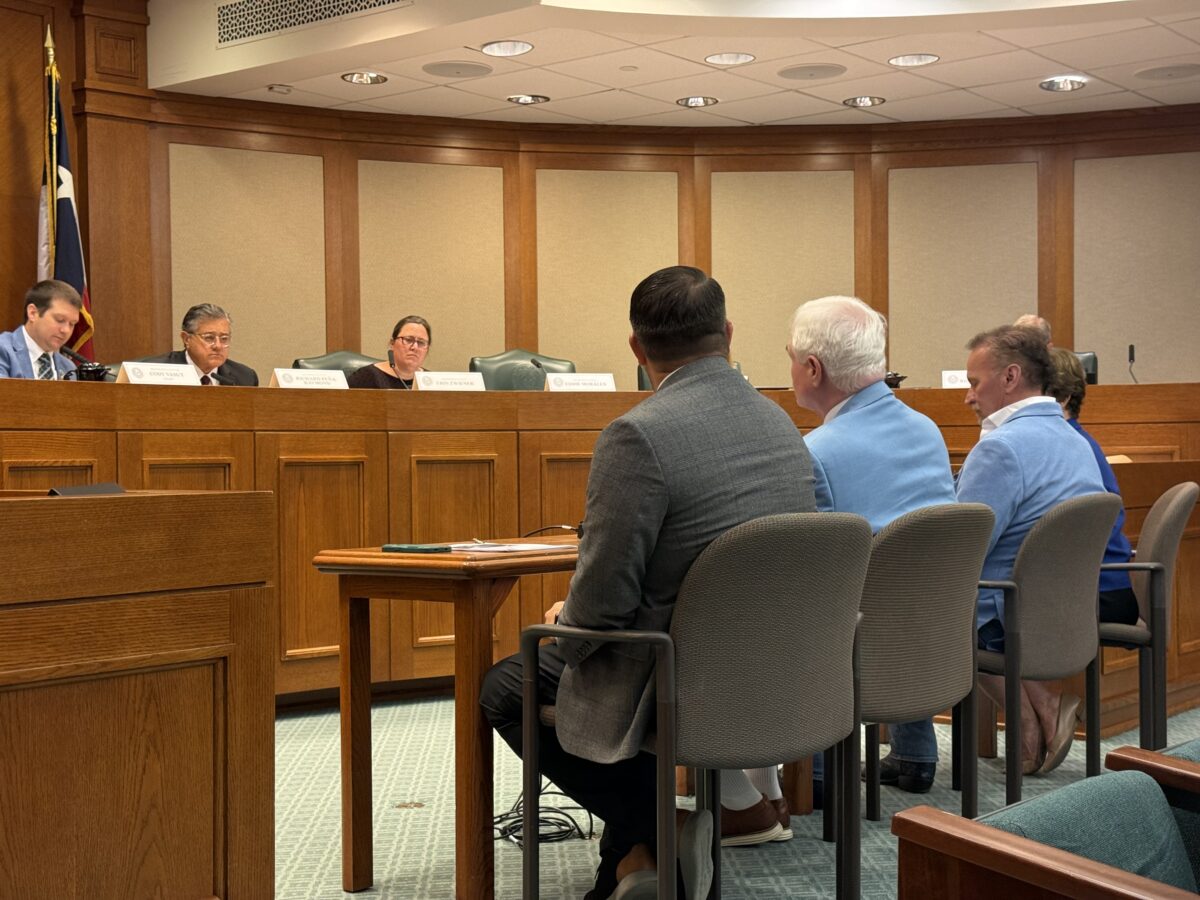
A Texas House committee scrutinized Barbers Hill ISD’s controversial education foundation Wednesday.
Lawmakers questioned the nearly $100 million that has been directed to the private nonprofit, which has reportedly grown to approximately $250 million.
The House Select Committee on Governmental Oversight examined education foundations as part of an interim charge focused on their financial relationships with public school districts, transparency requirements, conflicts of interest, and taxpayer protections.
Much of the hearing centered on the Barbers Hill ISD Education Foundation.
Mandy Drogin, a senior fellow with the Texas Public Policy Foundation, told lawmakers her organization reviewed 13 education foundations and found Barbers Hill stood apart.
“But what we found in Barbers Hill ISD is a completely different story,” said Drogin.
According to TPPF’s review, approximately $97.1 million was directed to the foundation between January 2012 and June 2025, while roughly $6.5 million flowed back from the foundation to the district between 2010 and 2025.
Drogin also raised concerns about overlapping leadership between the district and foundation. The foundation board includes Superintendent Greg Poole, three current Barbers Hill ISD trustees, a former trustee, and Nathan Watkins, a vice president of Americus Holdings.
In 2023, the foundation entered into the Brickyard Project, a real estate venture with Americus Holdings to develop multifamily housing in Mont Belvieu. The foundation and Americus each hold a 50 percent interest, with the foundation’s stake valued at more than $5.3 million.
“Was the foundation being used as an education foundation, or was the school district effectively using the foundation as a separate financial vehicle to hold, invest, and deploy money received from taxpayers?” she asked.
Drogin said the distinction matters because public entities are subject to extensive safeguards governing how taxpayer money can be invested.
“Public officials should not be able to move public money into a separate private entity, then effectively change the rules governing that money simply because it crossed the street into a nonprofit bank account,” she said.
Drogin urged lawmakers to consider reforms including greater disclosure of money transferred between districts and foundations, conflict-of-interest requirements, disclosure of related-party commercial ventures, and expanded public information requirements for foundations receiving public resources.
Poole pushed back forcefully against that characterization.
“We’re not a bad actor,” he said. “We have not done anything illegal, and I am not aware of any conflict.”
Poole argued that scrutiny of the foundation was the result of the political fight between Watkins and State Rep. Terri Leo Wilson.
Watkins challenged Leo Wilson in the Republican primary. The foundation later sued Leo Wilson after she publicly raised concerns about its activities.
Poole said building the foundation’s massive investment portfolio was intentional, describing it as an “alternative funding structure” designed in part to help Barbers Hill offset money lost through the state’s Robin Hood recapture system.
Poole said the foundation has returned more than 10 percent annually over 17 years after fees, generating roughly $100 million in proceeds. He compared the strategy to building an Ivy League-style endowment.
“We hope that we just spend the earnings,” he said.
Questions also emerged over the foundation’s investment manager, Commerce Street Holdings.
In one particularly heated exchange, State Reps. Ellen Troxclair (R–Lakeway) and Shelby Slawson (R–Stephenville) repeatedly asked Poole whether his daughter worked for Commerce Street when the firm was hired to manage the foundation’s investments.
“Did she or did she not work for Commerce Street Holdings when you hired them to manage education funds?” asked Slawson.
“It was close. It’s very close, and I don’t remember,” Poole responded. “I can get that information for you, but I don’t remember.”
Slawson noted that Poole had certified before testifying that he would provide truthful testimony to the committee, then asked again whether his daughter was employed by the firm.
“You can ask it three different ways, ma’am,” said Poole. “I don’t remember.”
State Rep. Mitch Little (R–Lewisville) questioned whether the foundation’s assets should remain outside some of the restrictions that apply directly to school districts.
“The only reason you have assets is because we’ve given you a private accommodation with public money,” Little told Poole.
Barbers Hill attorney Sarah Leon disputed that characterization.
Instead, Leon said the payments were authorized under the now-expired Chapter 313 economic development program and existed outside the state’s school finance formula.
Under Barbers Hill’s Chapter 313 agreements, companies receiving property tax limitations made supplemental payments that would ordinarily go to the school district. The agreements, however, included a provision allowing the district’s board of trustees to direct those payments instead to its education foundation.
That provision became a focus for State Rep. Mitch Little (R-Lewisville), who suggested Barbers Hill may have simply taken advantage of a system the Legislature itself created.
“When you say something’s technically legal, we just hear legal,” said Little. “Because when you write the law, you make things legal.”
“If Barbers Hill Education Foundation did something that is legal, and they simply mastered a game that the Legislature created for them, who should we be blaming for that?”
Little suggested lawmakers could eliminate the ability to redirect those payments to a private education foundation, requiring them to remain with the school district instead.
“We can just write that out of the law,” he said.
During public testimony, former Round Rock ISD Trustee Dr. Mary Bone argued that concerns surrounding education foundations extend beyond Barbers Hill.
Bone described some education foundations as “shadow governments” and alleged that foundations can become politically entangled with the districts they support.
“There are ones that are great,” she said, while arguing others engage in “a milder case of what Barbers Hill is doing.”
She urged lawmakers to prohibit districts from providing affiliated foundations with taxpayer resources, staff, or facilities, restrict dual leadership roles, and bar district vendors from donating to them.
Poole, meanwhile, remained unapologetic about Barbers Hill’s approach.
“The only thing we’re really guilty of is eye-popping success,” he told lawmakers.