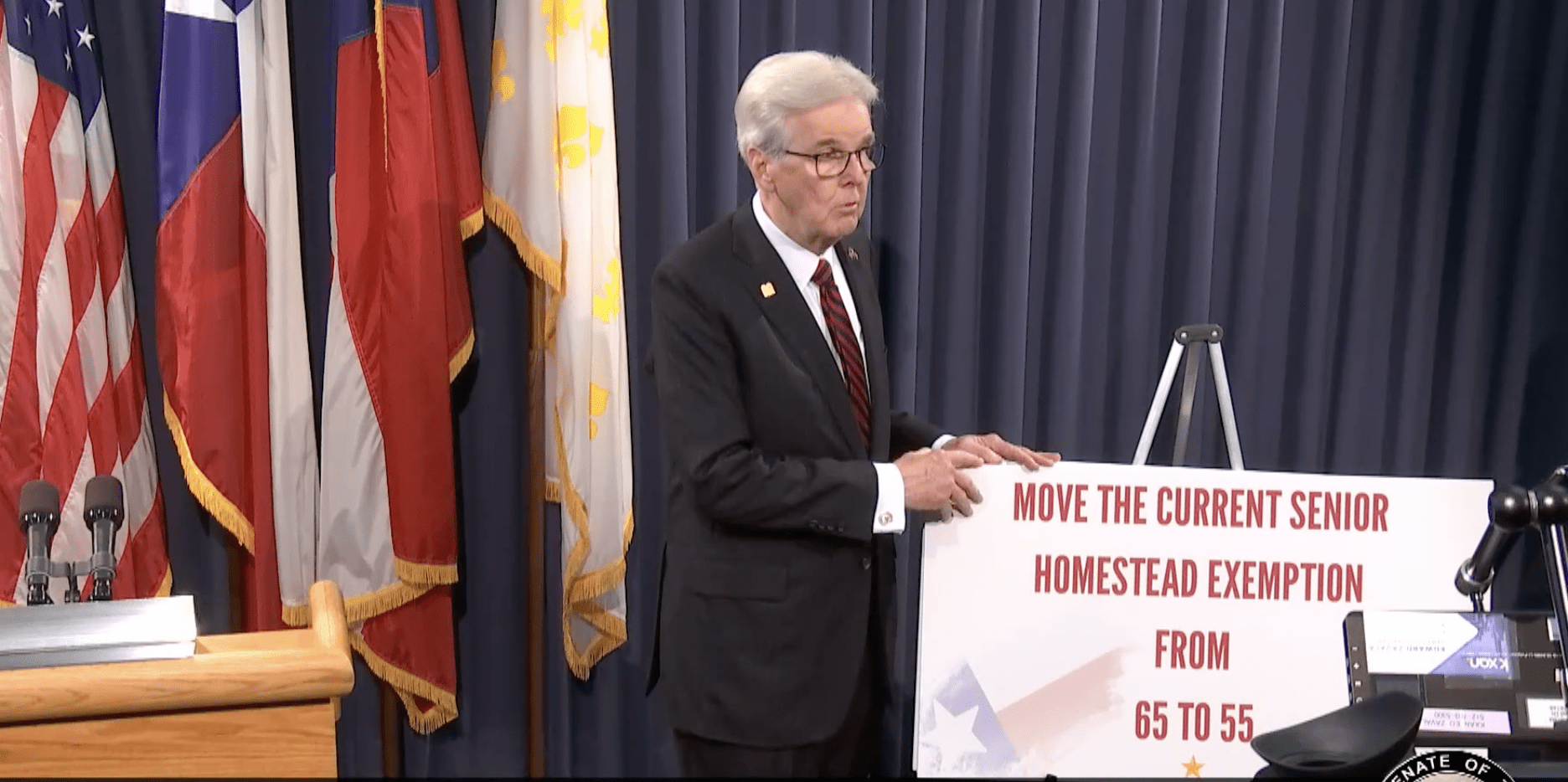
Lt. Gov. Dan Patrick announced a property tax reform plan aimed at increasing the homestead exemption for millions of Texas homeowners.
The plan falls short of many of the elements of the property tax cut proposal introduced by Gov. Greg Abbott just last month.
At a Tuesday press conference, Patrick outlined reforms that build on past efforts to raise homestead exemptions. He also introduced a new initiative known as “Operation Double Nickel.”
The centerpiece of Patrick’s latest plan, “Operation Double Nickel,” would extend senior property tax benefits to Texas homeowners beginning at age 55, a full decade earlier than the current standard. This means homeowners as young as 55 would see their property values and school property taxes frozen, protecting them from unpredictable appraisal spikes and potentially saving an extra $10,000 over the following decade.
With Texas boasting approximately 6.1 million homeowners, this measure could expand relief to an estimated 3.3 million residents.
Patrick further proposes increasing the homestead exemption by an additional $40,000 for all eligible homeowners, with even larger increases planned for seniors and those ages 55 and up. He argued this approach is both cost-effective and popular, noting that voters have consistently approved such measures at the ballot box.
To ensure sustained relief, the plan also seeks to curb local government spending by instituting a 3.5 percent cap on annual city and county budget increases. Patrick stressed the importance of responsible growth, noting that unchecked local spending can erode gains made at the state level and burden taxpayers.
Patrick was careful to address the financial feasibility of these measures. He projected that the entire reform package—including Operation Double Nickel and the proposed exemption increase—could be managed for under $4 billion per biennium, a figure he describes as “very doable” in light of Texas’ strong economy and recent budget surpluses.
While discussing aspirations to eliminate all school property taxes, Patrick cautioned that such a move would require a dramatic—and likely unpalatable—increase in the state’s sales tax. He claimed the offset required could raise sales taxes by 14 to 15 cents.
Patrick’s plan will require legislative approval and continued cooperation among Texas’ executive and legislative branches.
Gov. Greg Abbott, meanwhile, has introduced his own property tax plan aimed at tackling rising appraisals and local tax increases.
The plan would cap local government spending growth at the lesser of 3.5 percent or the rate of population growth and inflation, would require two-thirds voter approval before any local tax increase can take effect, and would allow voters to petition for rollback elections if 15 percent of registered voters sign on.
The plan also seeks to rein in property appraisals by requiring reappraisals only once every five years and lowering the annual appraisal growth cap from 10 percent to 3 percent, expanding that limit to all properties—including rentals and businesses. Abbott’s plan further includes a constitutional amendment to allow Texans to vote on the elimination of school district property taxes for homeowners.
Overall, Abbott’s plan seeks to structurally rein in appraisal growth and local tax collections, helping big bills stop climbing as quickly across the board, with less emphasis on large new exemptions or age‑based breaks.
When asked what he thought of Abbott’s plan, Patrick said he had not “really looked at it in depth,” but expressed a willingness to work with the governor.