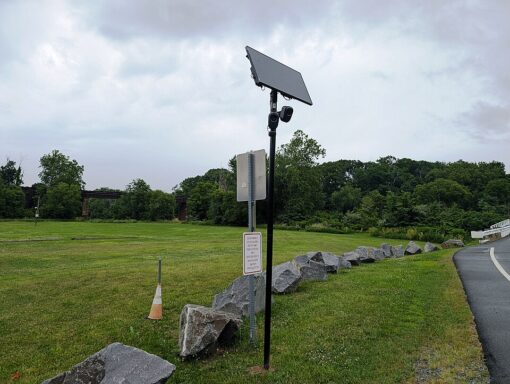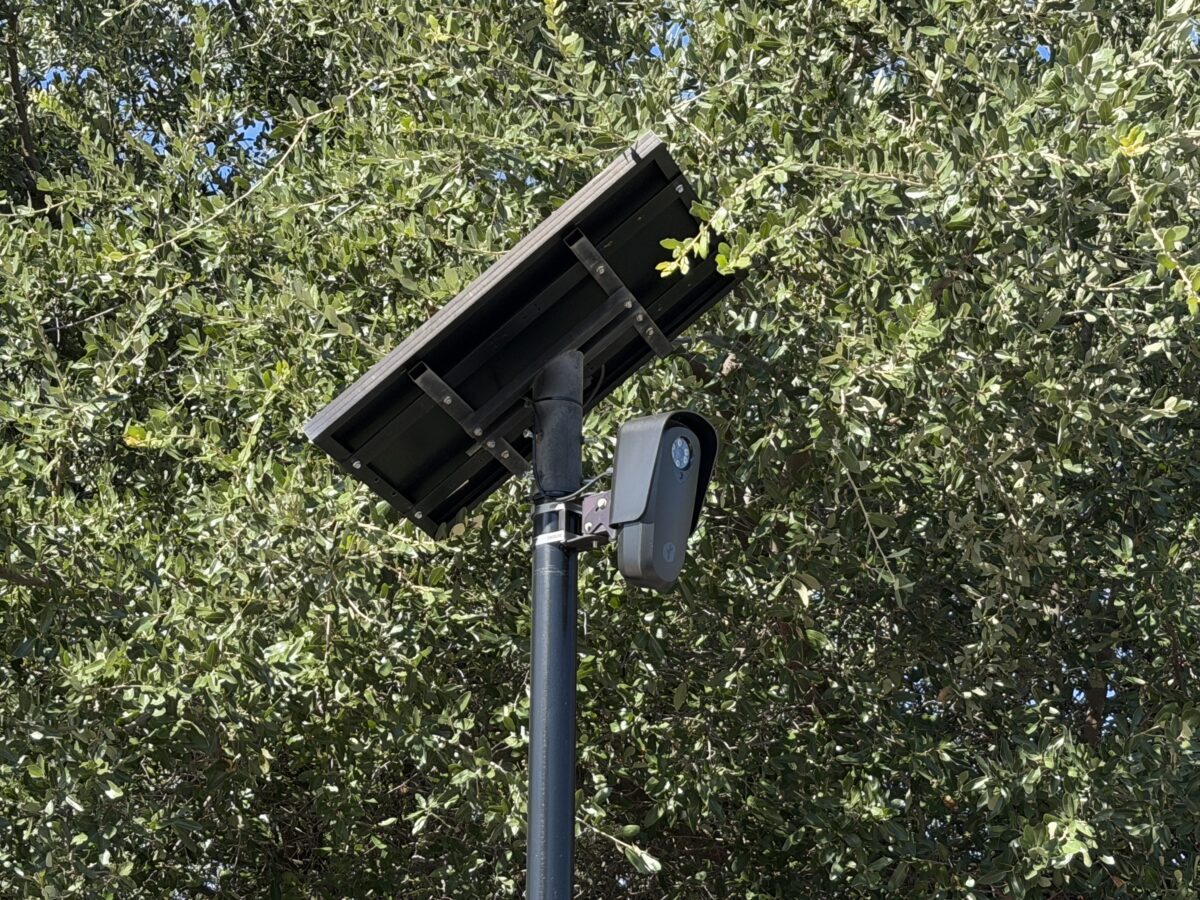
Security camera company Flock Safety has announced changes to its privacy safeguards amid public opposition to use of the devices and concerns about law enforcement abuse.
However, U.S. Rep. Keith Self (R–McKinney) told Texas Scorecard that although these changes are welcome, Flock is obviously “trying to gain acceptance and put lipstick on a pig amid the intense pushback they have received from Americans across the nation who are rightfully concerned about their privacy.”
“The bottom line is Americans do not want to be spied on, and they reject the surveillance state operating in America,” said Self. “The Fourth Amendment is not a suggestion. Federal and state legislation are still needed to ensure the government cannot access this data without a warrant—and that taxpayer dollars are not spent purchasing or installing this invasive spyware. That’s why Congress needs to pass my bill, the PRIVACY Act.”
Self filed the PRIVACY Act last month. It would require federal law enforcement to obtain official warrants before accessing or querying data collected by state and local systems, including automated license plate readers.
Powered by artificial intelligence, Flock cameras have been a hotly debated topic across the U.S., with concerned Texans requesting that state lawmakers create guardrails for the technology during the upcoming legislative session.
Since law enforcement officials do not need a warrant to access the Flock automated license plate reader (ALPR) database, citizens are raising concerns about potential Fourth Amendment violations.
Among the technology updates is a new default setting of 7-day data retention instead of the previous 30 days. This change is based on Flock’s analysis that all searches “without a full plate are done within a week.”
A new “Evidence Mode” will also address the cases when data is needed for longer periods, allowing detectives to “preserve specific ALPR data as evidence for an active investigation in cold storage, consistent with existing laws and policies.”
Customers will automatically receive the evidence mode, at no cost, if the 7-day data retention setting is adopted.
The company is also introducing offense filtering for sharing, allowing cities to decide the types of offenses for which other agencies can access the cameras.
Audit Assistance has been introduced by the company as a way to stop abuse of the technology by law enforcement officers. The new accountability feature “detects abnormal activity and flags it for Administrator review” and has been associated with the arrest of several law enforcement officers.
All law enforcement users will be required to adopt the feature by the end of the year, as well as the use of case codes.
Updates on data ownership, security, and accuracy include easier-to-read explanations of contracts on its website and continual testing and updating of controls.
State Sen. Bob Hall told Texas Scorecard Flock’s acknowledgment of privacy and surveillance concerns is a positive step, but argued that corporate safeguards alone cannot protect Texans’ constitutional rights. Hall cautioned that a surveillance network capable of tracking law-abiding citizens could expand beyond its original purpose and said lawmakers must ensure the technology is narrowly limited, independently overseen, and not used to monitor people not suspected of a crime.
“The Constitution is not an obstacle to public safety,” Hall said. “In truth, it is the boundary where public safety must operate.”
County Republican parties in Texas are currently passing resolutions calling for guardrails on the technology. The Waller County GOP was the first to pass the resolution, with the Rusk County GOP soon following.
Waller County GOP precinct chair Josh Posey told Texas Scorecard “Flock Safety’s latest ‘privacy upgrades’ aren’t a breakthrough; they are an indictment of their own platform. By boasting about finally shortening data retention, requiring case numbers for searches, and monitoring user abuse, Flock is quietly admitting that for nine years, warrantless mass tracking, zero audit trails, and a blind honor system were standard operating procedure.”
“They built a lucrative surveillance apparatus first and only installed basic guardrails when public scandals threatened their bottom line,” added Posey. “As established in Carpenter and reinforced in Chatrie, the Fourth Amendment explicitly forbids warrantless, aggregate location tracking through third party tech platforms, making ALPR dragnets inherently unconstitutional.”
Posey said the issue is not a partisan debate, but “is increasingly viewed on both sides of the aisle as a fundamental violation of Fourth Amendment principles. When the Texas Legislature convenes, lawmakers must step up to establish common sense guardrails that rein in this technology, or ban it outright, and restore true constitutional protections to the Lone Star State.”
The Texas House Committee on Delivery of Government Efficiency is set to meet August 19 to study data privacy and security.