Attorney General Ken Paxton is defending Texas’ decision to label the Muslim Brotherhood and the Council on American‑Islamic Relations as foreign terrorist organizations, asking a federal court to reject a lawsuit brought by two Texas CAIR chapters.
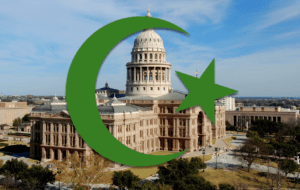
On November 18, Gov. Greg Abbott issued a proclamation declaring the Muslim Brotherhood and CAIR to be “foreign terrorist organizations” and “transnational criminal organizations” under Texas law.
In that order, Abbott relied on years of public reporting and federal investigative records tying both entities and their affiliates to Hamas and other extremist movements, and directed state agencies to treat them as security threats in contracting, funding, and cooperation decisions.
The Dallas–Fort Worth and Austin CAIR chapters quickly sued the State of Texas, arguing that the proclamation unlawfully “chilled” their free‑speech rights by branding them terrorists and scaring away donors, partners, and would‑be speakers. Their complaint does not allege arrests, searches, or shutdown orders, but instead focuses on reputational harm and the risk that state officials or private actors will treat them differently because of the governor’s designation.
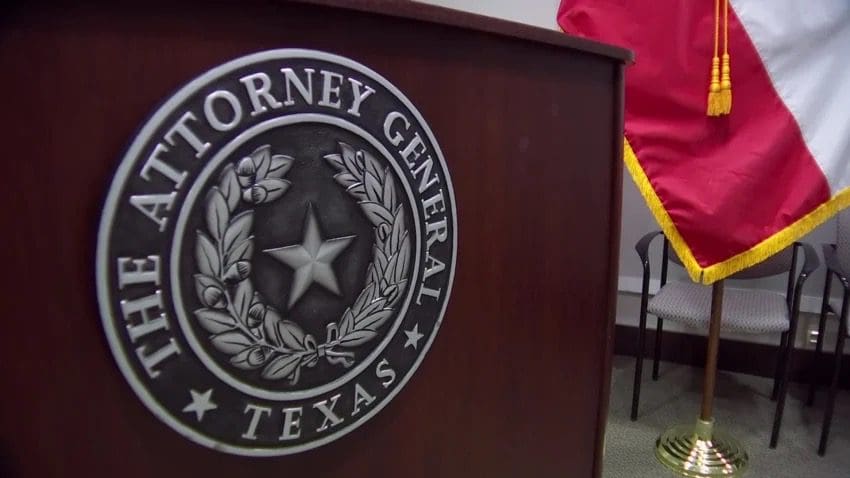
Paxton’s office has now filed a formal answer to CAIR’s complaint, defending Abbott’s authority to issue terrorism designations and attacking the legal sufficiency of CAIR’s claims.
The state’s filing contends that the local CAIR councils are basing their lawsuit on “speculative” injuries and simple disagreement with Texas’ national security judgments, not on concrete government actions that actually violate the Constitution.
In its response, the attorney general’s office argues that a gubernatorial proclamation, by itself, does not stop CAIR chapters from speaking, organizing, or criticizing Texas officials—and that the First Amendment does not give advocacy groups a right to be free from official disapproval or labels.
The filing also stresses that Texas has an independent sovereign interest in identifying, monitoring, and distancing itself from organizations it believes have ties to foreign extremist movements, especially where state contracts, grants, or partnerships are at stake.
Paxton paired the legal filing with a sharply worded public statement, warning that “radical Islamist terrorist groups are anti‑American, and the infiltration of these dangerous individuals into Texas must be stopped.”
He vowed that his office “will continue to defend the Governor’s lawful, accurate declaration that CAIR is an FTO, as well as Texas’s right to protect itself from organizations with documented ties to foreign extremist movements.”
In defending Abbott’s proclamation, Paxton notes that Texas is not alone in treating CAIR as a terror‑linked organization. Florida has also adopted state‑level designations or restrictions aimed at CAIR and related entities, and the United Arab Emirates has formally listed CAIR as a terrorist group in its own system, citing alleged connections to Hamas and the Muslim Brotherhood.
An FBI special agent has likewise described CAIR in public filings as a “front group for Hamas,” reflecting longstanding concerns inside federal law enforcement circles about its origins and some of its leadership’s past associations.
Those characterizations, while disputed by CAIR and its allies, are central to Texas’ argument that Abbott’s proclamation rests on a factual foundation built over decades—not on mere political animus.
Paxton makes clear that his first objective is to get the case thrown out on jurisdictional and procedural grounds, not to litigate a full First Amendment trial.
He is asking the judge to find that CAIR’s claims present a nonjusticiable “political question,” that the local chapters lack standing and ripeness because Abbott’s proclamation did not name them and Paxton has taken no enforcement action against them, and that sovereign immunity and the Eleventh Amendment bar the suit altogether.
If the court agrees, the case could be dismissed at an early stage on those threshold grounds—leaving Abbott’s terror and transnational criminal designations fully intact and unreviewed on the merits.
If, however, the judge rejects Paxton’s political question and jurisdictional arguments, the litigation would move forward, forcing the state to defend in detail both the factual basis and the constitutional limits of branding a U.S.‑based organization a “foreign terrorist organization” and “transnational criminal organization” under Texas law.