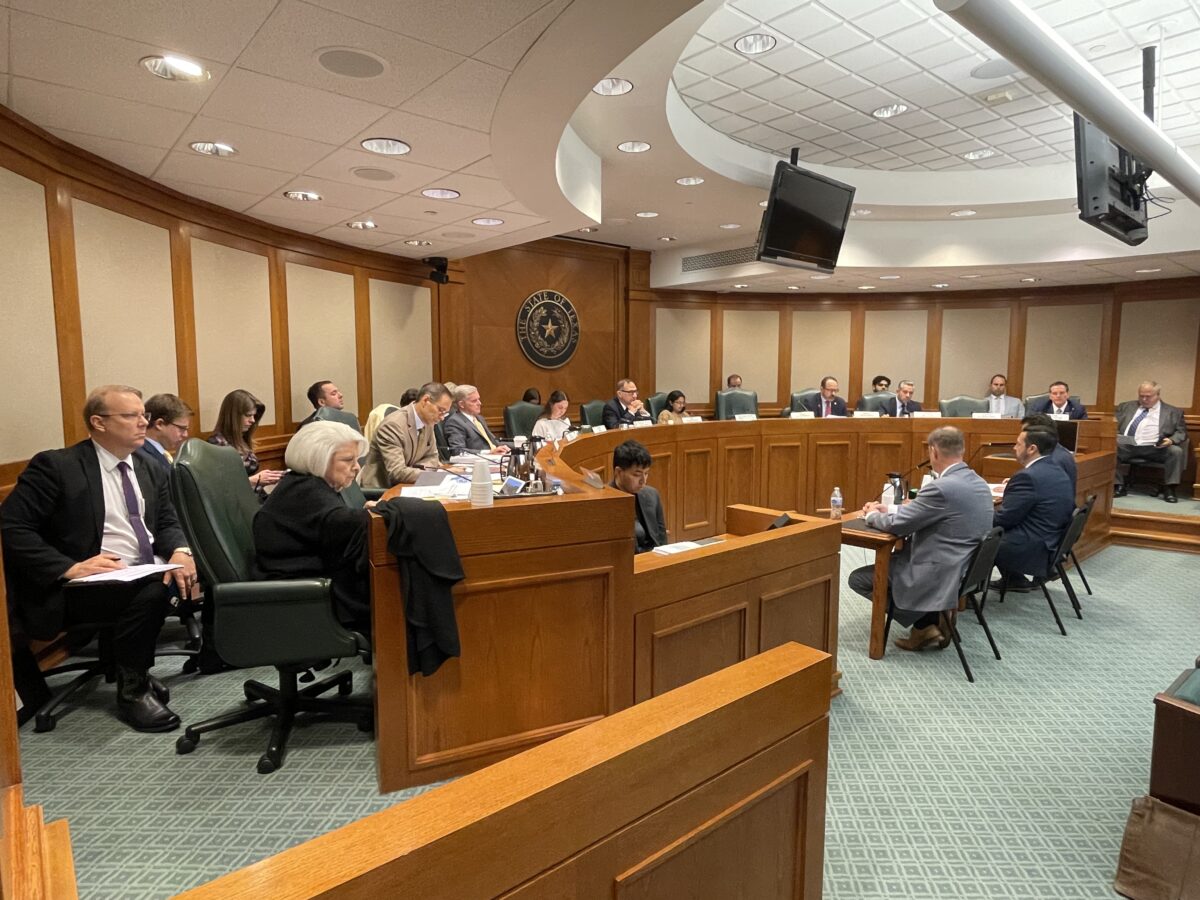
Texas’ regulated utility monopoly structure has exploded ratepayers’ bills and returns for investors and income for utilities, according to testimony before the Texas Senate Business & Commerce Committee this week.
Mark Ellis of MarketClear, a North Carolina-based utility policy research team, told senators Wednesday that under the current regulatory structure, utility shareholders get returns anytime there’s investment in a new project.
Sandra Haverlah, president of the Texas Consumers Association, provided a handout at Wednesday’s hearing that reported annual net increases for electric delivery companies from 2019 to 2025.
Oncor went from $651 million to just over $1 billion, CenterPoint Houston went from $356 million to $578 million, and AEP Texas went from $178.3 million to $488 million.
“A lot of that has been built into the delivery rates,” Haverlah said.
Thomas Brocato, of the Texas Coalition for Affordable Power, zeroed in on Oncor’s growth. He told senators the company’s electric rates have increased about 75 percent since 2016, and residential rates increased 15 percent in the last two years.
Sen. Judith Zaffirini (D–Laredo) asked what the average residential customer’s delivery bill would be in 2030, “if the current rate-making process remains the same.”
“It’s almost doubled for just the delivery charge from the last five to six years. So if we’re looking at 2030, it could be another doubling,” Haverlah said.
In a statement, an Oncor spokesperson wrote that “the percentage of a customer’s electric bill attributable to Oncor depends on the customer’s retail electricity plan. Oncor’s regulated delivery charges are one component of the bill, while retail electricity prices and plan structures vary.”
Jason Ryan, CenterPoint Energy’s executive vice president, said that over approximately the last decade, CenterPoint’s portion of the bill grew at about 1 percent annually thanks in part to customer growth. He said the company’s rate of return on equity, that is shareholder investment, is 9.6 percent, but was 7.5 percent last year.
Barksdale English, Public Utility Commission of Texas (PUCT) deputy executive director, told senators that electric utilities’ average rate of return on equity in Texas is about 9.6 percent, which he said is “right about the national average.”
Sen. Charles Schwertner (R–Georgetown), the committee chair, referenced a report from the American Economic Liberties Project on rates of return. “They’re arguing that the rate of return is higher here in Texas, even though it’s a regulated utility, than in more competitive areas,” he said.
Ellis, former corporate strategy chief at Oncor’s parent company Sempra, agreed 9.6 percent is too high for Texas’ “regulated monopolies.”
“Utilities are one of the safest investments around. No competition, steady customers, and virtually guaranteed recovery of both costs and profit,” he said. “The market says that level of safety is worth about 6 to 7 percent.”
Rate Regulators
According to a Texas Public Policy Foundation (TPPF) August 2022 report, while “the generation of electricity in Texas is largely deregulated,” its transmission and distribution “is still fully regulated and monopolized.” PUCT states it sets electric transmission and delivery rates within the state grid, rates for investor-owned utilities outside it, but not customers’ final electricity price.
According to Brocato, PUCT is providing utilities with more opportunities to increase rates.
“What we’re seeing is more cases, faster cases, a lot more process, less substantive review,” he said. “The sheer number of rate mechanisms available to utilities has continually gone up the last 10 or 15 years … We identified more than 120 discrete rate requests by Oncor, CenterPoint, TNP, and AEP from 2020 until the present. That’s an average of six per utility per year.”
He said that in April, Oncor received a $565 million rate increase. “Just five days later, on the 22nd of April, they filed their first [Unified Tracking Mechanism] case, asking for over a billion dollars,” he added. Oncor described UTM cases as allowing “certain transmission and distribution investment costs to be reviewed together in a single annual proceeding.”
An Oncor spokesperson wrote that “The referenced April rate change was a result of the PUCT approval of our comprehensive base rate review,” and that it “primarily reflected increased costs from past storms, inflation and other economic factors that Oncor has worked to absorb for several years.”
Incentivizing Building
Ellis said that return on equity “is the skeleton key” for decoding utilities’ financial incentives.
“When I’m an existing shareholder, how I get my return is every time they go to raise more capital, invest in a new project, I get an uplift in the share price,” he said. “Investor-owned utilities are for-profit companies, so profit is one of their costs. Profit is based on a simple formula that’s been discussed already: the total amount of shareholder capital or equity multiplied by a PUC set profit rate, the return on equity or ROE.”
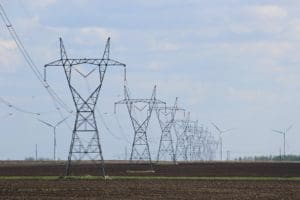
Currently, PUCT and Texas’ major electric utilities are pursuing a massive buildout of 765-kilovolt transmission lines. The first set is the Strategic Transmission Expansion Plan Permian, of which Oncor and AEP Texas are participants.
STEP Permian are three proposed 765-kV lines from East Texas into the natural-gas-rich Permian Basin. Participants in a second phase eastern backbone include Oncor, AEP Texas, and CenterPoint Energy.
Olivier Beaufils of Aurora Energy Research said the 765-kV STEP Permian lines represent a $36 billion investment that ratepayers will bear. PUCT has approved two of these lines, with the third in a holding pattern.
Barry Smitherman, a former PUCT chairman now with Texans for Affordable Transmission, said costs will increase as lines are adjusted after negotiations with landowners. Smitherman cited Texas’ 3,600-mile-long Competitive Renewable Energy Zone (CREZ) transmission line project as a previous example of this phenomenon.
Lawmakers authorized CREZ in 2005.
State Sen. Phil King (R–Fort Worth) said its cost went from $2 billion to $8 billion, mostly due to making accommodations for landowners. State Sen. Lois Kolkhorst (R—Brenham) calculated that CREZ’ return on equity, using the previously mentioned 9.6 percent rate, went from $192 million to $768 million.
“The losers are all the ratepayers,” she said.
Smitherman told senators they could “stall” the STEP Permian lines and “start over if you wanted to.” Schwertner asked how. Smitherman replied, “you’re coming into session, and I think you have extreme powers to do things on an emergency basis, if you wanted to,” mentioning Gov. Greg Abbott could also set it as an emergency item.
Oncor, AEP Texas, and CenterPoint Energy did not provide a number when asked for their projected profits from their STEP buildouts.
CenterPoint Energy wrote in a statement that it remains “focused on meeting our customers’ future energy priorities, which include strengthening and modernizing the electric grid, mitigating the effects of more powerful storms and extreme weather, and meeting the area’s growing energy and economic needs, while keeping our part of the bill as low as possible.”
TPPF’s Dr. Brent Bennett has advocated for market reforms enabling the building of new reliable electric generation in the natural-gas rich Permian Basin.
Opponents argue that the proliferation of wind and solar energy has disincentivized reliable generation buildouts, and that transmission is needed to build more generation.
Ellis believes lawmakers must inject the free market to restructure the system.
“Instead of having regulators pick a number, let investors bid the minimum return they’ll accept to fund the utility,” he said. “Investors still provide capital because they’re getting a fair return for the risk, but management becomes indifferent between a new transmission line and, say, reconductoring, grid-enhancing technologies, or demand-side resources that might serve customers as well, but for less money.”
State Sen. Kevin Sparks (R–Midland) said that if restructuring is the option lawmakers are going to look at, then they need to be “very prescriptive,” because “PUCT routinely ignores any input.”