A year after Gov. Greg Abbott vetoed a ban on hemp-derived THC products, senators worked on rebuilding the case for new restrictions during a committee hearing that spotlighted infant exposure, youth poisonings, and THC-induced psychosis.
Lt. Gov. Dan Patrick made banning consumable THC a legislative priority in 2025, culminating in the passage of Senate Bill 3. In a rare move of division, Gov. Greg Abbott vetoed SB 3 at the last moment, allowing THC-infused products to remain on shelves. He claimed to prefer a regulatory framework with age limits, packaging rules, THC caps, and something closer to alcohol‑style regulation instead of an outright prohibition.
Now, Patrick has once again charged senators with evaluating the impact of THC on public health, likely leading to another attempt to ban the product in 2027.
At a Senate hearing on Tuesday, the Committee on Health and Human Services sought to understand the relationship between THC products and the rising mental health epidemic.
State Sen. Lois Kolkhorst (R–Brenham) and State Sen. Charles Perry (R–Lubbock) both shared shocking statistics on the current hemp crisis in Texas, including that 1,896 children tested positive for THC at birth in 2025.
“I have faith that we can find solutions that will improve our state’s public health and safety while also respecting the dignity of every Texan who has lost their way due to the fog of mental illness and substance abuse,” said Kolkhorst.
Aubree Adams, the founder of Every Brain Matters, testified to how marijuana addiction impacted her family. Adams’ son became addicted to marijuana in high school. From there, he entered a state of psychosis and attempted to take his own life multiple times. Adams then uprooted her entire family and moved to Houston for her son to recover.
When THC products first began to be sold over the counter in 2019, her son relapsed once again. They became estranged for three years before he tried to take his life again. Emergency room doctors diagnosed her son with Cannabinoid Hyperemesis Syndrome. It took a full five months for his body to test negative for THC.
“THC is a weapon of mass destruction,” said Adams.
Police Chief Steve Dye, representing the Allen Police Department and the Texas Police Chiefs Association, testified that current laws are completely ineffective at regulating THC.
“State regulations have not been effective, with more than one aspect of those regulations already being legally challenged,” said Dye.
Dye stated that sting operations launched by the Allen Police Department found that THC products being sold are not under the 0.3 percent limit. In fact, Allen PD found most products being sold contained as much as 80 percent THC. He further stated that, by TPCA’s estimate, there are over 9,000 retail locations in Texas selling hemp products.
When asked what regulations were needed to effectively halt marijuana, Dye stated that they need a “trustworthy industry and enough regulators, and have neither.”
Dye also said that THC products are rarely manufactured in Texas and almost always come from other states or countries, making them difficult to regulate from the beginning.
Chambers County Sheriff Brian Hawthorne estimated in his testimony that 60 percent of people in jail are there for drug-related issues, including THC-related problems, and that the major issue is now THC-induced psychosis.
Dr. Dominic Lucia, a Baylor Scott & White emergency pediatric physician, testified to the impact of THC products on young Texans.
“I am increasingly concerned about the impact of THC on infants, children, and adolescents,” said Lucia.
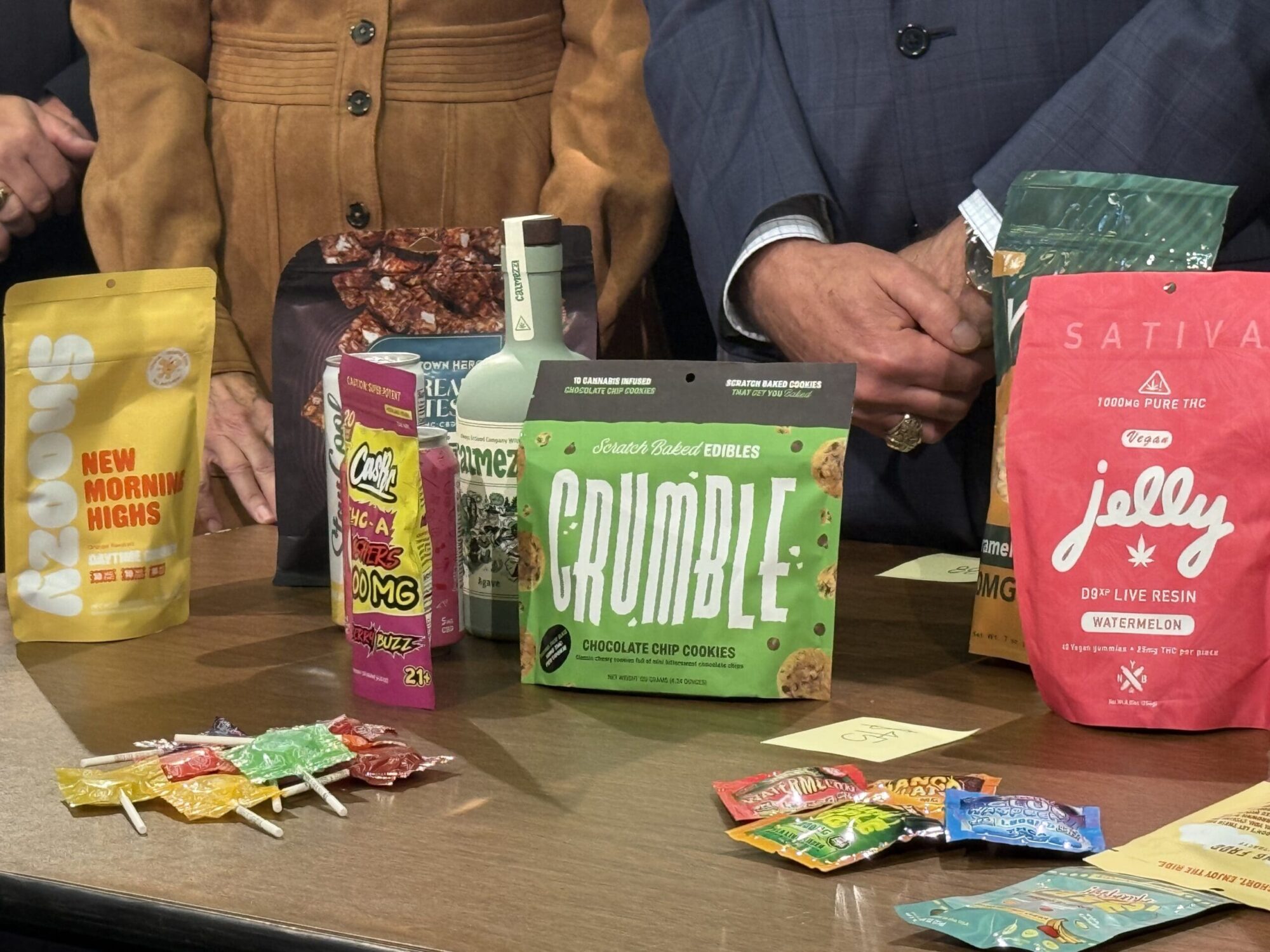
He told the story of a recent case in his ER of a 15-year-old girl who was found unconscious in a bathroom stall at her school. She did not respond to any stimulus and was hardly breathing on her own, according to Lucia. Further investigation revealed an empty bag of “Stoneos,” which mimic Oreos and contain 50 mg of THC each. She recovered, but was on life support while unconscious for 36 hours.
“[In the] perspective of pediatric health care, our young Texans are facing both immediate and long-term physical and mental harm from increasing exposure to THC products … often in forms that are more potent, accessible, and more attractive to youth than ever before … safeguards that center on public safety, comprehensive health of Texans, and reducing the burden of preventable health care costs must be prioritized,” said Lucia.
Matthew Rossheim, a researcher at the University of North Texas, said pediatric poisonings related to THC increased 400 percent from 2018 to 2023.
In addressing a growing mental health crisis, Kolkhorst revealed that among substances contributing to the crises, including drug-induced psychosis, schizophrenia, and bipolar disorder, cannabis is “number one” by a wide margin, with cocaine “not even close.”
Comal County District Attorney Jennifer Tharp testified that mental health cases requiring state intervention due to substance abuse have been rising in the past 5 years.
“The individuals with mental illness and substance use disorder, along with homelessness, have a greater representation in our criminal justice system now than I would submit to you I’ve ever seen in the last 22 years as a prosecutor,” said Tharp.
THC-infused products hit the market in Texas after Sen. Perry authored the Texas Hemp Bill in 2019. Initially intended to legalize the agricultural and industrial use of hemp, a loophole in the bill allowed hemp-derived THC products to be sold in stores.
The bill stated that “it is the policy of [Texas] that hemp is a viable agricultural crop and an agricultural commodity in this state.”
“What we have is the bastardization by an industry for profit and pure profit, with no consideration to those people that get addicted on it over the last, I’d say, roughly 10 years,” said Perry in Tuesday’s hearing.
Perry is working to close the loopholes. He authored the ban last session and said during the hearing that he intends to file another bill next session to do so.
The discussion of another ban comes after the Texas Supreme Court upheld the Texas Department of State Health Services’ classification of Delta-8 THC products as a Schedule I controlled substance.