Texas data centers face growing scrutiny from lawmakers after state agencies reported difficulty collecting basic water- and power-use information from the rapidly expanding industry.
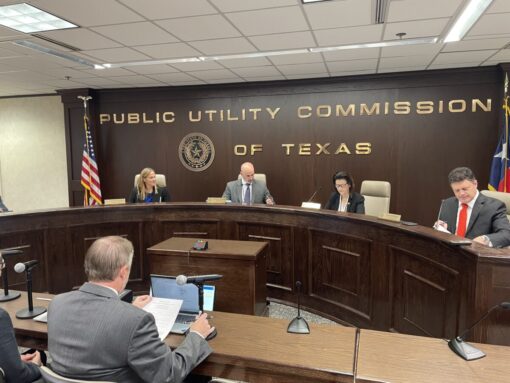
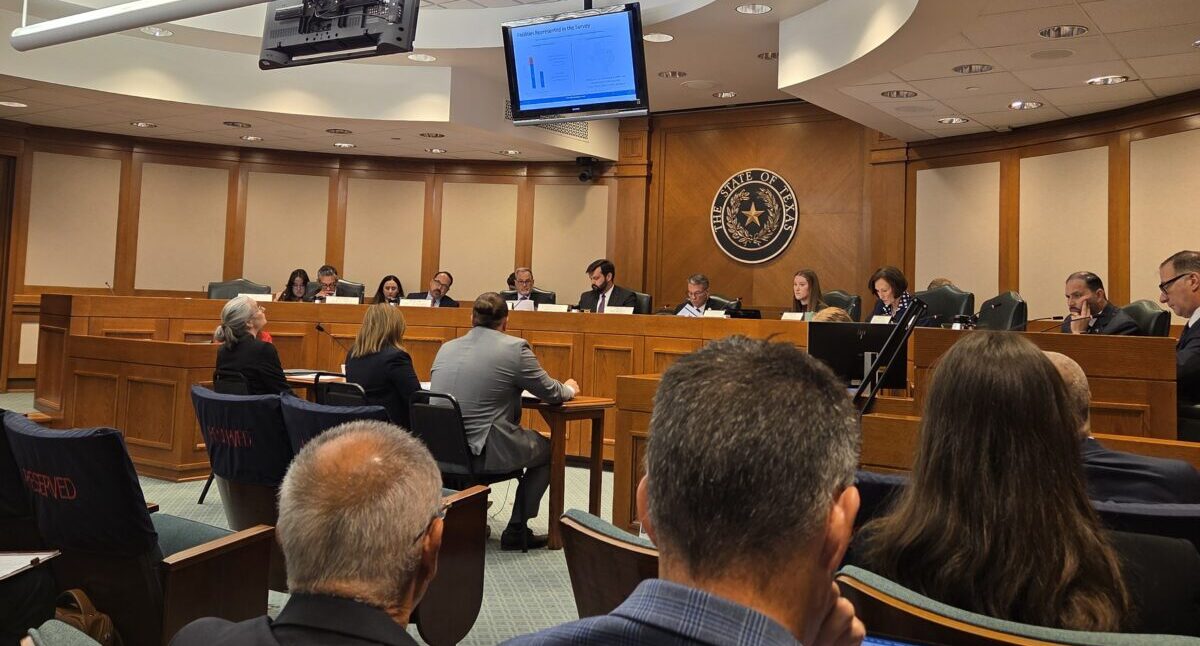
During a hearing of the Senate Committee on Water, Agriculture, and Rural Affairs on Tuesday, representatives for the Texas Water Development Board (TWDB) and Public Utility Commission of Texas (PUCT) reported difficulty in getting data centers to respond to surveys on water and electricity usage.
“Our agency sent 2,025 water use surveys to 341 facilities identified as data centers,” said Temple McKinnon with TWDB. “As of August 2026, we have a 30 percent response rate of the facilities that we have surveyed.”
“[PUCT] mailed 377 (survey) reminder notices to facilities using contact information from TWDB and our own virtual currency mining registry,” said PUCT Executive Director Connie Corona.
“[This survey] was intended to supplement the annual water use survey by TWDB in an area where response rates have historically been fairly limited,” said Corona.
“The PUC has received responses from 57 companies representing 168 total facilities, 144 of which are data centers. Some of these responses were received after the deadlines, and so they’re not all reflected in the statistics,” said PUCT’s Program Manager for Data Analysis Chris Brown.
Some committee members expressed concern that there was currently no enforcement procedure to ensure data centers returned answered surveys, though Chairman Charles Perry (R–Lubbock) sought to reassure those present at the hearing.
“So, 44 percent responded, 168 out of 377. That looks really bad, and that’ll be the headlines tomorrow. But truthfully we really don’t know if the 377 are even still in the conversation in the state of Texas,” said Perry.
“Water is a fungible asset available for all 30 million plus Texans, so there will be no confidentiality on water use. If that’s a proprietary problem for you as a business model, your business model needs to work differently because you’re asking for a public resource,” Perry said.
Drs. Ning Lin and Vaibhav Bahadur of UT-Austin provided expert testimony regarding the cooling systems used in the data facilities.
“Evaporative cooling systems work by using water to remove heat,” said Lin. “They perform best in dry air and become less effective as humidity increases.”
She noted that the systems work more efficiently in West Texas where it is drier than in the humid Gulf Coast region.
“Data centers count for just over one half of 1 percent of Texas water use. That is roughly 33 billion gallons per year,” noted Lin.
After explaining the intricacies of closed-loop water systems, Bahadur went on to state, “You need to have closed loops as much as possible.”
“You just cannot allow water to evaporate, and you will still need a small amount of water for adiabatic cooling (i.e., cooling using water mist) on hot summer days. But again, with the right technology choices, you can cut down substantially on water consumption, and again, that is seasonal,” said Bahadur.
Representatives of data centers reassured the committee that there were many “good actors” in the market.
Ryan Kuithe of QTS Data Centers emphasized his company’s openness to a community-oriented approach.
“Ninety-seven percent of our facilities in operation across the country today utilize [closed-loop systems] … we believe that this has helped us avoid 7.5 billion gallons of water usage compared to traditional evaporative methods.”
Michael McNamara of Lancium LLC and Ben Townsend of Google expressed similar sentiments and fielded questions from the committee on how they would curb water, power, noise, and light issues commonly voiced by data center opponents.
“Ultimately, our investments in Texas are designed to drive economic growth in the state we call home, while responsibly managing and even improving local water resources,” explained Townsend.
County and city representatives from around Texas gave mixed opinions on the centers being built in their areas.
“I can’t say that I’ve experienced anything to the negative side of saying we don’t want them. I haven’t experienced that,” said Childress City Manager Kevin Hodges. “It’s been the opposite for me. It’s been very positive … [The two data centers in the area] have both come to the table, and we’ve been encouraged by that.”
Armstrong County Judge Adam Ensey noted that while he did not ask for data centers to come to their area, the data centers could bring tax revenue.
However, the current tax laws for data centers would “bring in $16,000 that next year,” according to Ensey. “Yeah, they’ll pay $172 million up front, but you know my landowners and the people in my county are not going to like that they only pay $16,000.”
While Caldwell County Judge Hoppy Haden said he did not want a data center and that the county was already growing significantly without it, he agreed with Perry.
“These data centers are here to stay. That’s something we’re going to have to deal with.”
Texas lawmakers are expected to take up legislation next year to regulate data centers resource usage.