AUSTIN—Forty-eight days after initially approving Oncor’s 765-kilovolt transmission line, Texas’ public utility commissioners voted to extend time to consider rehearing motions to 100 days.
Attorneys warn against Oncor attempting to take land for the project until the motions are resolved.
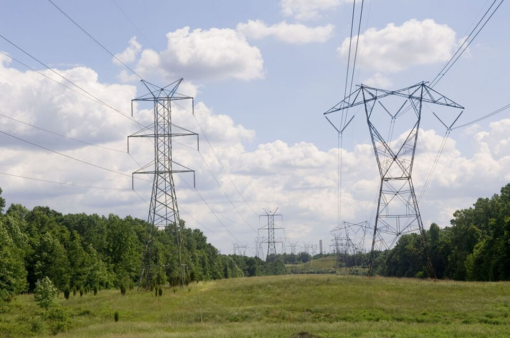
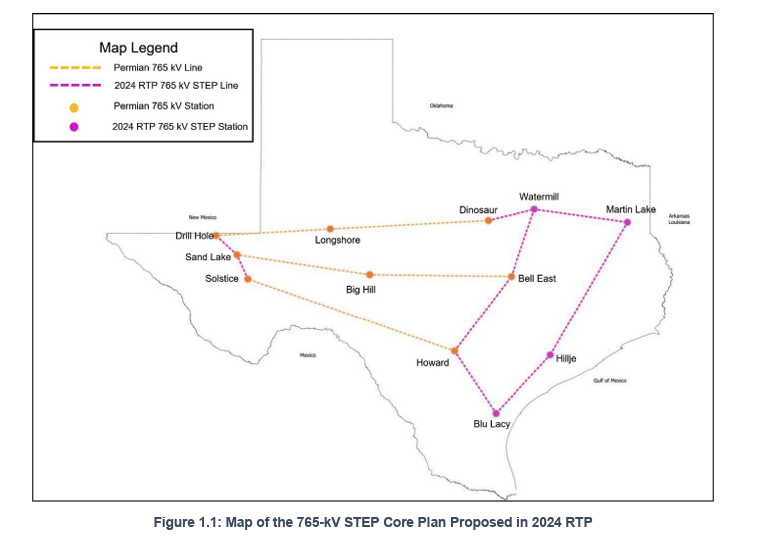
The vote was on Oncor’s Dinosaur-to-Drill Hole 765-kV line. Made up of two segments, Dinosaur-Longshore and Longshore-Drill Hole, it would span approximately 390 miles from near Glen Rose to near the Culberson-Reeves county line.
This project is part of the Strategic Transmission Expansion Plan (STEP) Permian, a key part of the Permian Basin Reliability Plan (PBRP). STEP Permian proposes three 765-kV transmission lines spanning more than 1,200 miles to move electricity from East Texas to the natural gas-rich Permian Basin. Dinosaur to Drill Hole is the northern line.
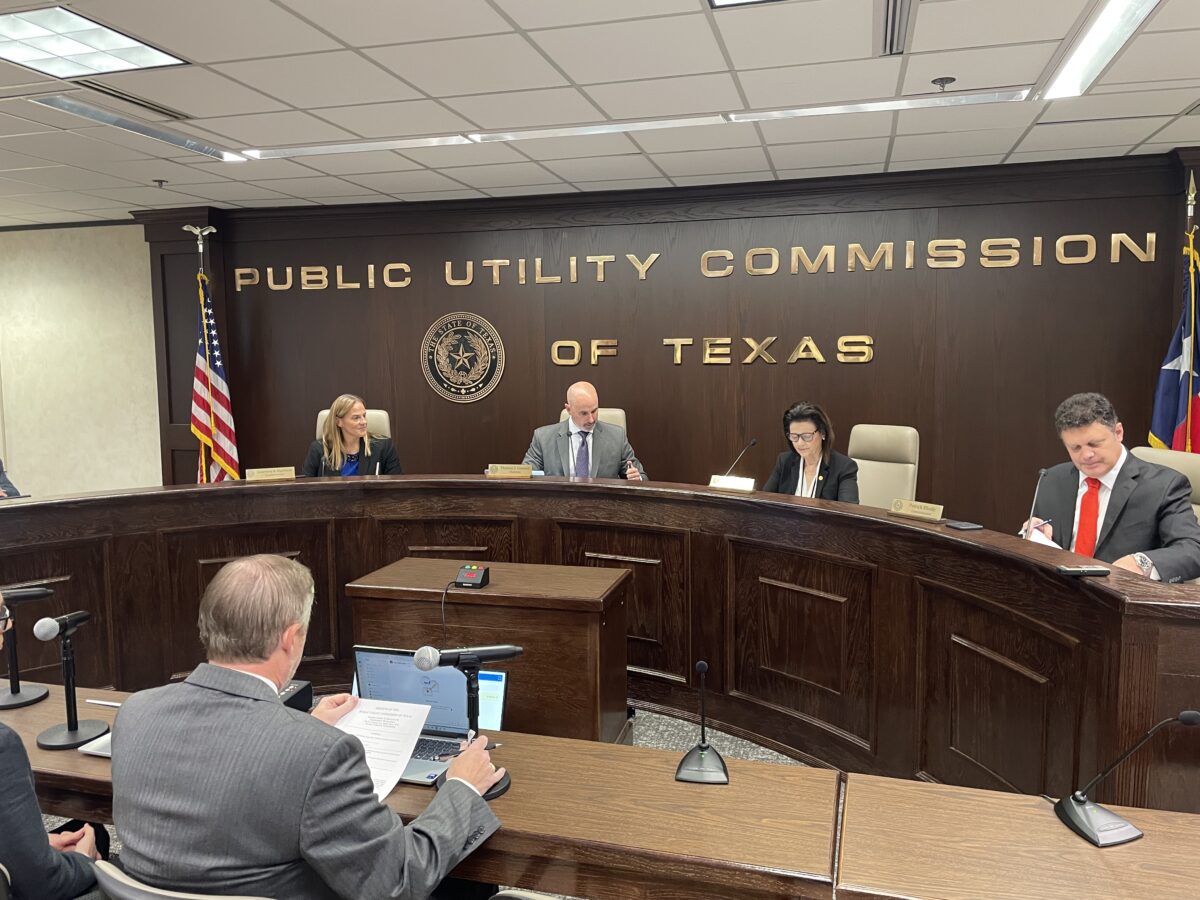
Public Utility Commission of Texas (PUCT) Chairman Thomas Gleeson and Commissioners Courtney Hjaltman, Patrick Rhode, and Kathleen Jackson, despite calls from impacted landowners and lawmakers, approved Dinosaur to Drill Hole on August 28.
Multiple organizations filed rehearing motions. State law requires that if commissioners do not act within 55 days from the date of a PUCT order, rehearing motions are overruled. Commissioners may, in a written order, extend the deadline as much as 100 days after the PUCT order.
Yesterday, Gleeson filed a memo in both Dinosaur to Drill Hole segments proposing commissioners “extend time to act on the motions for rehearing to the maximum extent allowed by law. This will allow the Commission to fully consider all the arguments raised in these motions.”
Back in late August, Gleeson argued against delaying the transmission line before the Texas House State Affairs Committee.
American Stewards of Liberty was one of the organizations that filed for rehearing. It requested that PUCT reverse itself and deny Oncor’s applications. It argued state lawmakers did not authorize a 765-kV buildout, but directed development of a reliability plan for the Permian Basin.
Oncor replied that the law passed in 2023, House Bill 5066, did not automatically necessitate any project, but its required study can still prove the need for the line.
ASL Attorney Shan Rutherford told Texas Scorecard that “Oncor may begin negotiating with landowners at any time, but the utility takes a risk if it commences eminent domain proceedings prior to the PUCT’s order becoming final.”
Attorney Connor Ellington of the Law Offices of Tony McDonald agreed. “The utility can’t use eminent domain or start building until the order is final,” he wrote. “The delay is capped, though. By law, the PUC can’t extend its deadline past 100 days after the order was signed. If it hasn’t ruled by then, the motions are automatically denied and the order becomes final.”
PUCT’s extension cuts both ways. According to Rutherford and Ellington, until PUCT’s order is finalized, opponents cannot go to court.
“The order isn’t final until the PUC rules on the rehearing motions, so giving the PUC more time to rule pushes back the day intervenors can file,” said Ellington. “So the extension pushes back the utility’s ability to build by about as much as it pushes back the landowners’ day in court.”
“The PUCT’s order becomes final for purposes of filing a petition for judicial review with the court only when the PUCT has denied all timely filed motions for rehearing,” Rutherford wrote.
He noted that further changes could also impact Oncor’s eminent domain ability, or add more time.
“Changes to the order in response to rehearing motions would subject the revised order to additional motions for rehearing,” Rutherford continued. “Until the PUCT’s order becomes final, the PUCT could change the findings that are necessary to the exercise of eminent domain by the utility.”
Oncor and PUCT did not comment before publication.
Others had filed rehearing motions.
Among them were two oil and gas pipeline companies. They requested PUCT adjust its order to require Oncor to consult and coordinate with them for the purpose of protecting their pipelines from potential transmission line impacts. The Middle Trinity Groundwater Conservation District sought similar changes to protect its aquifer systems.
The other two STEP-Permian 765-kV lines are still in process. PUCT approved AEP Texas’ and CPS Energy’s Howard to Solstice line, the southern line, on September 11. ASL and other intervenors have filed rehearing motions for that line.
The third line, composed of two segments from Oncor and the Lower Colorado River Authority Transmission Services Corporation, is in a holding pattern after PUCT remanded the Bell County East to Big Hill segment to the State Office of Administrative Hearings.
PUCT has come under increased scrutiny. Before the state Senate Business & Commerce Committee on September 30, reformers said that under Texas’ current regulated monopoly structure, utilities’ electricity delivery rates and annual net revenues have grown for years.
“The entire process has been chaos. Rushed timelines. No accountability. No due process for landowners. Estimated $10 billion in ‘uncompensated’ property value. Utility bills go up. Grid reliability goes down. Failure to justify that these massive transmission lines will solve the problem. And approved routes that will destroy some of Texas beloved rivers,” ASL posted on X after PUCT voted. “[L]et’s hope our state leaders wake up.”
Commissioner Morgan Johnson was absent today on maternity leave.