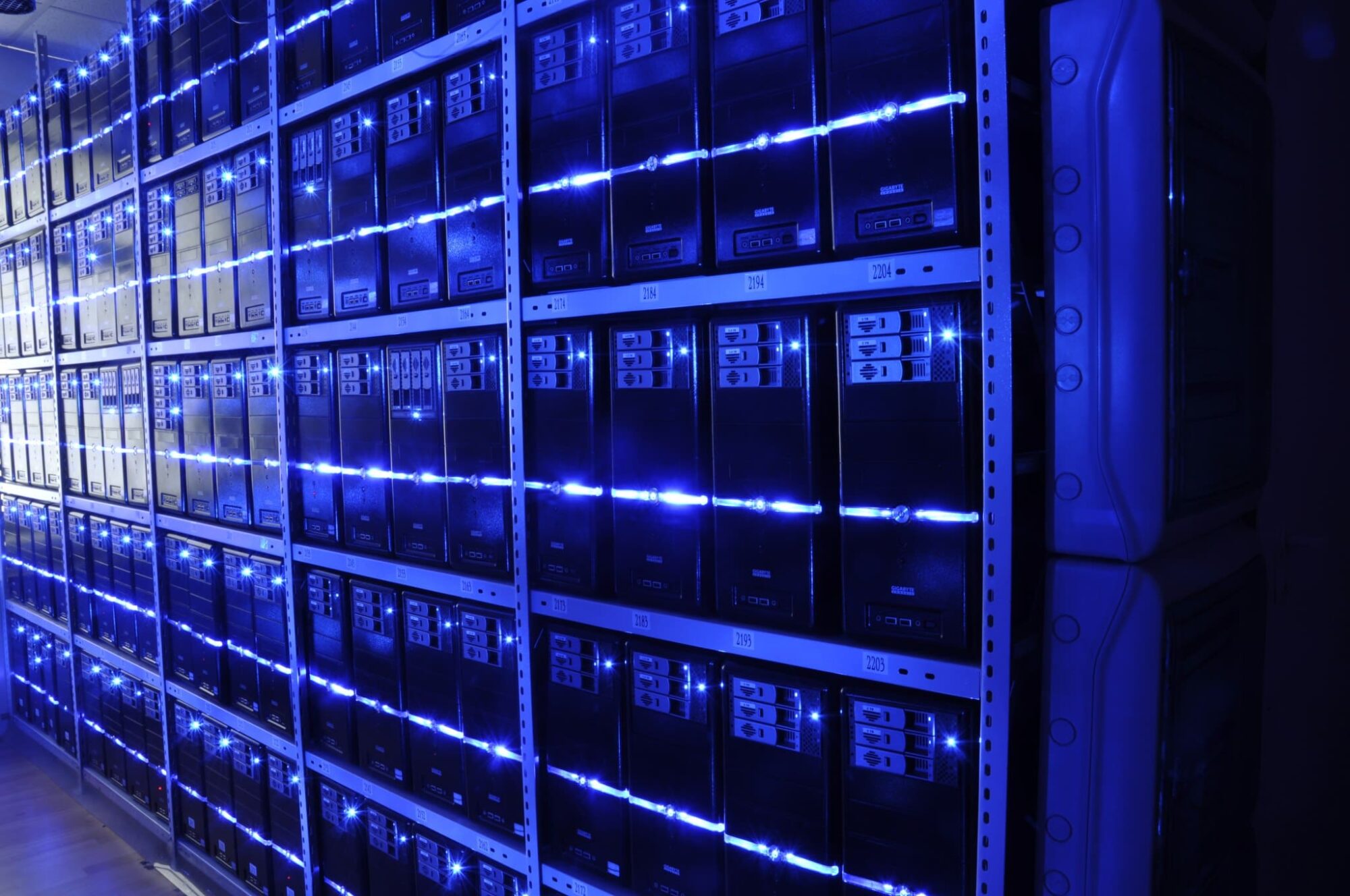
Lawmakers are questioning whether Texas’ generous tax breaks for data centers are working as intended after state officials confirmed several facilities failed to meet eligibility requirements.
During a Monday meeting of the Texas Senate Committee on Finance, senators discussed the future of section 151.359 of the Texas Tax Code, which allows qualifying data center developments that meet a certain threshold of commerce to be exempt from the state sales tax. In order to qualify, a data center must be a minimum of 100,000 square feet, commit to investing an additional $200 million within five years, and create at least 20 qualifying jobs.
Brad Reynolds, the chief revenue estimator in the comptroller’s office, stated that his audit division has been in the process of doing compliance checks on data centers using the exemption.
“[T]o date we have 20 of such audits that are either in process or already have been completed. One of those six came forward voluntarily [and] asked to have their certification removed [because they] lost their electricity supplier via ERCOT. The other five missed the 100,000 square-foot requirement. The others have missed the job creation requirement, which tells you really how little employment is stemming from this,” said Reynolds.
Reynolds admitted that in 2013 when House Bill 1223 was passed, which exempted data centers from the sales tax, the legislature estimated only one new facility per year.
However, the comptroller’s office saw an additional two to three facilities put up per year initially.
“I would say the early estimates are significantly too low to begin with because, as I say, the first few years we had about twice as many centers come in than we anticipated; and with spending at a higher level than those minimums, so they were too low to begin with, and of course never anticipated the kind of rapid development [in] numbers and scale that we see today,” stated Reynolds when asked about the extra capital investments.
He offered the committee a simplified version of the estimation that the comptroller’s office does. As more hyperscale data centers are developed in Texas, the cost of extra electricity consumption, as well as sales-taxable IT equipment, totals $107 million in forgone taxes and rises to $246 million by the third year of the facility’s operation.
Reynolds noted that the outbreak of COVID-19 accelerated the digitization of the U.S. economy, which led to a sharp increase in data centers due to businesses investing in new IT infrastructure to support remote work.
State Sen. Lois Kolhorst (R–Brenham) questioned Reynolds about the six data centers that fell short of the standard created by the tax exemption. Reynolds told the committee that all six data centers will be reassessed for sales tax for the period in which they were exempted.
“In the [data center] I mentioned earlier that had voluntarily [come] in for the cancellation of their certification because they lost their [power] agreement, there is a back assessment for almost $5.6 million on sales tax exemptions that they had taken,” Reynolds told Kolkhorst. “I’m told we’ll receive that payment by August 31st.”
When Kolkhorst pressed Reynolds regarding how data centers qualify for the tax exemptions, Reynolds testified that the Office of the Comptroller accepts the attestation of data center companies that they will meet the requirements by year five of operation.
Reynolds stated that the comptroller’s office must accept only the attestation of the companies due to the statute that allowed for the exemption explicitly instructing them to only conduct a post-audit.
“I know in one rural county that there are six proposed [data centers],” said Kolkhorst. “This is a county of 26,000. How do you get six data centers in this tiny little rural county? I think that the numbers perhaps that you are using, which I don’t blame you for, are woefully small.”
Reynolds admitted that the Office of the Comptroller has no idea how many data centers are planned to be built in Texas. Upon further questioning, he told the committee that data centers do not come to the comptroller until they are about to start construction in order to maximize the use of their sales tax exemption.
During State Sen. Carol Alvarado’s (D–Houston) questioning, Reynolds stated that the Office of the Comptroller does not “have the authority to decline to do the certifications.”
Jenny Burleson, the director of tax policy at the comptroller’s office, explained that in the case of the one center that came to the comptroller to waive their exemption, a Voluntary Disclosure Agreement waived the penalty and interest in exchange for the center agreeing to pay the tax moving forward.
State Sen. Pete Flores (R–Pleasanton) later asked Reynolds if data center development would continue in Texas regardless of whether or not they were exempt from sales tax.
“I think a large portion of the development would continue to come because it is just an economic and competitive necessity for these companies to do that, and that’s why your big hyperscale companies are constantly criticized in financial markets now for overspending, [but] every earnings report … that has come out and reiterated that they’re not only not going to slow down their capital spending, they’re going to do more. And why? Because it is a competitive necessity in their view to do that. If one of them stops, then the future of technology just goes to their rivals,” Reynolds replied.
When asked about repealing or retroactively modifying section 151.359 of the Texas Tax Code, Reynolds stated that the fiscal implications will depend on how a repeal is written.
“If all you did was come in and repeal these two exemptions, all those that are currently certified and receiving exemptions would lose the ability to take exemption on the effective day of that bill. But of course, that is going to be exceptionally controversial. So if you write to preserve the exemption for those that already have the certification, the fiscal revenue effect [will take time to be noticeable] because those who have certifications will continue to receive exemptions.”
Shannon Halbrook, director of Invest in Texas for left-wing think tank Every Texan, testified that lawmakers should end the exemption because the Texas government needs the money in order to function properly.
“We also know that agencies have been instructed to cut their base budget this year by three percent. So, with that in mind, we should be thinking in terms of how can we pay for that? Ending the exemption seems to be developing into a consensus position, and I think that the data center industry is viable in our state and no longer needs a subsidy.”