After dumping millions into the 2024 election cycle and coming up short, Las Vegas Sands appears ready to roll the dice again.
New financial disclosures show that Texas Sands PAC, the Texas-based political arm of the casino giant, has more than $9 million in cash on hand heading into the upcoming election season. That money comes almost entirely from Miriam Adelson, the billionaire owner of Las Vegas Sands and majority owner of the Dallas Mavericks. Despite its name, Sands does not operate casinos in Las Vegas or anywhere in the United States; its operations are exclusively in China and Singapore.
While the group has largely held off on spending in recent months, records show it contributed $1.8 million to members of the Texas House during the 2024 cycle—$1.34 million to Republicans and $457,500 to Democrats. That spending mirrors the strategy the group employed last time: pour money into protecting lawmakers who supported its push to legalize casino gambling in Texas.
That effort didn’t go as planned.
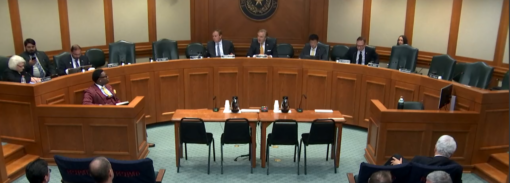
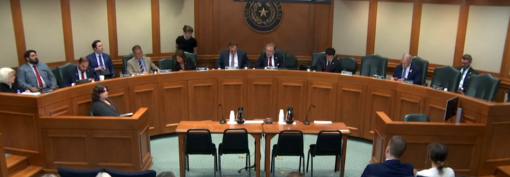
Despite getting casino legislation to the floor of the Texas House in 2023, Sands watched its momentum collapse in the primaries. Voters rejected the very lawmakers who had sided with the casino giant. Former House Speaker Dade Phelan, the top recipient of Sands money, was forced into a runoff. Meanwhile, 14 Republican House members who voted for casino legislation either lost re-election or chose not to seek it.
Sands and Adelson attempted to salvage the cycle with a massive last-minute push. The Texas Defense PAC, funded entirely by Adelson, poured more than $7 million into runoff races in an effort to rescue Phelan’s allies. But again, the money didn’t translate into wins.
Now, Sands is recalibrating.
Although no major new contributions have been reported yet this cycle, those connected to the group have continued to work in some statewide campaigns.
Former State Sen. Kelly Hancock, who is now running for state comptroller, has hired John Jackson to run his campaign.
Until earlier this year, however, Jackson served as Sands’ head political consultant in Texas. He previously managed campaigns for Gov. Greg Abbott and U.S. Sen. John Cornyn.
Hancock did not respond to a request for comment on whether he supports the group’s efforts to bring government-monopoly casinos to Texas.
Neither Don Huffines or Christi Craddick—the other two candidates currently in the race—have casino operatives leading their campaigns.
Hancock is not the only one with senior staff tied to the casino operator.
Jordan Berry, a recent registered lobbyist for Sands, also serves as a campaign consultant to numerous candidates in the state legislature, including State Sen. Mayes Middleton (R–Galveston) in his campaign for attorney general. Berry’s lobby registration with all his clients ended on June 23.
Middleton has been an outspoken critic of the Texas Lottery, calling it a “rogue agency” that is “clearly run by the gambling vendors” which “will bend to them even when it breaks the law,” but he did not comment on how he balances that with his consultant’s high-profile position with Sands.
The most recent reports do not show Sands lobbyists on the leadership teams of the other candidates in the race, Joan Huffman and Aaron Reitz.
The Republican Party of Texas, meanwhile, has remained clear in its opposition.
“We oppose any expansion of gambling, including legalized casino gambling,” states the party platform.
But Sands doesn’t appear to be deterred. Despite past losses, the group is sitting on a war chest and maintaining its political infrastructure in Texas.
Critics argue that Sands’ presence in Texas politics is about more than just gambling—it’s about power and influence. With its deep pockets, foreign ties, and willingness to defy the Texas GOP’s platform, the company is once again positioning itself to shape the state’s future.
Whether Texas voters will once again rebuff those efforts remains to be seen. But one thing is clear: casino interests are back at the table—and they’re not bluffing.