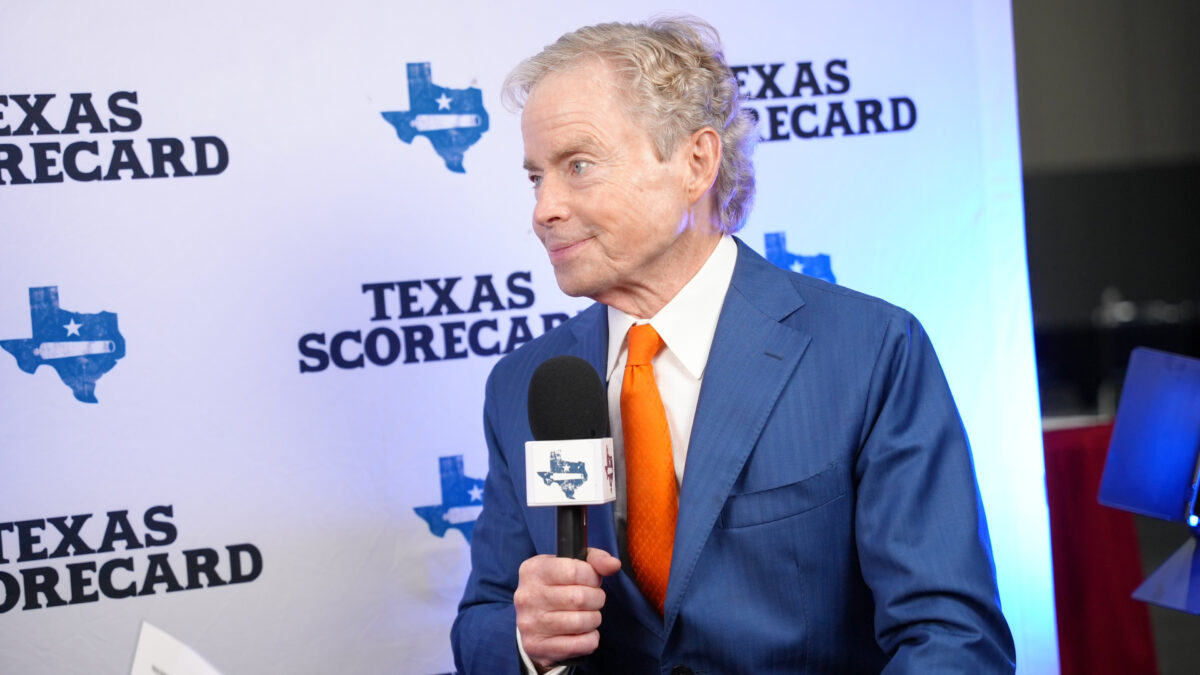
Comptroller Don Huffines is launching a review of school district spending following a request from Gov. Greg Abbott to investigate whether taxpayer dollars are reaching classrooms rather than fueling administrative growth.
Huffines announced Wednesday that his office will conduct detailed performance reviews of select independent school districts, examining whether their spending complies with state law and supports students, classrooms, and teachers.
“Texans must have confidence that their school tax dollars support educational opportunities for students, not layers of bureaucracy in central administrative offices,” said Huffines. “We will document wasteful and inappropriate spending wherever we discover it and report our findings to the Legislature and the people of Texas.”
Abbott formally requested the investigation in a letter to Huffines, citing the $104.9 billion Texas spends on K-12 education and arguing that increased education funding should come with increased scrutiny.
“As Texas continues to make crucial investments in public education, it is our collective responsibility to ensure that taxpayer dollars directly reach students, classrooms, and teachers, instead of being absorbed by central-office growth, administrative bloat, consultants, and the web of noninstructional bureaucracy,” Abbott wrote.
The governor asked Huffines to select up to four school districts of varying sizes and geographic locations for the investigation.
Huffines’ office says districts led by state-appointed boards, such as Houston ISD and Fort Worth ISD, will not be selected.
The specific districts targeted for review have not yet been announced. Huffines said his office expects to name them in the coming weeks.
Abbott expanded on the effort during a press conference Wednesday, announcing that he will seek legislation requiring school districts to spend at least 70 percent of their funds “in the classroom,” rather than on administrative expenses, staff, or bureaucracy.
The proposal would also require the state’s lowest-performing school districts to undergo comprehensive audits by the comptroller.
“Simply put, too many tax dollars for schools are funding things that do not improve student outcomes,” said Abbott.
Abbott pointed specifically to Austin and El Paso ISDs, where he said enrollment declined substantially between 2015 and 2025 while administrative spending per student increased.
According to Abbott, Austin ISD enrollment fell 14 percent over the decade while administrative spending per student rose 75 percent. In El Paso ISD, enrollment fell roughly 20 percent while administrative spending per student doubled.
Abbott contrasted those districts with Red Oak and Dickinson ISDs, where he said administrative spending increases more closely tracked enrollment growth.
The review comes as Abbott pushes a broader property tax plan that would eliminate school property taxes for Texas homeowners.
Under his proposal, homeowners would pay no school property taxes on their homesteads, and the state would assume responsibility for replacing that funding for public schools.
Abbott has requested that Huffines submit his final report by December 31, ahead of the 90th Texas Legislature, where lawmakers could consider additional reforms based on the findings.