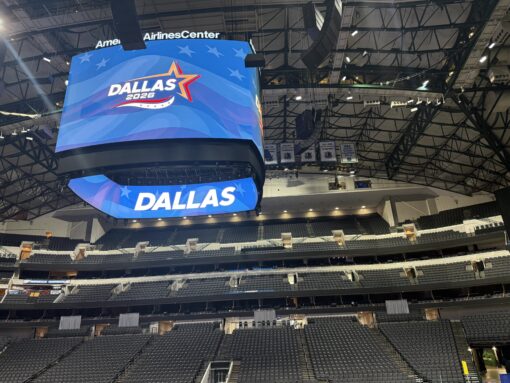
As the Texas Republican Party of Texas wrapped up the 2026 GOP Convention, delegates made fighting the influence of Sharia law a priority for the 2027 legislative session.
In the 2026 Permanent Rules, Platform and Resolutions, and Legislative Committees Report, the GOP listed specific ways to outlaw the foreign legal framework.
One suggestion by Republican delegates is for the federal government to denaturalize and deport advocates of Sharia law.
Delegates also want to ban taxpayer-funding from being granted to programs or entities that advocate for a Sharia law-based system, as it conflicts with the national and state constitutions. They also advised banning taxpayer-funded institutions such as schools from providing meals in accordance with Sharia.
Another part of the priority includes stopping any economic or residential developments that advocate for Sharia and discriminate against individuals who do not submit to it, which became a national topic of discussion with the EPIC City development in North Texas.
EPIC City, now rebranded as The Meadow, is a planned development that features 1,000 homes, a mosque, and a school. The initial marketing for the community offered Muslim families “more than just a neighborhood” but rather a “way of life.”
The seemingly exclusionary language and ownership model sparked numerous state and federal investigations into the neighborhood and the developer, Community Capital Partners.
The Texas Funeral Service Commission issued a cease-and-desist order over alleged unlicensed funeral operations, the Texas Commission on Environmental Quality flagged the project for lacking necessary permits, and the Texas Workforce Commission reviewed potential fair housing violations.
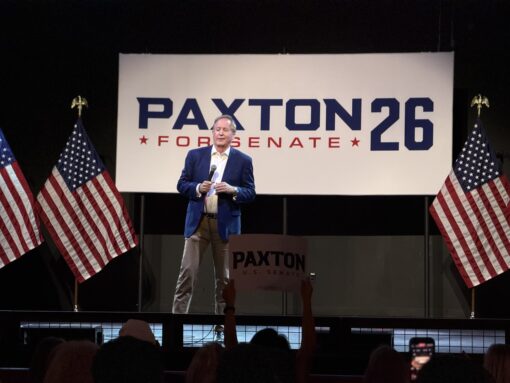
Paxton has filed a lawsuit against EPIC and its developer for violating Texas’ securities laws with an illegal land development scheme.
The GOP priority further seeks to stop any religious or educational institution in Texas from receiving funding from “hostile foreign or domestic sources that have any affiliation with any organization that advocates Sharia law or has been designated as a Foreign Terror Organization or Transnational Criminal Organization.”
The party is also urging public officials to use Texas sedition law against advocacy of Sharia and to rigorously enforce criminal laws against what it calls “aspects of Sharia law”—including terroristic threat, female genital mutilation, animal cruelty, domestic violence, rape, polygamy, and pedophilia—while explicitly adding Sharia references into statute and expanding the attorney general’s power to prosecute.
House Bill 45, passed in 2017, required the Texas Supreme Court to adopt rules regarding the application of foreign laws in certain family law cases. Delegates want to expand on House Bill 45 so that courts clearly cannot give effect to any Sharia‑based rulings or proceedings that conflict with state and federal law.
For instance, Texas Attorney General Ken Paxton is currently investigating a court system that claims it is operating under Sharia Law. The Islamic Tribunal in Dallas claims to adjudicate rulings under Sharia law that are binding. The organization is operating directly in opposition to Texas law by presenting itself as a court.
The priority does not come as a surprise, as GOP voters in the March 2026 primary election overwhelmingly called for an end to Sharia in Texas. Proposition 10, one of the nonbinding questions for GOP primary voters, asked whether or not voters desired an end to Sharia law in Texas. Of roughly 2 million voters, nearly 95 percent supported the prohibition of Islamic law.
As lawmakers prepare to return to the Texas Capitol, several launched a “Sharia Free Texas Caucus” in March. The Caucus said its goal is to completely combat Islamization in Texas, namely through the application of Sharia law.
State Rep. Brent Money (R-Greenville) said the Caucus was designed to prevent Islamic influence in Texas.
“We are seeing throughout the world what it’s like when you have runaway immigration and enclaves of Islamic communities that don’t assimilate into culture,” Money told Texas Scorecard.