Agricultural officials have warned landowners to keep a watch out for a foreign invasive pest discovered in South Texas, which has already caused significant damage.
First recorded in Australia in 1928, the pasture mealybug has devastated millions of acres of agricultural grazing land there, causing severe financial impact.
There is currently no known labeled pesticide effective at killing the pasture mealybug, but the Texas Department of Agriculture, A&M AgriLife Extension, and the U.S. Department of Agriculture’s Animal and Plant Health Inspection Service have announced they are coordinating a rapid response to the threat.
“If the pasture mealybug spreads across Texas grazing lands like it has in eastern Australia, it could cost Texas agriculture dearly in lost productivity and reduced livestock capacity,” said Texas Agriculture Commissioner Sid Miller. “TDA is working hand-in-hand with federal and university partners to respond swiftly and protect our producers from this unprecedented threat.”
The pest was first discovered after southern Texas landowners reported irregular patches of grass turning brown or dying. Initially believed to be damage from the Rhodes grass mealybug, present in the U.S. since 1942, closer examination revealed the true culprit—the pasture mealybug.
Currently, the pasture mealybug has been confirmed in 20 counties in south and southeast Texas. The AgriLife Extension has created a map highlighting affected counties.
Pasture mealybugs destroy the grasses most commonly used for livestock grazing and hay production, as juvenile mealybugs use their piercing/sucking mouthparts to extract sugary substances from the plant called honeydew. As they feed, they also inject saliva into the grass, which is toxic to the grass.
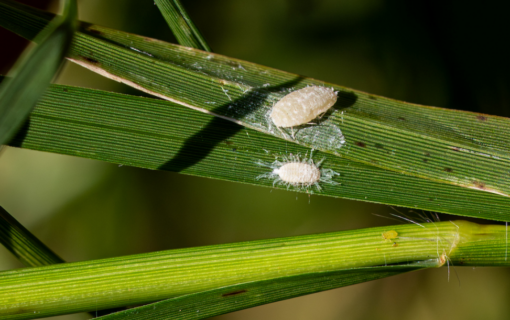
Miller encourages producers to actively watch for signs of infestation, which include yellowing and discoloration of leaves, stunted growth and drought stress despite rainfall, and dieback starting at leaf tips and progressing downward. Producers should also look for fluffy, waxy, or “fuzzy” insects on blades or stems.
TDA requests that Texans who observe symptoms or insects matching these descriptions call 1-(800)-TELL-TDA.