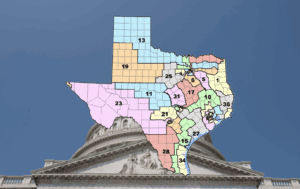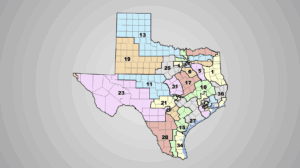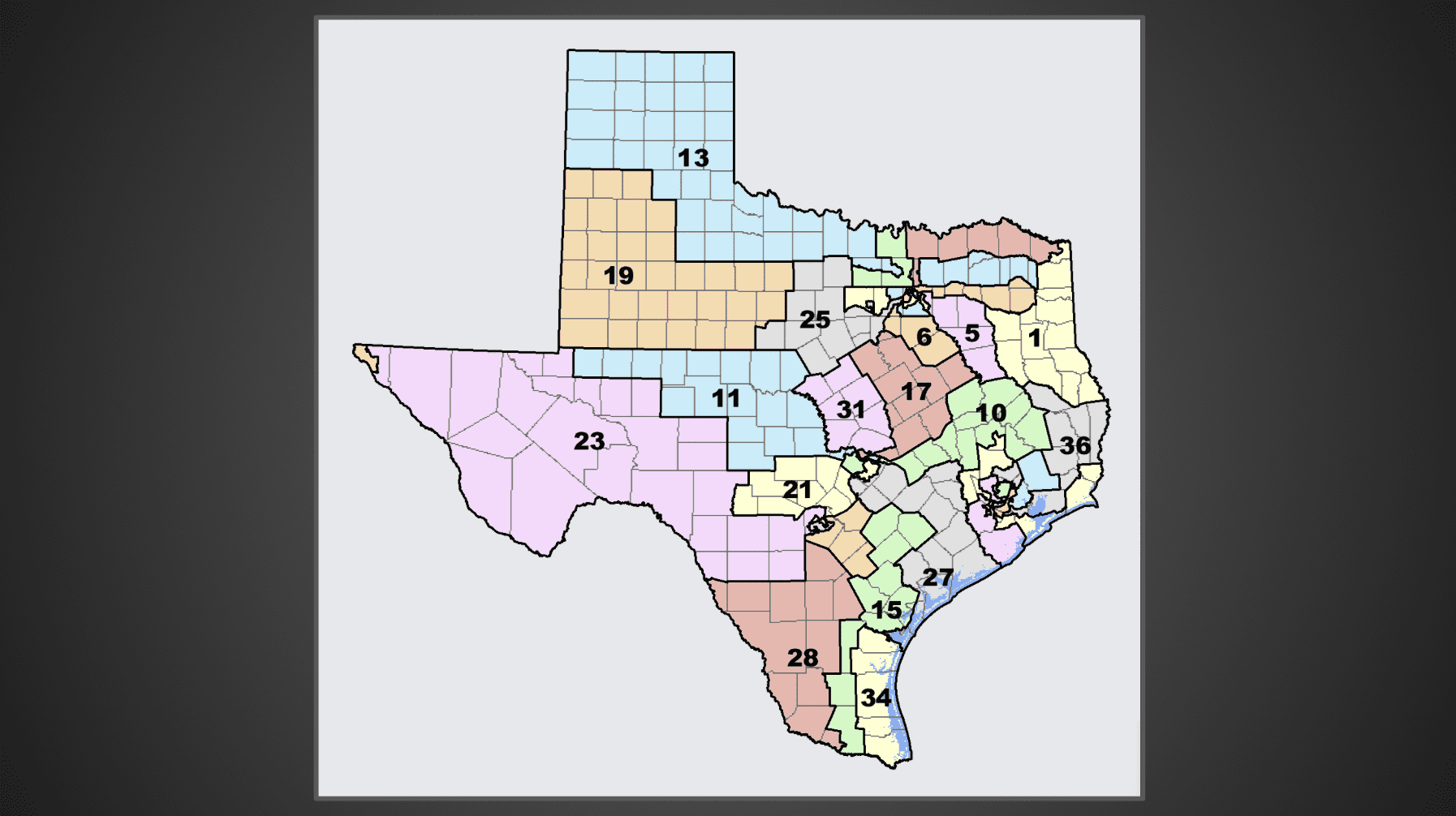
EL PASO—The high-stakes legal challenge to Texas’ new congressional map continued Thursday, as a panel of federal judges heard testimony from Democrat lawmakers and examined claims from left-wing advocacy groups that the state’s redistricting process was racially discriminatory.
Organizations suing include the League of United Latin American Citizens (LULAC), the National Association for the Advancement of Colored People (NAACP), the Mexican American Legal Defense and Educational Fund (MALDEF), and the Mexican American Legislative Caucus (MALC).
A pivotal moment came when the State introduced a bombshell video of U.S. Rep. Al Green (D–Houston), who candidly stated: “If we don’t say this is racial we won’t get to Section 2 and we won’t win,” referring to the Voting Rights Act strategy at the heart of the Democrats’ court challenge.
This acknowledged strategy underscores that the ongoing courtroom drama is as much about partisan advantage as the content of the maps themselves.
Day two opened with testimony from Democrat State Sen. Royce West (Dallas), who admitted his primary reason for believing race was a factor in the new maps was his sense that minority communities were “used as pawns.”
While West previously claimed the entire process was about “getting more Republican seats in Congress,” he tried to shift the narrative toward racial intent but revealed little to substantiate it.
He acknowledged that votes on redistricting fell strictly along party lines, but argued that the Black Caucus not being consulted was somehow evidence of discrimination.
He also made the highly questionable assertion that “If a person has a past of discrimination, even if that case was reversed, that should inform intent in this case.” That was in reference to a 2011 case in which State Rep. Todd Hunter’s (R–Corpus Christi) redistricting plan was accused of being racially discriminatory. The U.S. Supreme Court ruled that racial discrimination did not take place.
West believes that Hunter—who is also involved in this redistricting case as the House member who carried the legislation—should be held liable for allegations against him in the past, despite them having been debunked in the nation’s highest Court. This upends the fundamental presumption of innocence in federal law.
Next, Democrat State Rep. Senfronia Thompson (Houston) took the stand, providing testimony that inadvertently weakened the plaintiffs’ arguments.
During the 2021 redistricting lawsuit—which also alleged the State discriminated on the basis of race—the State asked Thompson a few questions during deposition. One such question was whether she believed State Sen. Joan Huffman (R–Houston)—who carried the map—racially discriminated.
Thompson expressed personal offense at being asked this question, misinterpreting the state’s inquiry as an attack. She believed the State was attempting to “catch” a Democrat accusing a Republican colleague of racism. Thompson said that she knows Huffman well and that this was a ridiculous allegation—stating she believes there was no racial discrimination in the 2021 redistricting efforts.
Nonetheless, Thompson is accusing the 2025 redistricting of racial discrimination.
State attorneys asked Thompson if she was aware that the lawyers alleging racism against the 2021 redistricting were the exact same lawyers before her today—alleging racism against the 2025 redistricting attempt.
In response, Thompson stated that “every redistricting we have, lawsuits are filed,” regardless of what the map looks like. She described post-redistricting lawsuits as a routine political exercise rather than unique evidence of discrimination—seemingly undercutting the validity of the lawsuit at hand.
She further testified that she had no problem with State Rep. Hunter providing racial demographic data when introducing the new maps—stating, “I would hope he would.” The State had been trying to use Hunter’s presentation as evidence that race was considered in redistricting.
Hunter had emphasized to lawmakers that the new map actually increases representation for minority voters: four out of five redrawn districts are now Hispanic-majority, and Texas, which previously had no Black-majority districts, will now have two.
State Rep. Ramon Romero Jr. (D–Fort Worth), who also testified Thursday, claimed the 2025 redistricting was racially discriminatory but could not provide evidence, only saying “folks were already electing the candidate of their choice.”
When shown his own past comments warning that passing the map would undermine democracy, Romero first denied making them, then admitted to the remarks. When pressed, he also stated that he could not judge colleagues’ motives as racist based on a single vote.
As the hearing continues, testimony from the plaintiffs’ own witnesses has repeatedly failed to provide solid evidence of racial intent—contradicting the core of their legal argument.
With prominent Democrats admitting that lawsuits are standard fare after every redistricting cycle, and the real battle lines drawn along party lines rather than racial divisions, the case for blocking the new congressional districts may be on shakier ground than before.
The outcome of the case will determine whether Texas’ new map, which creates five new GOP-opportunity districts, will be used in the 2026 midterm elections. The case is expected to be appealed to the U.S. Supreme Court, regardless of the outcome.