Senators debated whether online prediction markets such as Kalshi should be treated as federally regulated financial exchanges or gambling platforms subject to state oversight and restrictions during a Tuesday committee hearing.
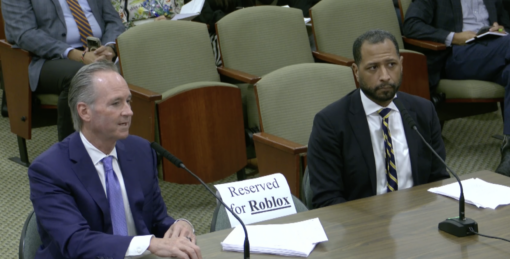
The Texas Senate State Affairs Committee heard from prediction exchange market Kalshi, as well as experts on gambling and gaming.
Kalshi categorizes itself as “the first CFTC regulated exchange dedicated to trading on the outcome of future events.” The company advertises that “traders” can enter into exchanges on topics as broad as elections, sports, the weather, or pop culture.
“Kalshi’s vision is to allow people to capitalize on their opinions, trade in the domain of every day, and hedge risks that relate to them,” reads Kalshi’s website. The company charges a flat fee of about one cent for each transaction.
However, the recent rise in online prediction markets like Kalshi has created a gray area regarding how these markets should be regulated.
Kalshi’s head of enforcement and legal counsel Robert DeNault likened the practice to a derivatives market in his testimony before the committee.
“What [Kalshi] offers is a financial product that lets Texans engage in well-regulated trading activity in a free and open market, as well as manage real financial risk, the same way that any other regulated derivatives market does,” said DeNault.
DeNault also downplayed the company’s similarity to a sportsbook or sports gambling, noting that other products have similar likenesses and yet are not regulated by gambling laws.
“Different types of financial products warrant different regulatory structures, even when those products bear similarities or touch on similar topics,” said DeNault. “For example, weather derivatives can offer the same financial exposure as an insurance contract based on a weather event, and every year colleges manage risk by taking out sports insurance policies that depend upon whether the team wins or loses, but we do not regulate insurance like gambling just because it touches on sports or weather.”
Critics argued otherwise.
Problem gambling policy expert Brianne Doura-Schawohl cited a 2026 survey by the American Institute for Boys and Men showing that 61 percent of Americans view prediction markets as gambling rather than investing.
Doura-Schawohl also noted how problem gambling has the highest suicide rate of all addictions, and Kalshi’s website directly links to the 988 Suicide and Crisis Lifeline on a webpage titled “Responsible trading tools.”
State Sen. Bob Hall (R–Edgewood) remarked that “[gambling is] an industry that not only recognizes how truly evil it is, in their advertisement to come play our games, they’ll run a little trailer at the bottom and say, ‘Oh, by the way, if you become mentally ill, addicted to this, we’ll tell you who to go talk to.’ I can’t imagine any other industry out there [doing such a thing].”
Tres York of the American Gaming Association recommended that Texas sue prediction markets in state courts, noting that “out of the 42 state and federal rulings that have been issued so far, states have won 36 of them. That’s an 86 percent win rate. Why? Because what they’re offering is clearly gambling, and 85 percent of their gambling volume is on sports and parlays.”
“If 85 percent of the betting on your site is on sports, you’re a sportsbook,” said York.
DeNault pushed back against this, stating that this “combative alternative” would only push American customers to offshore markets, where “there are no consumer protections [or] federal regulations.”
“You could go the combative route and try to ban something that’s here in the United States and already federally regulated, but what you’ll end up with is a bunch of customers here in Texas just going offshore to an even more dangerous platform,” said DeNault.
DeNault also noted that, while prediction markets’ influence on election integrity is of some concern, transactions surrounding elections are closely monitored and restrictions are placed on some Kalshi customers that hold political office.
He argued the prediction market is self-regulating as well, noting anecdotally how an attempt to artificially inflate the odds of a California mayoral race was met with increased counterbalancing investments on the other side.
In late August, a former White House teleprompter operator was fined $172,000 for using insider knowledge to make Kalshi bets on U.S. President Donald Trump’s speeches.
Texas Values Director of Policy Jonathan Covey stated that, while Kalshi’s detection of the operator’s insider betting was “favorable evidence for Kalshi,” it also showed that “highly sensitive, non-public political information can be monetized on the platform.”
Concerns were also voiced regarding the effects of prediction markets on young people.
Houston-based pediatrician Lindy McGee expressed that she was “very disappointed in this last panel to hear the representative from Kalshi not say that 21 should be the age for these products.”
“Gambling addiction can impact people of all ages and their families, not just young people,” said McGee. “Families’ experience play a critical role in child development. Parents and other relatives with gambling addiction may normalize addictive behaviors and contribute to financial instability and family distress, placing children at greater risk for adverse outcomes.”
“According to a recent analysis, young adults between 18 and 21 years of age have gambled an estimated $5.4 billion on Kalshi alone this year,” said York. “Every parent with a senior in high school or a freshman in college should be immensely concerned about this.”
“Their message to young Texans is clear: instead of saving up to buy a car, pay for college tuition, or invest early in your 401k for retirement, you should put that money instead on a 13-leg parlay with plus 12,000 odds instead,” York added.
According to Covey, the Texas Legislature will need to deliberate how best to regulate these prediction markets without running into federal preemption.
The next legislative session is slated to begin on January 12.