Texas senators are weighing whether wind and solar developers should be required to provide financial assurances for eventual cleanup earlier in a project’s life. This followed testimony about abandoned turbine blades and concerns that landowners could be left with costly decommissioning obligations.
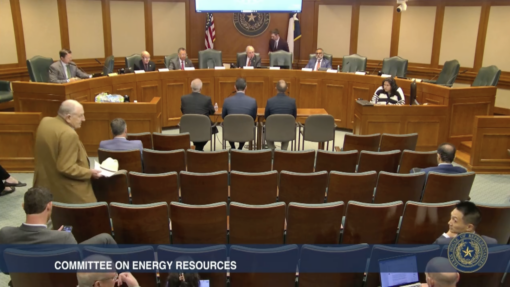
During a Monday interim hearing, the Senate Natural Resources Committee examined whether existing requirements, generally delayed until a wind project’s 10th year or a solar project’s 20th year, adequately protect landowners and taxpayers.
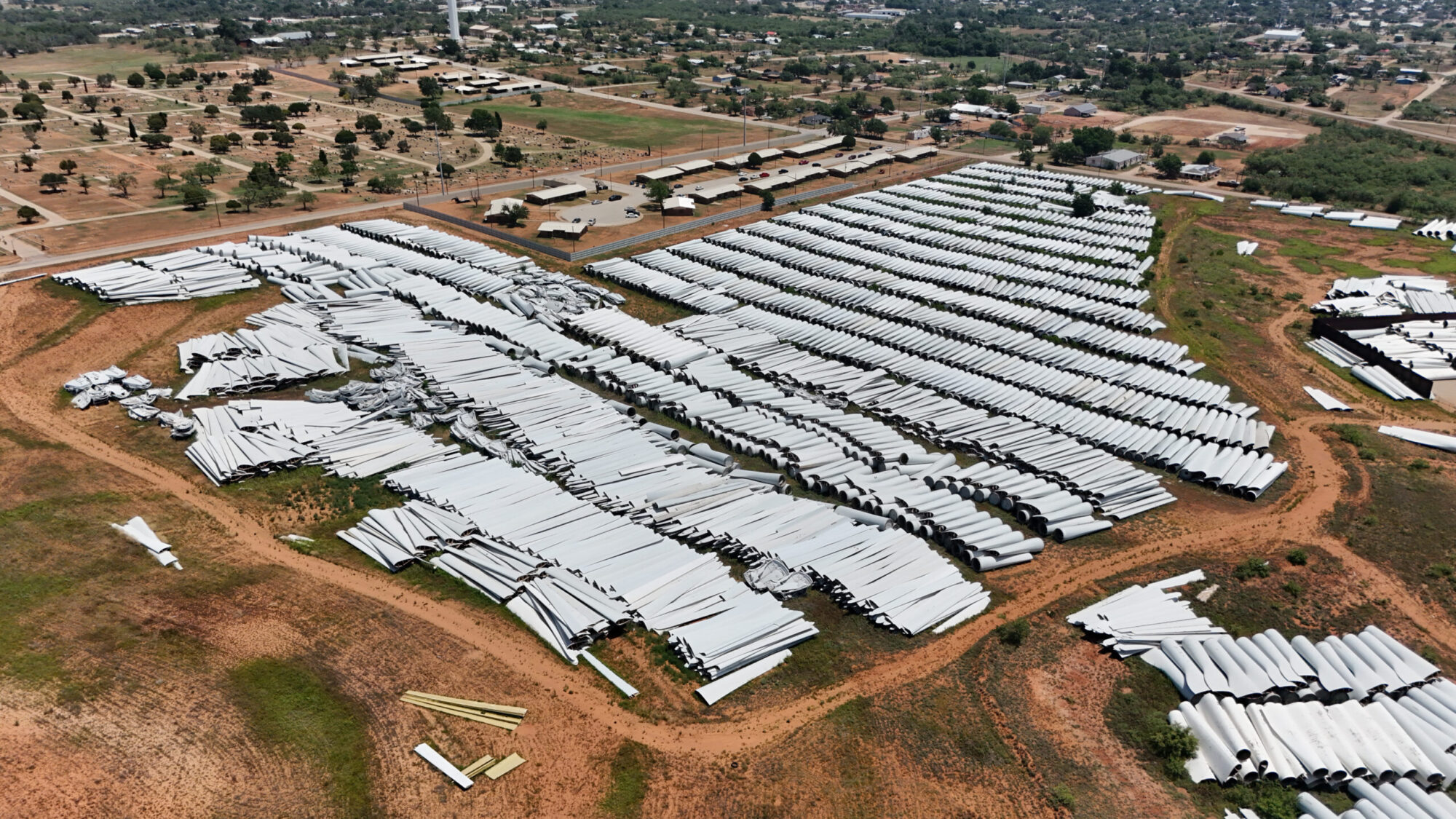
Richard Thompson, district attorney for Texas’ 32nd Judicial District, described a Sweetwater disposal site he called “Windblade Cemetery” as an example of failed wind-blade recycling and disposal.
According to Thompson, a Washington-based company offering windblade recycling options moved into the area but was not able to actually recycle the blades. The company established two disposal sites in Sweetwater near an actual cemetery and government housing facility.
“The [windblade] cemetery got so huge. There is actually a wild pack of dogs that live in the cemetery. Vermin comes into the government housing facility. They had to take measures to stop that from coming in because there’s kids playing, things like that,” said Thompson.
Thompson noted that Global Fiberglass Solutions, the company that carried out the decommission neglect, has been indicted for illegal dumping.
Charly Fritz of the Texas Commission on Environmental Quality reviewed previously passed legislation, notably House Bill 3229, which “established new reporting, financial assurance, and penalty requirements for recycling facilities that recycle components from wind turbine generators, solar energy devices, and battery energy storage systems.”
Curtis Schube, executive director of the Council to Modernize Governance, said his organization rated each state’s renewable energy regulations to determine how well it is protecting the taxpayer when decommissioning comes due.
Only one state received an A, 26 states failed, and Texas received a C grade, “which is actually ahead of a lot,” according to Schube.
Schube noted two changes could make Texas one of the best rated in the country.
“First, Texas should create a statutory minimum for their financial assurance. Currently, it’s done on an estimation, but we think that that is too indefinite. If you create a minimum floor, that protects the taxpayer. Second, we do not think that you should have the 10- or 20-year delay on putting up the financial assurance. We think that that should be at the project’s inception, just like it is for oil and gas,” said Schube.
Advanced Power Alliance’s (APA) Judd Messer said that “end-of-life management is an important part of developing all energy infrastructure.” APA represents energy developers, as well as owners and operators of power generation projects.
“The company that builds and operates a project should ultimately be responsible for the cost of removing its equipment, restoring the land, and then managing the proper disposition of the components at the end of their useful life. Those costs, we also agree, should never fall to the landowner or the Texas taxpayer,” said Messer.
Messer noted his support for recent legislation that sought to correct decommissioning neglect, and called the situation in Sweetwater “abhorrent.”
“Our industry wants to see those things gone more than anybody else,” added Messer.
When State Sen. Bryan Hughes (R–Mineola) asked Messer whether or not he could agree that financial security could be put up earlier in the construction process, he said, “I would agree that nothing bad could come from doing it earlier in the process,” though he quibbled on exactly when in the process the financial security should be put up.
Senators signaled they may file bills addressing decommissioning issues during the next legislative session, which is slated to begin on January 12.