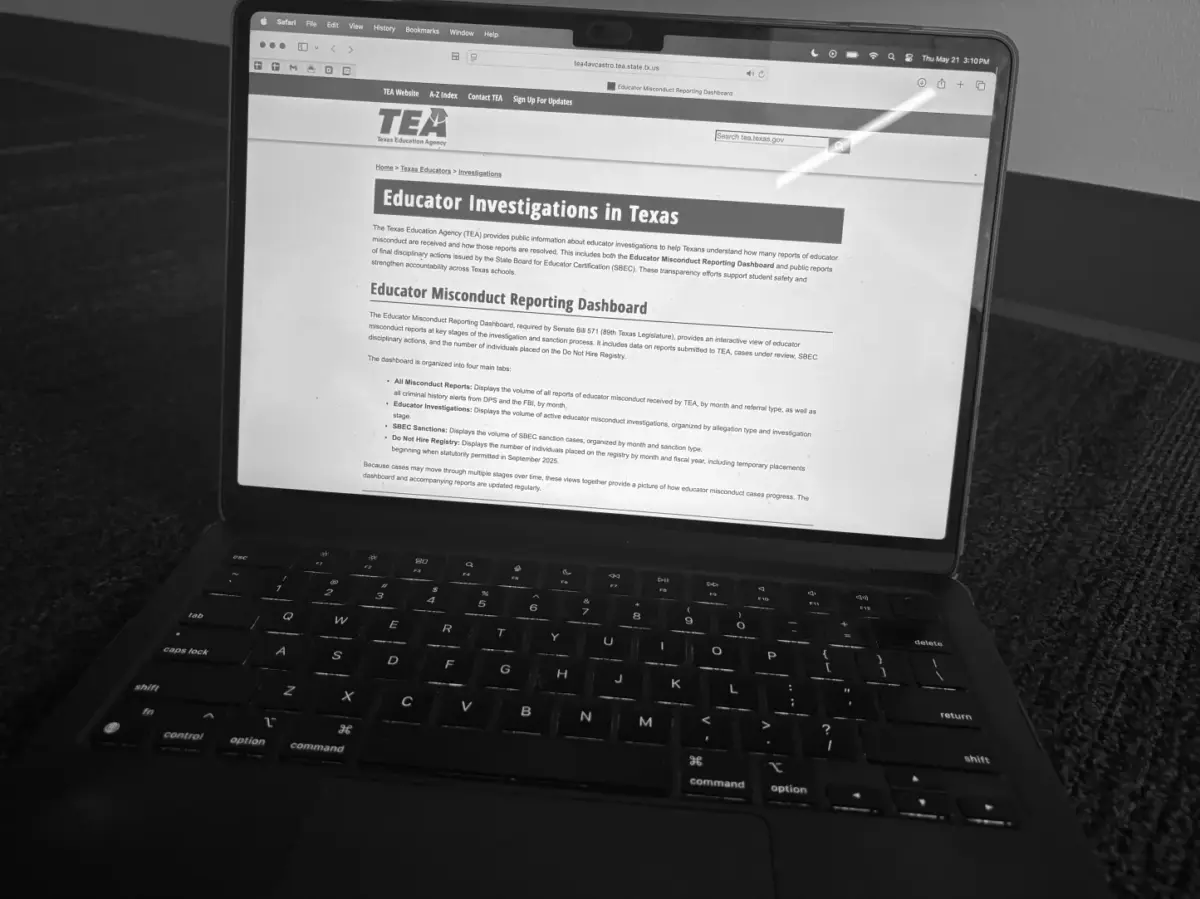
A new transparency tool created by the Texas Education Agency reveals an alarming number of the state’s educators are committing crimes.
The state’s new Educator Misconduct Reporting Dashboard displays data on reports submitted to the TEA from various sources—including fingerprint-based criminal history alerts from the Texas Department of Public Safety and the FBI.
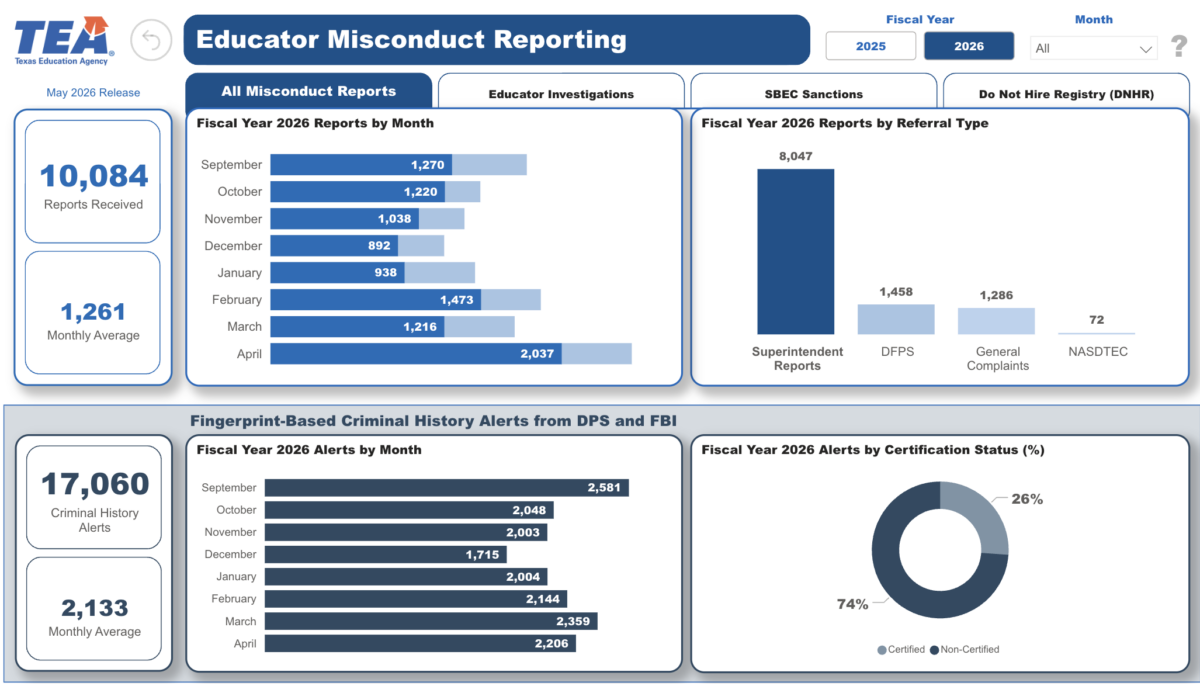
Dashboard data for the first eight months of the 2026 fiscal year, from September 2025 through April 2026, shows 17,060 criminal history alerts. That’s an average of 2,133 Texas school employees every month who are arrested or have their criminal records updated.
In fiscal 2025, the monthly average was 1,938, with a total of 23,257 criminal history updates for the year.
For both years, non-certified school employees accounted for three-quarters of the criminal alerts.
Escalating Educator Misconduct Reports
A skyrocketing number of educators are also being accused of violent and sexual misconduct involving students.
Educator misconduct reports submitted through the TEA’s complaint reporting portal have reached 10,863 so far in fiscal 2026, averaging 1,552 a month.
That number is a big increase from 2025’s total of 6,456 misconduct reports and monthly average of 538.
The dashboard also displays the number of investigations opened by TEA as a result of the misconduct reports received by the agency and breaks them down by complaint category.
So far this year, TEA’s Educator Investigations Division is opening an average of 1,158 investigations a month—more than double last year’s average of 423 a month.
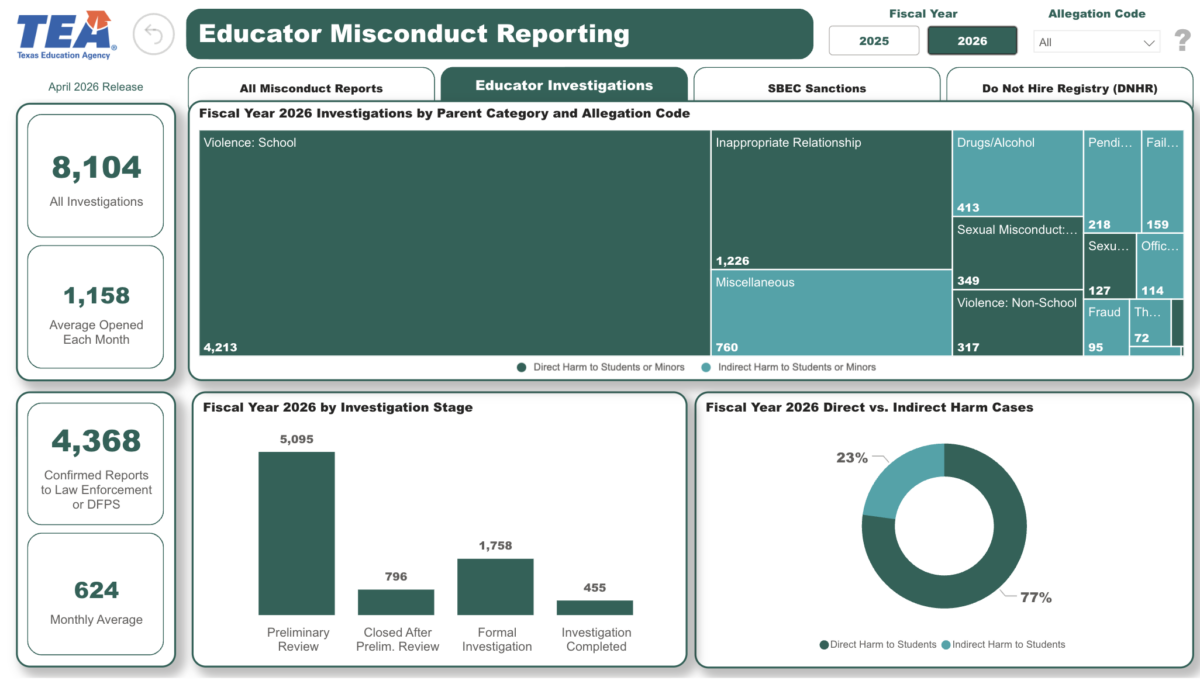
Half of the 8,104 complaints currently being investigated involve school-related violence. The monthly average of investigations opened into educators accused of violence toward students has more than tripled since last year, from 180 to 647.
Sexual misconduct complaints—including alleged “inappropriate relationships” with students and sexual abuse of students or other minors—account for 21 percent of open TEA investigations.
The average monthly number of sex-related investigations opened so far this year is 249, nearly triple last year’s pace of 86 per month.
Other misconduct categories include drugs/alcohol, non-school violence, fraud, theft, and official misconduct. In addition, 180 superintendents and principals are being investigated for failing to report misconduct allegations to TEA.
Behind the Numbers
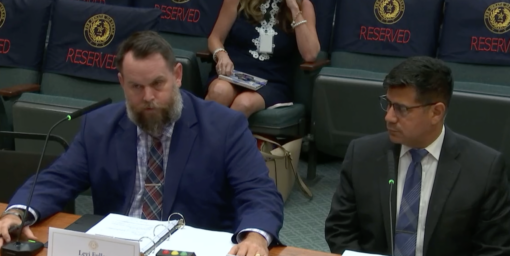
Earlier this week, the state’s first Inspector General for Educator Misconduct, Levi Fuller, demonstrated the dashboard to members of the State Board for Educator Certification, the government-appointed body that oversees professional standards for Texas school teachers and administrators.
Fuller attributed some of the spike in reports and investigations to stiffer laws passed last year and creation of an office focused on these cases.
“I don’t want anyone to be disheartened by the increased reports, by the increased investigations,” Fuller told SBEC members during a meeting on Tuesday. “These are all good things, and if we are successful, then eventually these numbers will go down.”
“But they will go down because we have culled the population of bad actors,” he added.
Last year’s game-changing legislation for educator misconduct investigations and reporting was Senate Bill 571 by State Sen. Paul Bettencourt (R–Houston).
Bettencourt was behind the state’s first law against “passing the trash” and has worked each session since to improve laws that protect students from known predators in schools.
“We’ve got to do everything we can to stop it,” Bettencourt told Texas Scorecard.
SB 571’s expansion of what and who can be reported contributed to the exploding numbers shown on the Dashboard. Reportable misconduct now specifically includes inappropriate communications and boundary-crossing by any school employee or contracted service provider.
The law also allows educators accused of certain serious crimes to be temporarily placed on the TEA’s Do Not Hire Registry (now integrated with the Search Engine for Multi-Agency Reportable Conduct) pending the outcome of investigations.
Adding an inspector general at TEA was not part of Bettencourt’s legislation, but he called it a “key addition” in the fight to protect students.
“We have to have someone who is going to aggressively use the tools designed to protect our kids from abhorrent, documented predatory behavior,” said the senator.
Looking Forward
Bettencourt said the culture of “looking the other way” has to end.
“The important thing is to keep at it and be willing to listen and plug any remaining holes,” he said, adding that there are still a few “small cracks” he wants to fill. “I’ll do whatever I have to, to get everybody.”
“We’re talking about the future of someone’s child. We’re pumping money into public education and people want to get in there who have a problem … We can’t have that around kids.”
During an interview last month, Fuller noted that the “bad actors” are a small percentage of the 355,000 certified educators and 200,000 non-certified employees in Texas public schools, but he agreed with Bettencourt that one is too many.
“This is a fraction of a percent, which is good. But that being said, it is something we need to root out,” Fuller said during Tuesday’s SBEC meeting.
Fuller said the dashboard numbers show that bad actors are being identified, which is the first step toward removing them from Texas schools.
“These numbers seem disheartening, right? But this was our goal,” explained Fuller.
“We want to protect kids, we want to make sure that reports are happening, we want to investigate them, we want to figure out and only have the best educators around our kids, and keep our kids safe,” he said.
“I know that’s been a priority of this board, of the legislature, of TEA, and so seeing these numbers like this shows that what we’re doing is working and progressing towards our goal of keeping our kids safe in our schools.”
Overseeing Educator Conduct
The Texas Education Agency and State Board for Educator Certification are separate entities, but they work together and each have a role in overseeing educator conduct.
TEA receives educator misconduct reports, investigates allegations, and recommends actions to SBEC.
SBEC takes disciplinary action against educator certificates based on TEA’s investigation findings and recommendations from administrative law judges who hear contested cases.
The TEA commissioner, who is appointed by the governor, issues final decisions in certain disciplinary cases.
The State Board for Educator Certification was created by the Texas Legislature in 1995 to grant public school educators authority to govern standards of conduct within their profession.
SBEC consists of 15 members, including 11 voting members appointed by the governor. Board members are required to meet a minimum of quarterly to conduct business, including deciding disciplinary action on complaints filed with the TEA against certified educators.