University leaders told Texas senators that recent higher education reforms are helping drive new interest in their institutions, as lawmakers reviewed governance changes, research security, and state funding oversight during interim hearings this week.
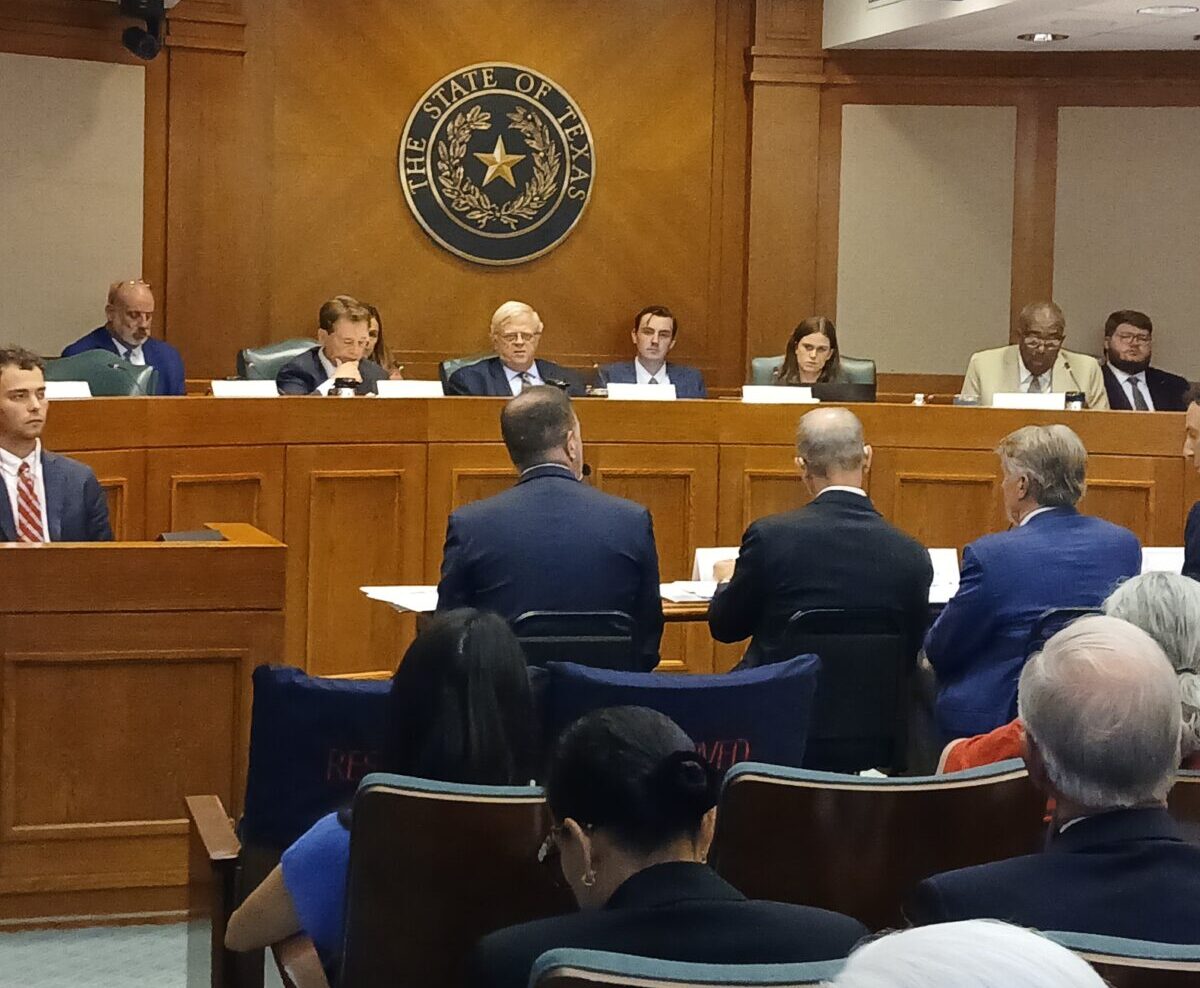
The Texas Senate Higher Education Committee‘s Tuesday hearing primarily focused on the implementation of Senate Bill 37, a state law passed in 2025. The law reformed several aspects of university governance, focused on expanding the explicit authority of campus presidents and system boards of regents.
Texas Tech Chancellor Brandon Creighton, who wrote SB 37 as a member of the Senate, reported curriculum reviews are ahead of schedule, with board of regents action expected in November.
Beyond operational updates, Creighton predicted a realignment in perceptions of academic prestige where current “elite” university brands decline in influence while lesser-known institutions rise rapidly. As an example of this phenomenon, Creighton cited a partnership with NVIDIA that Texas Tech announced in February.
Creighton also discussed campus culture, noting a surprisingly high figure regarding male student gambling. He dismissed questions regarding Tech System Chairman Cody Campbell’s substantial financial support to the attorney general ahead of the Brendan Sorsby case intervention.
University systems are aggressively restructuring their internal operations to align with new state expectations. Archie Holmes of the UT System confirmed that faculty senates were abolished in August 2025, with new governance rules finalized this past May to ensure clear accountability.
University of North Texas Chancellor Michael Williams reported the closure of more than 70 low-enrollment programs, while Texas A&M General Counsel Brooks Moore said that his system would undergo further consolidation and elimination of underperforming programs later this fall.
Brandon Simmons, a director in the Texas Higher Education Coordinating Board Office of the Ombudsman, which was created under SB 37, detailed its efforts since its launch in October 2025.
The ombudsman’s office has hired a legal team drawn primarily from Attorney General Ken Paxton’s office, led by Ryan Walters.
As of the hearing, his office has received 73 complaints. Of these, two open investigations are underway with a third expected shortly, while roughly 30 complaints fell outside the office’s jurisdiction and 29 were related to harassment.
State Sen. Carol Alvarado (D–Houston) attempted to pivot the conversation toward racial narratives during these discussions but did not succeed.
The committee also discussed the implementation of House Bill 127, a research security law passed in 2025, on Tuesday.
Kevin Gamache, the Texas A&M’s System’s chief research security officer, argued that institutions can effectively protect innovation without resorting to blanket bans based on nationality or forestalling international collaboration.
While Gamache did not discuss specific countries of concern, Texas A&M has faced extensive criticism for its collaboration with entities affiliated with China and Qatar.
Joan Bienvenue, chief research security officer for the University of Texas System, said board action related to this law is likely in August.
Trey Atchley, MD Anderson’s research security officer, discussed a series of regulatory compliance issues, such as federal regulations on “biospecimens” or state regulations on “genome data.”
State Sen. Paul Bettencourt (R–Houston) emphasized that intellectual property theft remains an ongoing threat, despite high-profile public announcements regarding relationships with entities like China.
Prior to Tuesday’s hearing, a handful of opponents held a press conference where they repeated familiar allegations of “censorship.”
On Wednesday, officials from several taxpayer-subsidized university systems updated the committee on their use of a series of state funds dedicated to higher education.
Bettencourt told officials from the UT and A&M systems that “to whom much is given, much is expected” in reference to a series of funds with significant energy resources to which they have exclusive access.
Bettencourt told the officials that his committee would set the standards for the “much is expected.”
UT System Chairman Kevin Eltife told the committee that recent reforms to higher education passed by state lawmakers have led to unprecedented interest in UT-System institutions from out of state. Texas A&M System Chancellor Glenn Hegar echoed Eltife’s point on behalf of his institution.
Bettencourt pointed to recent enrollment growth as proof the public supports recent reforms.
Eltife further told lawmakers that 90 percent of building requests from these funds are turned down. He spoke of the need to prioritize maintenance on existing buildings and told the committee that the system spends over $1 billion annually on this item alone.
Legislative oversight is expected to continue throughout the interim. The 90th Texas Legislature begins on January 12, 2027.