This article was updated after publication to include Sorsby’s announced departure.
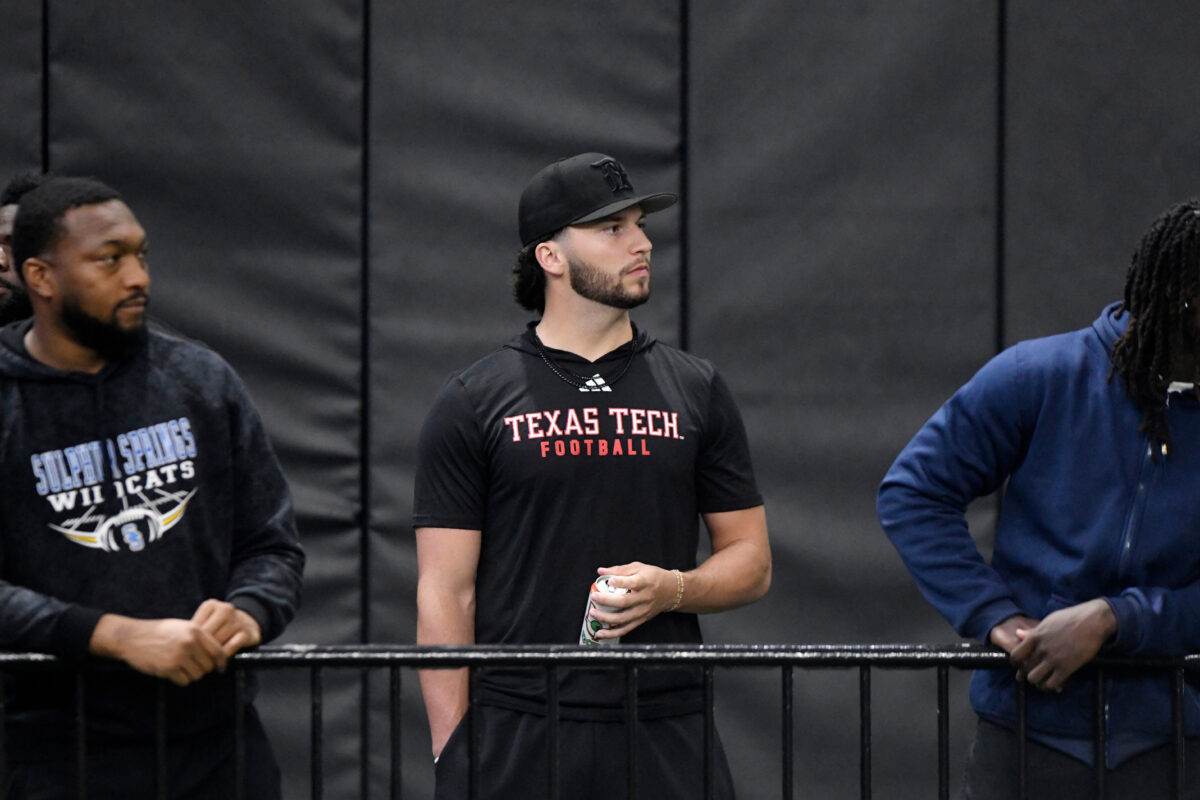
After the Big 12 Conference filed a federal lawsuit against Attorney General Ken Paxton and Texas Tech University over playing quarterback Brendan Sorsby, university officials announced Sorsby will leave college sports for a shot at the NFL.
Sorsby’s eligibility had been revoked by the NCAA after it came to light that he had been betting on Indiana football while he was on the roster. The NCAA has a stringent policy against any players or coaches placing bets of any kind on their own team’s games. Penalties for sports betting range from forfeiture of 30 to 50 percent of the season, to permanent disqualification.
The federal lawsuit filed Monday sought to clarify that the Big 12 may exercise its right to sanction TTU for playing Sorsby, while blocking any legal action that Paxton has threatened to take against the conference.
Late Monday evening, Cody Campbell, chair of the Texas Tech System Board of Regents, announced that Sorsby would not play for Tech this year and instead enter the NFL supplemental draft.
Background
Earlier this month, Sorsby won a court order blocking the NCAA from revoking his eligibility and allowing him to play this upcoming season after a two-game suspension.
The Big 12 held a call after the ruling to see if it could invoke Section 3.6 of the conference’s bylaws to sanction Texas Tech, citing the fact that the university is acting against the best interests of the conference. Texas Christian University and Kansas State officials have both suggested that other universities in the Big 12 will not play if Sorsby is allowed to remain on Tech’s roster.
On June 11, Paxton published a letter to the Big 12 Board of Directors on behalf of Texas Tech stating that any effort to sanction the university via Section 3.6 of the conference’s bylaws “would be unlawful and would expose the Conference to substantial liability.”
He further warned that any action resulting in the cancellation, forfeiture, or alteration of Texas Tech’s schedule would constitute a breach of contract.
The Lawsuit
In response, the Big 12 filed its lawsuit against TTU and Paxton on Sunday, seeking a declaratory judgement that protects the conference’s rights to sanction the university and blocks the Office of the Attorney General from taking legal action against it.
Such a judgement would save the Big 12 from issuing sanctions just to be dragged through the inevitable litigation that follows.
In addition to Paxton and TTU, the suit named the TTU System, Chancellor Brandon Creighton, President Lawrence Schovanec, and Athletic Director Kirby Hocutt as defendants.
Paxton’s threatened legal actions, according to the lawsuit, would “prevent the Big 12 from exercising its rights under its Bylaws and the First Amendment—by seeking to disassociate from and decline to endorse the willingness of one of its Member Institutions to condone, if not tacitly endorse, the sports gambling of one of its players.”
“The Big 12 Conference and its member schools, including Defendant Texas Tech University, have long recognized and spoken out about the dangers of unethical and illegal sports betting by student athletes,” reads the lawsuit. “So too has the Texas Attorney General.”
The suit highlighted the irony that TTU has gone “further than the Big 12 itself” by making student gambling a ground for probation or expulsion from TTU, and that the State of Texas prohibits sports betting outright and criminalizes it, with the Attorney General even having faced suit because of limitations the state has placed on the practice.
“The Big 12 and its Member Institutions (apparently save TTU) have no interest in being required to endorse or even appearing to endorse unethical and indeed unlawful conduct that strikes at the heart of athletic integrity,” reads the suit.
On Monday, Utah Attorney General Derek Brown and Utah Governor Spencer J. Cox published a letter to the Big 12, supporting the conference’s potential sanctions while condemning Paxton’s legal threats.
Utah joins the attorneys general of Oklahoma and Kansas, who had already publicly backed the Big 12 in the dispute.
Sorsby Leaves
Campbell issued a lengthy statement defending the university’s handling of the situation involving Sorsby and his gambling addiction. Campbell said Texas Tech followed all NCAA protocols, conducted standard background checks, and had no knowledge of Sorsby’s gambling activity until months after he arrived on campus, at which point Sorsby took responsibility and sought help.
He emphasized that the school’s “only objectives” were to protect Sorsby’s well‑being, support his recovery, and safeguard his teammates and the broader university community.
Campbell also stressed that it was Sorsby—not Texas Tech—who sued the NCAA to regain his eligibility, and that the university would have abided by the court’s decision regardless of the outcome.
Maintaining that Tech “broke no rules, no laws, and crossed no ethical lines,” Campbell used the case to argue that college sports have descended into “a bottomless pit of chaos” and to renew his call for sweeping reforms, including backing the Protect College Sports Act of 2026.
Even as he announced that Sorsby will not play for Texas Tech this fall and will lose his final year of college eligibility, Campbell said the school will continue to support him personally and expressed hope that the experience will ultimately lead to Sorsby’s long‑term recovery and success.
This all comes as Texas seeks to crack down on sports betting, which has proliferated as online “prediction” markets. Lt. Gov. Dan Patrick has charged the Texas Senate with studying the laws in order to close loopholes allowing mobile apps like Kalshi to operate in Texas.
If you or anyone you know has information regarding court cases, please contact our tip line: scorecardtips@protonmail.com.