As the balance between surveillance and privacy with Flock cameras is debated nationwide, State Rep. Mitch Little is promising to dive into the issue ahead of next year’s legislative session.
“I see several problems. These are sold as license plate readers, but the capabilities are far greater than that. The software captures measurements to identify vehicles ‘even when a license plate isn’t visible.’ This includes decals, bumper stickers, and modifications to cars,” wrote Little (R–Lewisville) on X.
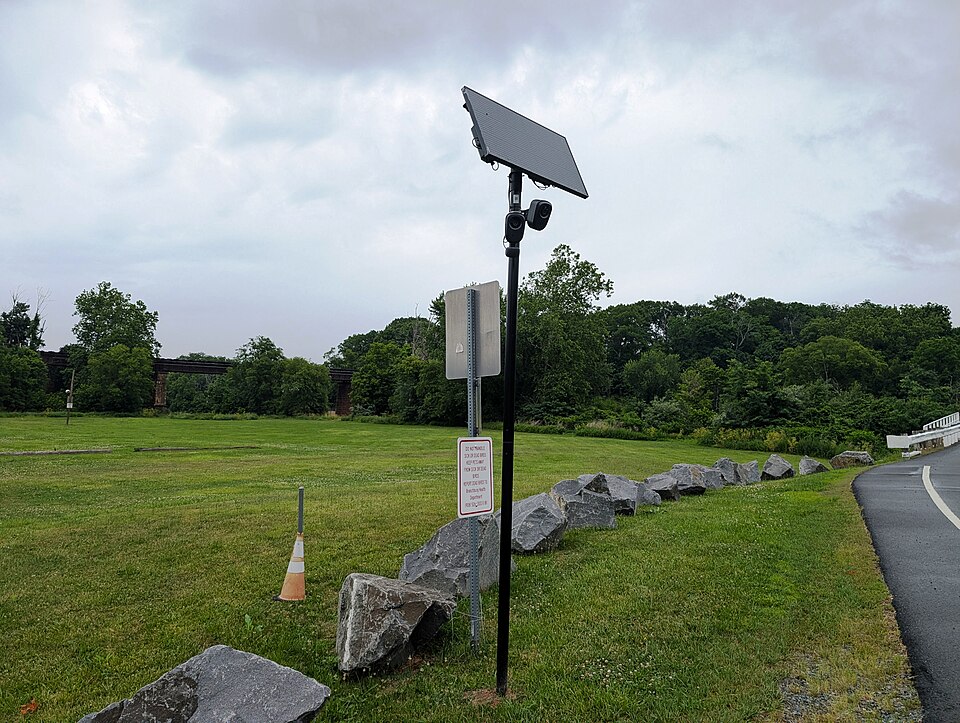
Agencies employ Flock cameras as automatic license plate readers. The cameras utilize AI to read license plates as well as save any identifying markings, such as bumper stickers, cosmetic damage, or aftermarket parts.
Law enforcement officials are not required to obtain a warrant in order to access Flock’s database, raising concerns that the cameras violate citizens’ Fourth Amendment rights.
While law enforcement has touted the cameras as a tool for catching criminals, citizens have expressed concerns that any agency in the country with a Flock contract can access data without a warrant.
Flock has recently come under fire for operating in Texas without required private‑security licensing. In July 2024, DPS ordered the company to cease regulated private‑security operations—including certain private installations—until it obtained the proper license. State records show Flock’s license was suspended and allowed to lapse in 2025, with a new license not issued until December 4, 2025, even as many camera deployments continued during that period.
“One of the fundamental problems I see is that no one voted for this, and there is no legislation that enabled it in the first place. We need to think through this more carefully,” Little added.
Citizens across Texas are getting involved in the debate.
One Houston woman told Little, “As a violent crime victim, I support Flock cameras. My car is already registered, and my plate is visible every time I drive on a public road. I am willing to give up a little privacy if it helps identify a violent suspect, recover a stolen vehicle, or find a missing child.”
She also said regulations should be in place to guide it, arguing the technology is necessary but abuse of it should not be tolerated.
Jon Bouche, former chairman of the Montgomery County Republican Party, spoke at a Montgomery County Tea Party meeting on Monday regarding Flock cameras.
“Our constitutional protections did not remain frozen in the technology of 1791, when it was ratified,” Bouche stated. “As technology evolves, so too must the safeguards designed to protect that individual liberty.”
A common argument by proponents of Flock cameras is that there is no real difference between law enforcement officers and government agents tracking a phone and the use of Flock ALPRs for data collection.
Bouche rebutted this, arguing that individuals willingly entered into a contract with their cellphone company but did not enter into a contract with Flock or in some cases even vote for it.
He cited the U.S. Supreme Court decision in Carpenter v. United States (2018), which held that law enforcement officials must obtain a warrant before accessing or tracking cellphone data.
Conversely, Bouche stated that “these cameras are operating without warrants, and they’re tracking you everywhere,” calling the constitutionality of the set-up into question.
State Rep. Brian Harrison (R–Midlothian) filed a measure last legislative session to regulate the use of automatic license plate readers, but the bill died in committee.
State lawmakers could take up the issue again when they return in January.