A new federal lawsuit is seeking to block Texas’ regulations on hemp-derived THC, which took effect last week. The suit claims that the regulations are preempted by a federal law that legalized hemp by removing it from the Controlled Substances Act in 2018.
The regulations had been blocked for the past four and a half years as a state-level lawsuit was being sorted out. Despite the regulations being deemed legal by the Texas Supreme Court, a new federal challenge has emerged.
Background
In 2018, the U.S. Congress passed the Agriculture Improvement Act—known as the “2018 Farm Bill”—defining “hemp” and removing hemp from the federal Controlled Substances Act. In 2019, the Texas Legislature mirrored the federal farm bill by passing the Texas Hemp Law.
The law established the state’s legal definition of hemp and stated, “It is the policy of [Texas] that hemp is a viable agricultural crop and an agricultural commodity in this state.”
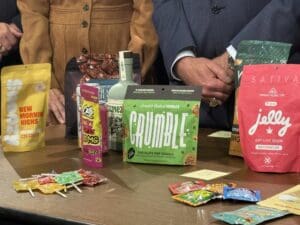
Intoxicating hemp-derived THC was not mentioned in these laws, but technological developments have made it possible to create products containing a high concentration of manufactured THC from hemp—more than enough to create the “high” experienced by smoking marijuana.
Traditional marijuana remains illegal in the state of Texas, and State Sen. Bob Hall (R–Edgewood)—who was a sponsor of the Texas Hemp law—told Texas Scorecard that the Legislature’s intent in 2019 was to produce “an agricultural bill to allow for the growing and production of hemp products.”
“They never intended to allow a psychoactive drug to be on the market with no regulation or control,” he added.
To clarify the state’s position, former Texas Department of State Health Services (DSHS) Commissioner John Hellerstedt updated the DSHS website in October 2021 to classify delta-8, delta‑10, and delta‑6 THC, as well as THCP and and other “manufactured” intoxicating hemp‑derived cannabinoids, as Schedule I controlled substances.
Under Texas law, a Schedule I controlled substance is considered to have a high potential for abuse and no currently accepted medical use in the United States. Possession or distribution of such drugs carries significant criminal penalties.
This sparked a state lawsuit, filed by a coalition of hemp businesses and consumers, which managed to have the DSHS regulations blocked from enforcement while the case proceeded.
In May, the Texas Supreme Court reversed the lower-court injunction, allowing the DSHS regulations to take effect July 31, 2026.
“If the legislature desires to legalize powerful drugs, it has every tool it needs to do so—and to do so unmistakably, as we expect for such a major change to social policy,” wrote Justice Young. “The role of the courts is merely to assess the state of the law as it is.”
A Federal Challenge
Once the DSHS regulations took effect last week, a different coalition of hemp businesses and consumers—Thomas Monti, Lifted Liquids, and The Happy Cactus Apothecary—filed a federal lawsuit in the Southern District of Texas—this time claiming the regulations are preempted by federal law.
In addition to invoking the Supremacy Clause, plaintiffs contend the regulations are void for vagueness and an unconstitutional burden on interstate commerce. While the case proceeds on the merits, plaintiffs are also seeking a preliminary injunction to block enforcement.
Regarding vagueness, plaintiffs argue that DSHS’ definitions do not draw a clear line “between lawful hemp and Schedule I contraband.”
“The commissioner represented that delta-8 ‘naturally occur[ring]’ in hemp ‘is tolerable under the current legal regime,’ but because no rule, guidance, or required documentation identifies how a regulated party can establish compliance, the purported safe harbor is incapable of providing fair notice and necessarily invites arbitrary enforcement,” reads the suit.
Regarding the Commerce Clause, plaintiffs argue the new regulations force out-of-state manufacturers to abandon one of their two largest states, halt shipments, and retrieve their own “compliant products from Texas as contraband.”
They claim that this imposes a burden on interstate commerce that is “clearly excessive in relation to putative local benefits that Texas’s own elected branches have repeatedly declined to claim.”
Regarding the Supremacy Clause, plaintiffs point out that the 2018 Farm Bill provides that “no State may prohibit the transportation or shipment through the State of hemp or hemp products produced in accordance with federal law.”
Because DSHS’ regulations criminalizing possession fail to provide an exception for interstate transportation or shipment through Texas, plaintiffs contend the regulations are preempted by federal law.
However, that same section of the Farm Bill contains a “NO PREEMPTION” clause, which preserves states’ power to adopt “more stringent” regulations on hemp production.
Plaintiffs attempt to dismiss this argument by claiming the preemption clause still does not authorize an administrative agency to classify hemp products as controlled substances contrary to the governing statutory definitions.
The lawsuit emphasizes that it is not asking the court to resolve any questions of state law or any policy debate reserved for the legislative branch. Rather, the court is only asked to determine whether the enforcement of DSHS’ regulations is consistent with federal law and the U.S. Constitution.
Clarifying the Law
Notably, hemp and hemp products with a delta-9 THC concentration that does not exceed 0.3 percent on a dry-weight basis remain legal. This is because such low concentrations are non-intoxicating and align with the State Legislature’s original intent of legalizing hemp as a crop and commodity, rather than opening a backdoor recreational THC market.
The newly reinstated regulations classify all other manufactured, intoxicating, hemp-derived cannabinoids as Schedule I controlled substances. Possession of less than a gram of these products could result in a prison sentence of six months to two years.
Marijuana-derived THC remains entirely illegal in the state of Texas.
Should the plaintiffs be granted a preliminary injunction, the DSHS regulations would once again be blocked while the case proceeds. Should the court rule in their favor on the merits, the regulations would be permanently blocked, and possession of the products would be legal until the Legislature takes further action.
Lt. Gov. Dan Patrick made banning consumable THC a legislative priority in 2025, culminating in the passage of Senate Bill 3. Gov. Greg Abbott vetoed SB 3 at the last moment, allowing THC-infused products to remain on shelves. He claimed to prefer a regulatory framework with age limits, packaging rules, THC caps, and something closer to alcohol‑style regulation instead of outright prohibition.
Now, Patrick has once again charged senators with evaluating the impact of THC on public health, likely leading to another attempt to ban the product in 2027.
If you or anyone you know has information regarding court cases, please contact our tip line: scorecardtips@protonmail.com.