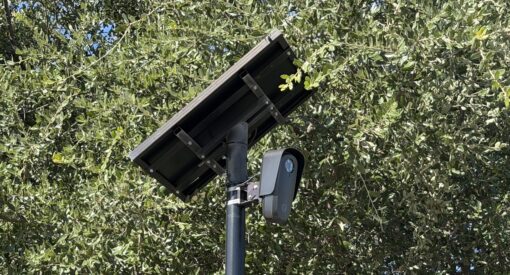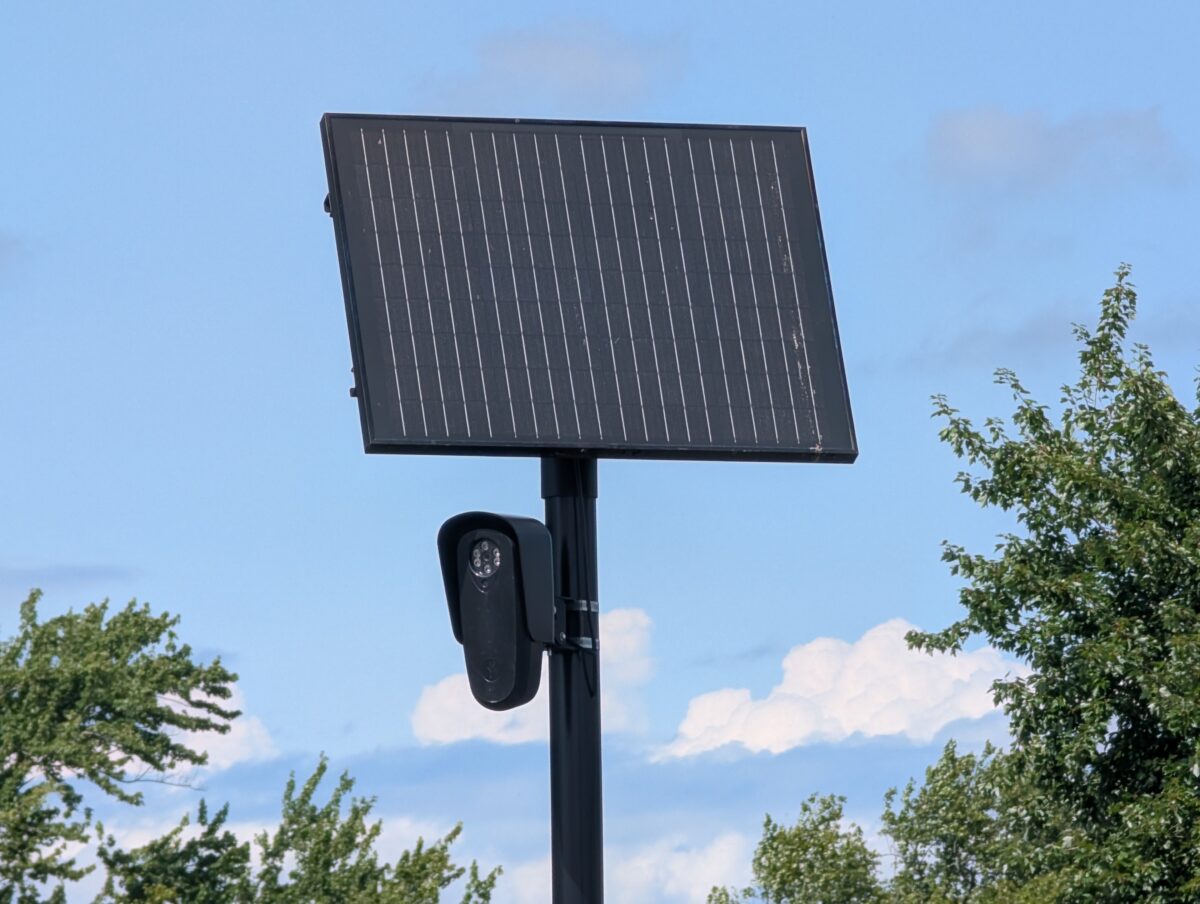
Texas House lawmakers are proposing restrictions on automated license plate reader technology used by government entities.
State Rep. Brian Harrison (R–Midlothian) filed House Bill 847, which requires a warrant for law enforcement to use automated license plate readers (ALPRs).
HB 847 limits ALPR image and data use to investigation of a violent criminal offense.
Images and related data from ALPRs would be destroyed immediately after collection unless the data is involved in a criminal offense or investigation.
House Bill 763 by State Rep. Mary Gonzalez (D–San Elizario) defines allowable ALPR use for government entities to include investigating felony crimes, identifying unregistered or uninsured vehicles, and recovering stolen motor vehicles.
The bill also grants government entities ALPR usage to investigate missing person reports, collect or enforce tolls, and enforce parking requirements.
Captured plate data not needed as criminal evidence would be destroyed by the governmental entity within 48 hours.
HB 763 states that ALPRs cannot be used to target a race, ethnicity, or income level disproportionately to their proportion of the overall population.
Neither HB 847 nor HB 763 addresses data privacy practices at ALPR providers such as Flock Safety, although House Bill 331, proposed by State Rep. John Bucy (D–Austin), would prohibit ALPRs outright for governmental entities.
ALPR providers have seen national pushback amid privacy concerns.
In September, Benn Jordan, a cybersecurity engineer, told a U.S. Senate panel that he found “Flock law enforcement accounts for sale by a Russian vendor on a Dark Web marketplace.”
“FOIA requests show that Flock employees had viewed cameras on their network over 1000 times, including the ones in sensitive areas like the interior of a Jewish community center and a playground,” Jordan continued.
Jordan also “found insufficiently protected sensitive information stored on Flock cameras including photos, license plate data, logs, API keys, passwords, and communications.”
Texas pushback against ALPRs has included Flock contract termination in cities such as Sherman, Midland, and Taylor.
In August, Gov. Greg Abbott paused state funding for Flock cameras, and in September he directed the Texas Department of Transportation to stop issuing new permits for Flock cameras and other ALPRs on state-owned roads.
In October, Comptroller Don Huffines banned grant funds his office administers from being used for Flock cameras and other ALPRs.
In the November election, League City voters rejected a proposition that asked whether League City Police should continue using ALPRs. The 54 percent to 46 percent vote triggered a separate resolution to remove or cover the city’s Flock cameras.
The 90th Legislative Session begins January 12, 2027.