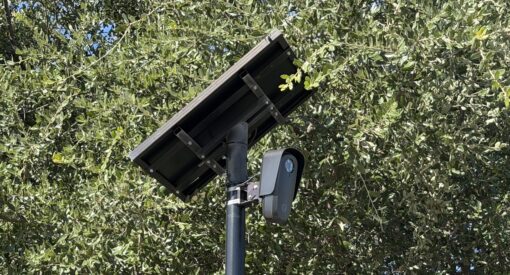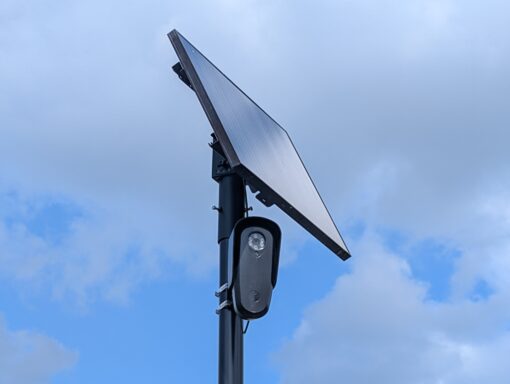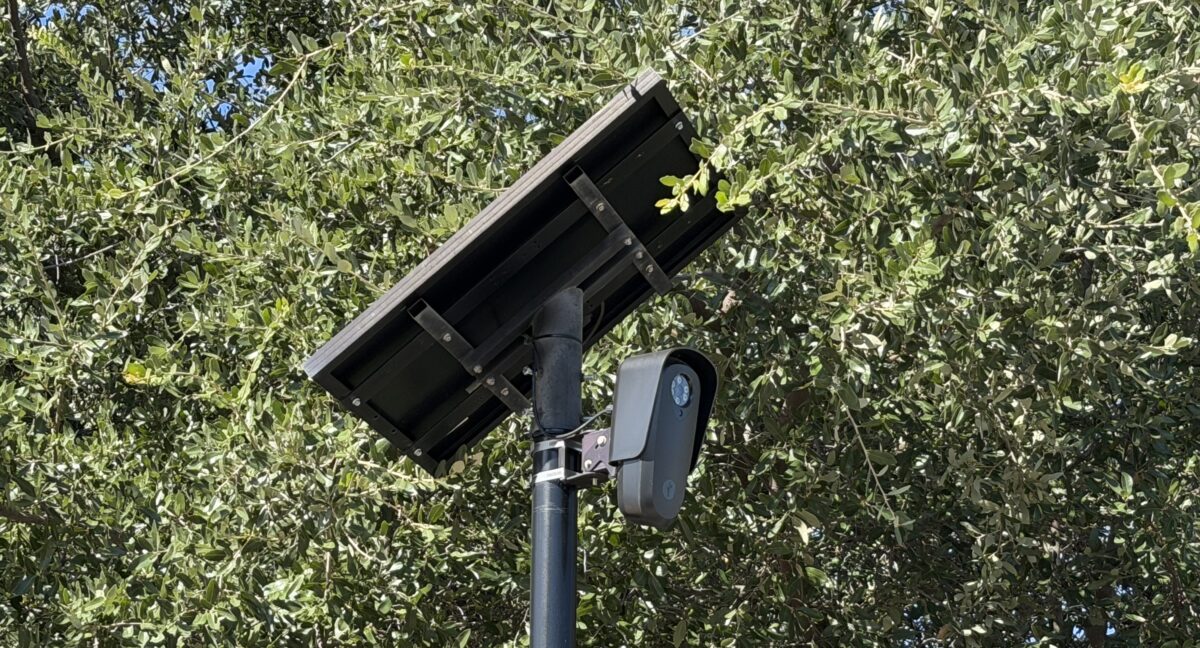
At Gov. Greg Abbott’s direction, the Texas Department of Transportation suspended the issuance of permits for Flock cameras and other automated license plate readers on state-owned roads.
TxDOT said its role is limited to reviewing permits to ensure license plate readers are installed safely and correctly. The agency noted it does not have access to the data collected by the cameras.
The suspension follows Abbott’s decision in late August to issue a pause on state funding for Flock cameras.
Thousands of Flock cameras operate across Texas, with local governments using the technology to assist law enforcement investigations.
Flock’s automated license plate reader system captures vehicle images and license plate data that participating agencies can search for law enforcement purposes.
Local jurisdictions can share the collected information with other law enforcement agencies, creating a broader network that investigators can use when solving crimes. However, privacy advocates have raised concerns about who has the ability to access and share the data as well as potential Fourth Amendment violations.
Earlier in September, former police officer Christian Eder of Amarillo was arrested and charged with 78 counts of tampering with a government record. Court records allege Eder used the city’s Flock camera system 76 times to track a man for personal reasons.
The case prompted the Amarillo City Council to review the city’s use of Flock cameras. Amarillo police chief Thomas Hover said the department had reduced its data retention period from 30 days to seven and implemented monthly audits of camera searches by a supervisor and artificial intelligence.
In response to concerns surrounding its technology, Flock has introduced additional privacy measures, including tools intended to identify suspicious searches of its system.
Concerns over the technology have also prompted several Texas cities to reconsider contracts with Flock. Earlier this month, Manvel City Council voted to end its contract with Flock. Other Texas cities like Bastrop, El Paso, Elgin, and Wylie have done so as well.
Earlier this year, the Republican Party of Texas adopted a new platform that included language opposing ALPRs. The State Republican Executive Committee passed a resolution this past weekend affirming their opposition to the technology.
Abbott’s actions do not amount to a statewide ban on Flock cameras. Instead, the latest suspension applies to TxDOT approvals for cameras installed along state-owned roadways, while local governments can continue to make their own decisions regarding the technology.
Lawmakers are expected to address the technology during the next legislative session, which begins on January 12.