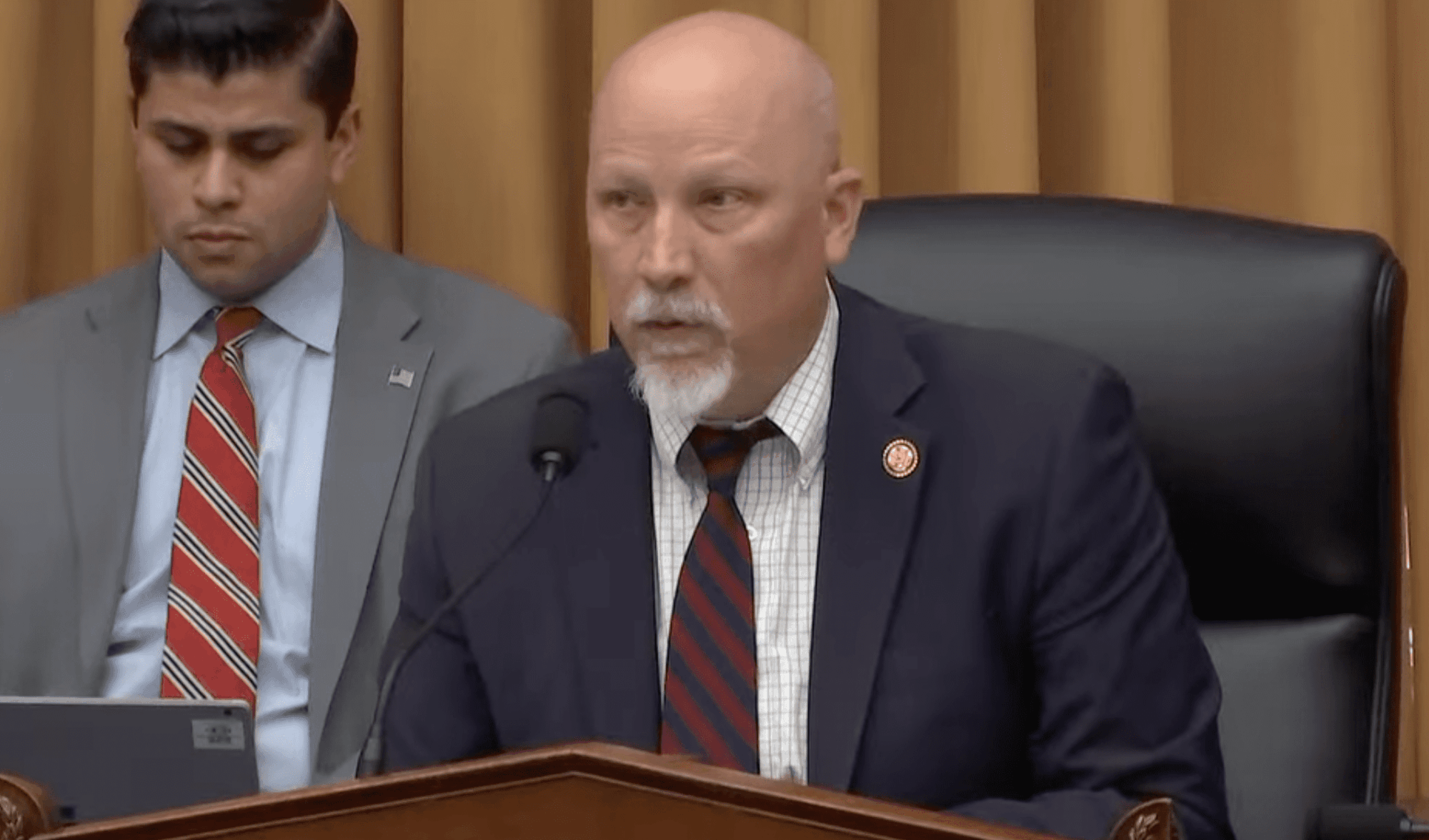
U.S. Rep. Chip Roy has filed legislation to phase out federal renewable fuel mandates while easing restrictions on year-round sales of gasoline containing higher ethanol blends.
The Fuel Freedom Act takes a two-part approach: reduce how much renewable fuel the federal government requires while giving sellers more flexibility to offer ethanol blends voluntarily.
Roy (R–Austin) told Texas Scorecard that the Act “puts consumers, farmers, and American energy independence first” and leads to “empowering the free market, expanding consumer choice, and strengthening America’s domestic energy sector.”
The Fuel Freedom Act modifies the Renewable Fuel Program, which sets requirements for renewable fuels in the nation’s transportation fuel supply. It ensures that “gasoline sold or introduced into commerce in the United States (except in noncontiguous States or territories), on an annual average basis, contains the applicable volume of renewable fuel” specified in the Clean Air Act. The code states that “applicable volume of renewable fuel” equated to 36 billion gallons for 2022.
“By repealing the [Renewable Fuel Standard], refineries are relieved of the cost of complying with the program, a burden which is often the costliest line item in a refinery’s balance sheet,” according to Roy’s summary of the bill.
“This relief would lessen the pressure on our domestic refining capacity, which has been steadily declining for years, and further build on the revitalization of American energy independence that Republicans have been dedicated to.”
The Fuel Freedom Act also adds a “Phase Out” clause, beginning in 2029 and ending in 2032, which gradually introduces a smaller applicable volume for renewable fuels each year. By 2033 and 2034, the applicable volume “shall be 0 gallons.”
The bill also introduces a “Prohibition on Reallocation,” which prevents the reallocation “to any other person [of] any renewable fuel obligation from which a small refinery was exempted” under the law. All new enforcement actions regarding the renewable fuel program must stop by the beginning of 2034, and after 2034 “any program substantially similar to the renewable fuel program” may not be implemented.
The bill also expands the Clean Air Act’s fuel-volatility waiver to cover higher ethanol blends, replacing “10 percent denatured anhydrous ethanol” with “any percentage of denatured anhydrous ethanol.”
“By repealing the barriers to E15 and higher blends, our farmers can continue to produce biofuel and enjoy increased market access year-round without waiting for additional annual action from the government to permit year-round sale of applicable blends,” Roy wrote.
“American consumers will benefit the most by having their choice of preferred blends at the fuel pumps year-round and a bolstered domestic refining sector which pushes costs down,” Roy added.