KERRVILLE – U.S. Secretary of Agriculture Brooke Rollins said the Biden administration’s open border policies helped pave the way for the return of a parasite America had already beaten, as she highlighted steps taken to combat the pest.
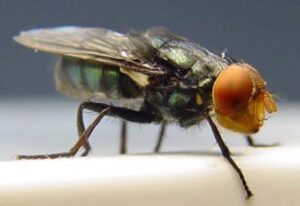
Rollins described how the screwworm, which is a parasitic fly whose larvae infest open wounds on warm-blooded animals, was pushed out of the U.S. decades ago. American actions pushed it from Mexico, and all the way down through Central America and beyond the Darien Gap separating Panama from Colombia.
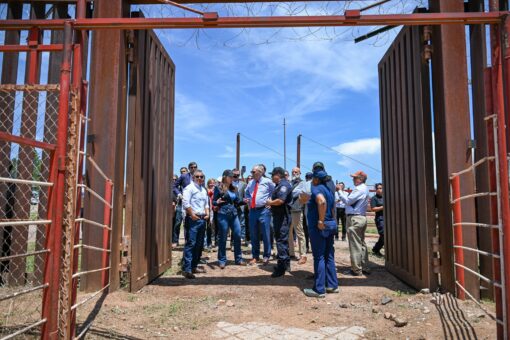
Only after years of lax border enforcement and mass movement of people and animals northward under the Biden administration, Rollins said, did the parasite march back into Mexico and begin its push toward Texas.
The first case was confirmed on Wednesday in Zavala County, and other cases have now been confirmed as well, including a calf in La Salle County and a dog in New Mexico.
A case in a goat from Gillespie County has also been confirmed, but very few details about the case are known by the Texas Animal Health Commission at the time of publishing.
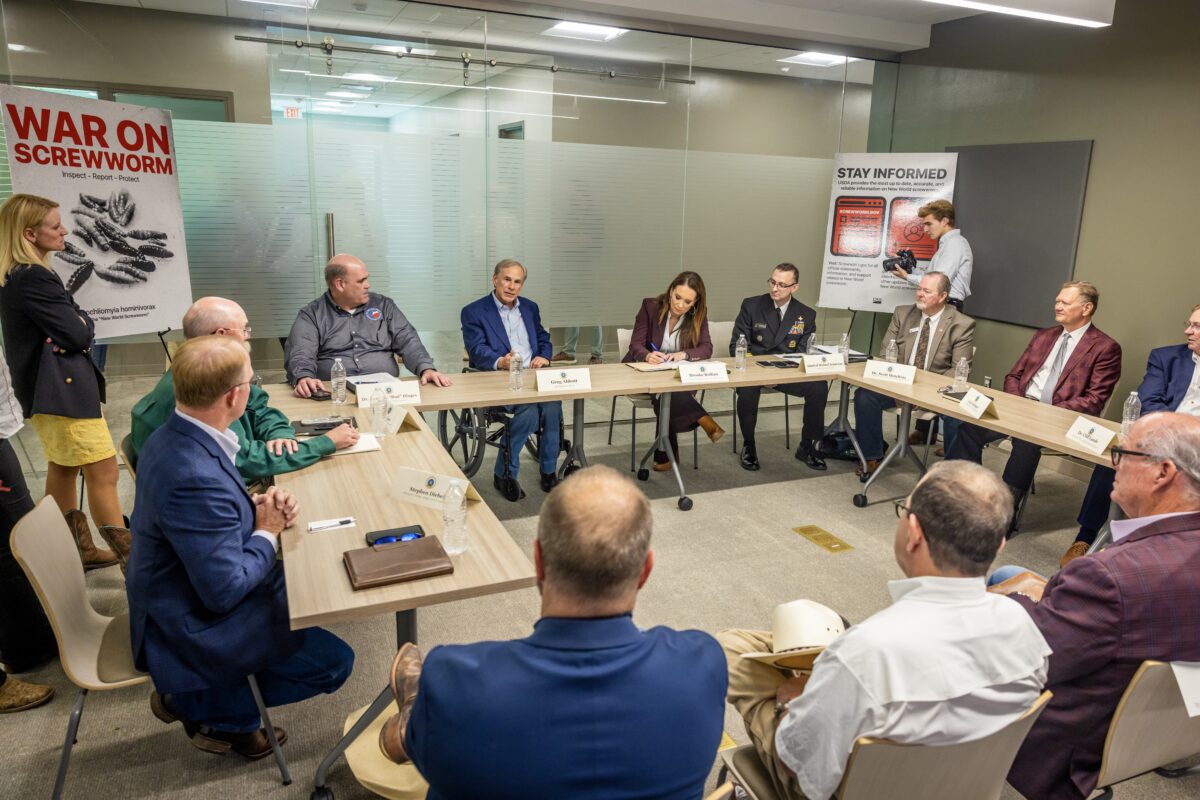
Rollins was joined by Gov. Greg Abbott on Monday at the Knipling-Bushland U.S. Livestock Insects Research Laboratory in Kerrville to address the recent cases of the New World Screwworm.
She also announced additional measures being taken to combat the screwworm.
As a means of collapsing the screwworm population over time, sterile male flies are being released in massive numbers so that wild females lay infertile eggs.
Dr. Scott Hutchins, USDA under secretary for Research, Education and Economics, announced the development of the Novo fly, which will almost instantly double the number of flies put into the fight against the screwworm.
This new development will allow for sterile fly production facilities to only produce sterile male flies.
“If you have a plant that produces 100 million flies, as we do today, 50 percent of those are sterile females, they do us no good in this particular fight,” said Hutchins. “So, by going to 100 percent sterile males, we’re able to instantly double our production.”
Hutchins also said that research is underway to discover the specific odor that the screwworm female is attracted to, which can not only be used for the purpose of monitoring, but also for developing a modern SWASS (Screw Worm Adult Suppression System), which utilizes targeted, toxic bait and attractants to lure and kill adult flies.
In the 1970s, there were some early methods to this approach, although the materials for both the lures and insecticides are no longer viable for current use.
“We’re going to develop one that’s very specific, that allows us to do what we need to do without any collateral impact to the environment, and very focused and specific,” said Hutchins. “And even if we don’t develop that, we should have a lot of confidence in this, in the sterile insect technique.”
Rollins also thanked Texas A&M Regent John Bellinger, who has been appointed by President Donald Trump as senior advisor for New World Screwworm Preparedness, praising his “tremendous private sector experience in the cattle industry” and “depth of knowledge in building infrastructure.” Rollins said he will “spend all day, every day” ensuring the response infrastructure scales at “rapid pace.”
The secretary also announced that the Department of War and the Army Corps of Engineers have put the construction of the sterile fly facility in Edinburg under the command of Colonel Matt Chase, as his sole project, taking a similar approach to other disaster projects undertaken that were completed in significantly less time than predicted.
Abbott highlighted the state’s continued support in addressing the confirmed cases of infestation, announcing the activation of the state emergency operations center, which will be staffed 24/7.
Personnel expected to be there include individuals from the Texas Animal Health Commission, Texas Parks and Wildlife Department, the Texas A&M AgriLife Extension Service, Texas A&M Veterinary Medical Diagnostic Lab, the Texas Department of Agriculture, and the Texas Department of State Health Services.
Additionally, Abbott announced the creation of a screwworm‑certified inspector program to address the shortage of inspectors.
“By this weekend, the Texas A&M AgriLife Extension, in coordination with the Texas Animal Health Commission, will publish a New World Screwworm Training Module,” said Abbott. “Ranchers and cattlemen can be certified to inspect your animals to ensure no interruptions to the continuity of business.”
“We prevented and eradicated this pest before; we can do it again,” Abbott said, while urging vigilance and quick reporting from animal owners across the state.
Both federal and state leaders repeatedly emphasized that the screwworm is a pest—not a virus or infectious disease—and that meat from treated and inspected animals remains safe.
Officials urged Texans who suspect New World Screwworm to immediately contact the Texas Animal Health Commission or their veterinarian and not move any animal they believe may be infested. Wildlife sightings suggesting possible screwworm infestations should be reported to Texas Parks and Wildlife or local biologists.