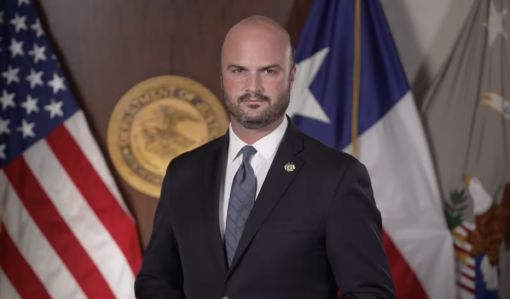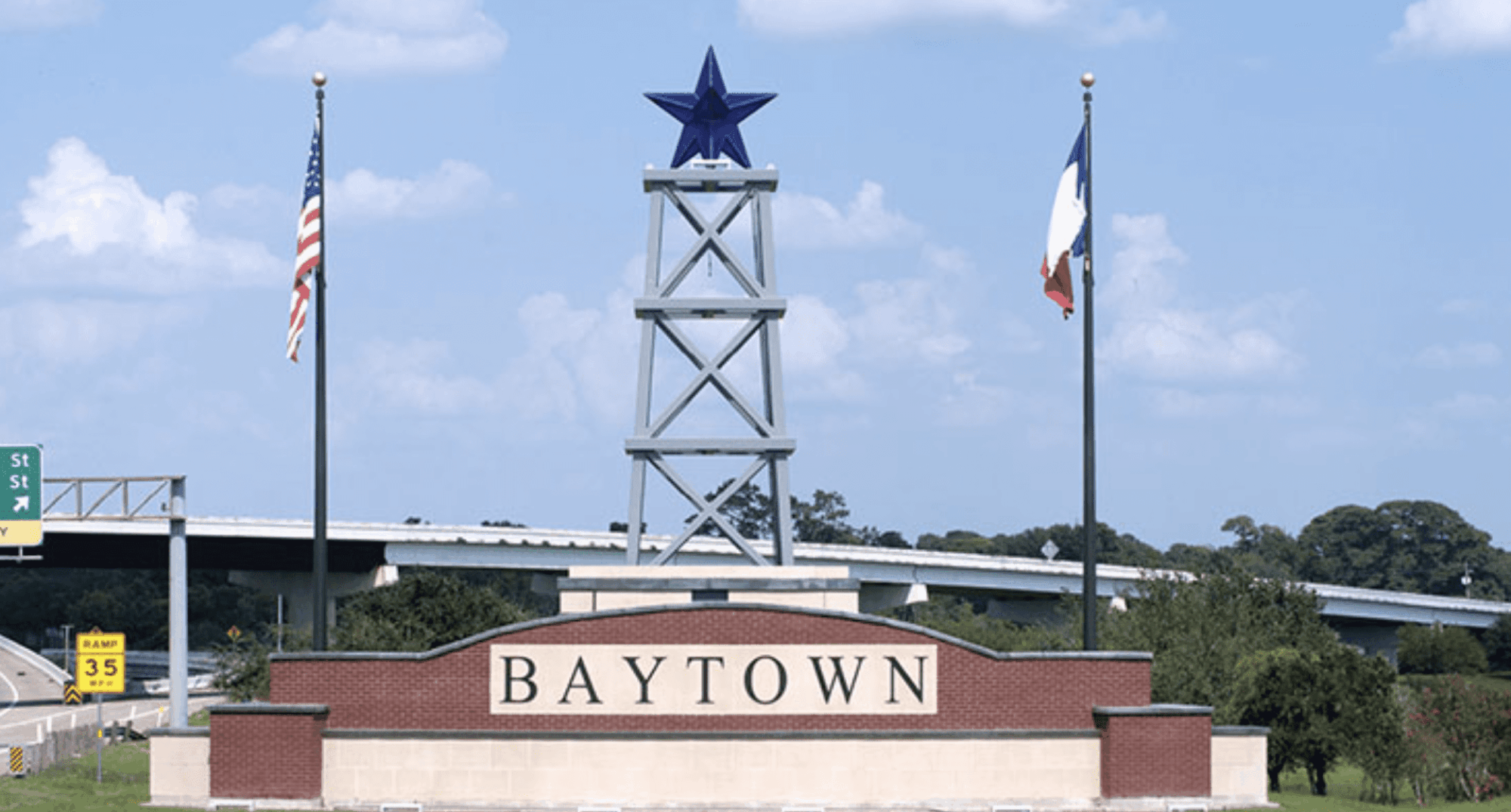
A Baytown police officer is under investigation for potentially misusing the city’s Flock license plate reader system, Police Chief John Stringer announced Friday in a video posted to the department’s Facebook page.
Stringer said he authorized an internal affairs investigation to determine whether the officer violated department policy, along with a separate criminal investigation into potential criminal misconduct.
For the criminal probe, Stringer said he asked the Harris County District Attorney’s Office for assistance. The department has not named the officer involved.
“The executive staff of the Baytown Police Department and I recognize our community’s concerns for the protection and respect of individual privacy, as well as for police accountability,” Stringer said. He added that if the allegations are confirmed, the officer will be held accountable “to the fullest extent of the law and policy.”
Flock Safety cameras are used by police departments, businesses, and neighborhoods to provide continuous automated monitoring of license plates.
The technology has drawn scrutiny across the Houston area and beyond in recent months. Harris County commissioners voted in May to renew the county’s Flock contract through June 2027, a deal covering license plate reader and gunshot detection technology at a cost of roughly $869,000. The Harris County Sheriff’s Office has said it has access to about 480 of the cameras countywide.
Residents in Conroe raised objections to the cameras at a city council meeting last week.
The Baytown case follows a similar controversy in Pasadena, where police Sgt. Michael Palitz resigned this month while under an active internal investigation.
Pasadena City Councilmember Emmanuel Guerrero has said he believes Palitz used the department’s Flock system to track and monitor a female officer, conduct he described as touching on two potential felonies: misuse of the system under public trust laws and the stalking of a fellow officer. Guerrero said Palitz was first investigated for misusing the camera system in March 2025 and suspended, then reinstated that August, before a second investigation opened this past January and led to his resignation.
Palitz has not been charged with a crime, and it remains unclear whether that case has been referred to the Harris County DA’s Office. The controversy resurfaced at a Pasadena City Council meeting last week, where members pressed the department for more transparency.
The allegations in both cities add to a broader statewide debate about oversight of the technology.
State Rep. Mitch Little has said he plans to examine Flock’s use ahead of next year’s legislative session, noting that the system’s software can capture far more than plate numbers, including bumper stickers, decals, and vehicle modifications. He also said law enforcement agencies are not required to obtain a warrant to search the database.
At the federal level, U.S. Rep. Keith Self (R–McKinney) has introduced legislation that would require a warrant before federal agencies could access state and local license plate reader data, cap data retention at 30 days outside active prosecutions, and bar federal funds from being used to purchase the technology. Self’s office has said more than 120,000 automatic license plate readers are now installed across 49 states, logging vehicle scans more than a billion times a day.
Similar misuse allegations have surfaced outside Texas as well.
A former Milwaukee police officer resigned earlier this year after using Flock cameras to track a former love interest nearly 180 times, and two other Wisconsin law enforcement officers have separately faced allegations of using the system to monitor a romantic partner and a coworker.