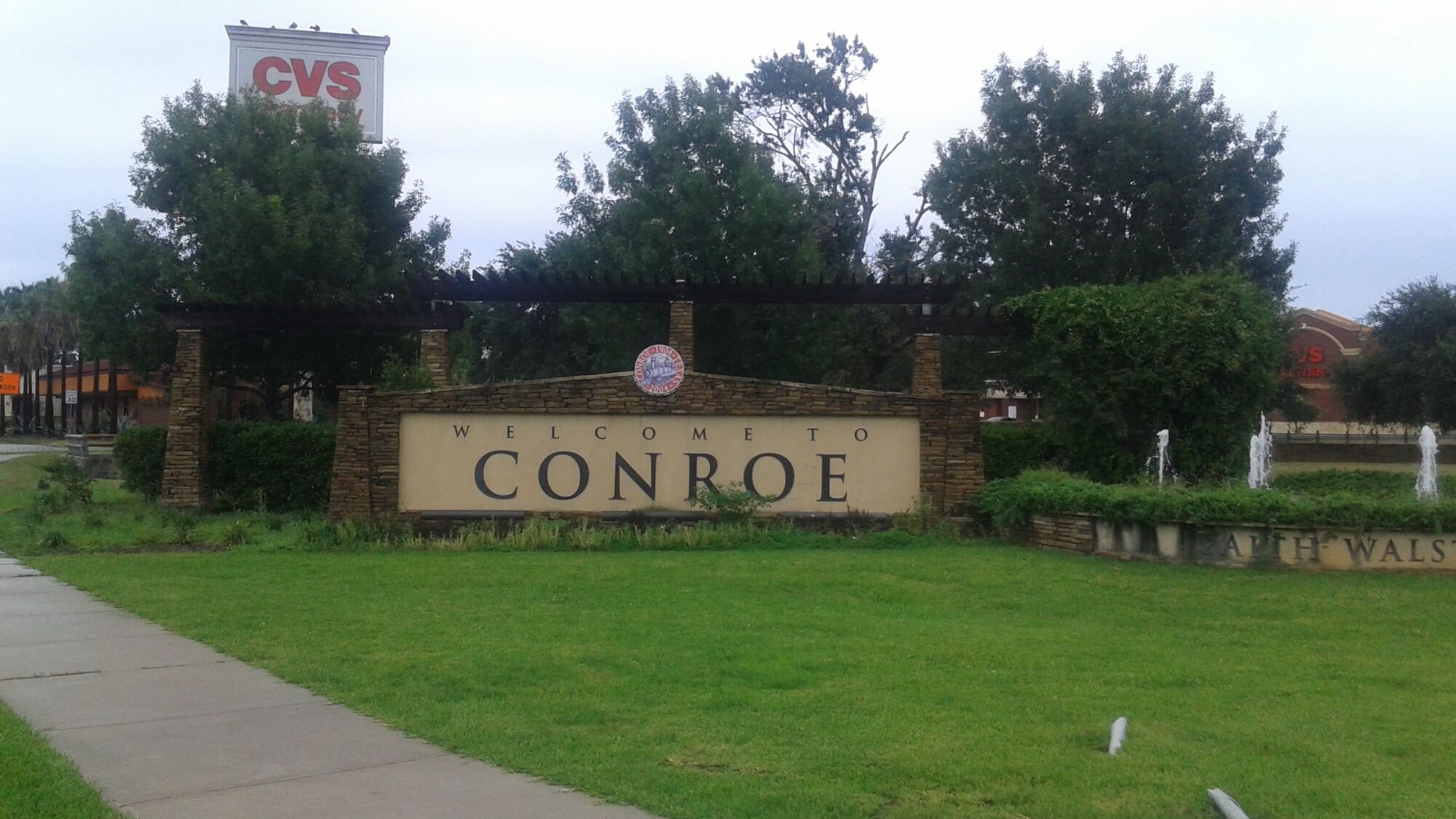
Two Conroe City Council members say they’ve faced threats and harassment since the council voted down a proposal to put the city’s Flock Safety camera program before voters in November.
Council Member Ken Blevins and Mayor Pro Tem John Sellars both said residents are free to disagree with the vote, and even to pursue a recall, but threats against them and their families go too far.
“If someone disagrees with my position enough to pursue a recall, they have every right to do so,” Blevins said. “That’s their choice, and ultimately the voters get the final say.”
But he drew a line at threats against him and harassment he said his wife has faced. “There is a line that should never be crossed,” Blevins said. “Disagreeing with a councilman or mayor is politics. Directly threatening one’s life and repeatedly harassing their spouse is not politics. It’s unacceptable.” He added, “Let’s disagree on the issues without losing respect for one another or dragging our families into it.”
Sellars said much the same. “I’ve got no problem with folks disagreeing with me, that comes with the job.”
He said what changed his tone was a threat he received directly. “What I won’t shrug off is the recent death threat made to me by phone and the harassing calls made to my wife’s cellphone,” Sellars said. “Political disagreement is fair game. Threatening someone or dragging their family into it isn’t.”
The council voted August 13 on whether to place a binding proposition on the ballot asking voters if the city should stop using its automated license plate reader cameras, which have come under public scrutiny in recent months.
The motion needed three votes to advance and only received two, from Council Members David Hairel and Shana Arthur. Blevins, Sellars and Mayor Kristin Hoisington voted no, and the council fell short by a 3-2 margin, with the city facing an August 17 deadline to add items to the November ballot.
The debate centered partly on process.
Hairel and Arthur placed the item on the agenda using two council signatures, enough under city rules to get a proposal discussed, but advancing it to voters required three council votes. A separate citizen petition opposing Flock had gathered more than 1,500 signatures by late July, but that petition sought to end the city’s contract directly and did not follow the process Sellars and Blevins said was required to force putting a binding ballot question before voters.
Sellars argued that sending the issue straight to voters without a qualifying petition could set a “slippery slope” for other issues.
“If you want to put an issue before the voters, there is a process for doing that. Follow that process, gather the required signatures, and let the voters decide,” Blevins said in a statement, citing what he described as nearly a quarter million dollars in taxpayer costs tied to holding the election.
Pointing to the same signature process Blevins referenced, Sellars said “My position is pretty simple: if you want to put something on the ballot, show the public support and collect the signatures… That’s what our firefighters were required to do, and I believe they were successful. Everybody ought to play by the same rules.”
Flock’s automated license plate readers have drawn scrutiny well beyond Conroe.
Harris County alone has more than 3,500 of the cameras, and the Texas Department of Public Safety now has data sharing agreements with more than 200 local and county agencies, a sharp increase from earlier this year.
Two Houston-area agencies, the Harris County Sheriff’s Office and the Deer Park Police Department, recently took disciplinary or corrective action after employees were found to have misused the system.
State lawmakers, including Rep. Mitch Little (R-Lewisville) and Sen. Bob Hall (R-Edgewood), have said they plan to examine the technology when the legislature meets next year.
League City, also in the Houston area, agreed to place its own non-binding referendum on Flock on the November ballot this month, becoming the first city in the region to let voters decide the issue directly.
Conroe’s council will not follow that path in November, leaving the fight over its camera program—and how residents can challenge that decision—unresolved heading into the fall.