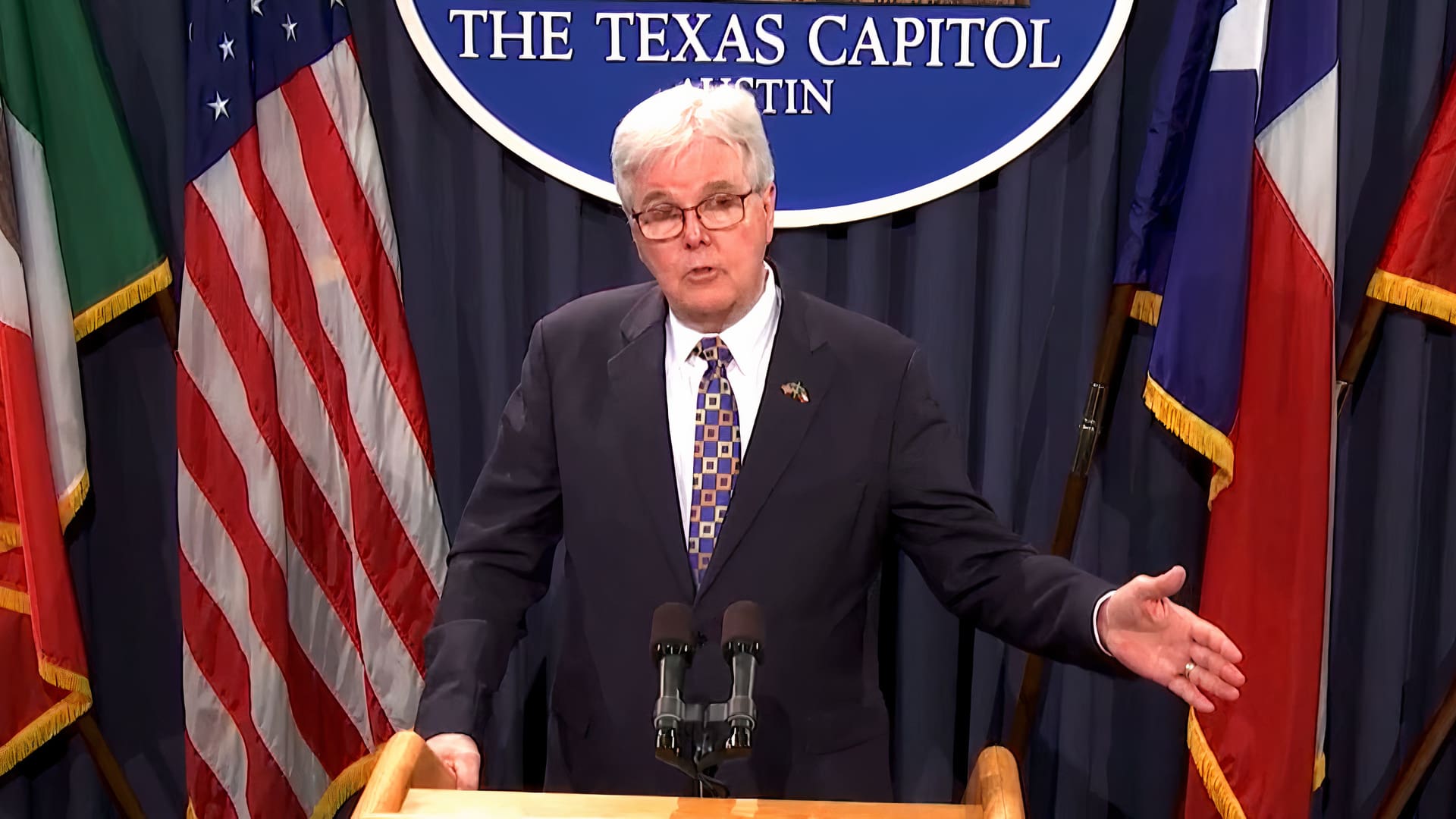
Lt. Gov. Dan Patrick has released a new, wide‑ranging set of interim charges for the Texas Senate, outlining what he wants lawmakers digging into before they return to Austin in 2027.
His first release of five charges in January focused on the influence of Sharia law in Texas as well as foreign threats. Now, Patrick has provided a more robust list ranging from property tax cuts and grid reliability to closing gambling loopholes and studying the effects of THC.
The Senate Business & Commerce Committee is ordered to take a hard look at Texas’ rapidly changing power landscape.
Senators are told to:
- Review the adequacy of transmission and generation to meet future demand, including “next‑generation” 765‑kV lines and how they affect landowners, routing, and cost‑allocation.
- Study the explosive growth of large‑scale data centers and cryptocurrency mining operations—how much power and water they consume, what they contribute economically, and whether current tax abatements and incentives make sense.
- Examine reliability risks, resiliency planning, and whether any legislative changes are needed as more load‑intensive facilities plug into the grid.
The Senate State Affairs Committee has been handed a charged portfolio that touches elections, life issues, banking, gambling, and the courts. Senators are instructed to study how to “maintain election security,” including tightening access for poll watchers, scrutinizing county election administrators, and investigating attempts to circumvent state law.
They are also told to look at “efficiency” in elections by reviewing how counties mark and count ballots and designate polling places for party primaries.
On social policy, the committee is tasked with protecting the unborn by tracking illegal abortion‑pill shipments and the implementation of House Bill 7, with recommendations to further safeguard women and children.
Patrick is also looking to “close gambling loopholes” by targeting the rapid spread of prediction‑market betting that skirts Texas’ gambling ban, and to “guarantee fair banking” by probing banks and insurers that deny services based on political or religious views.
The Education Committee’s interim to‑do list is broad:
- Review academic outcomes, enrollment declines, four‑day school weeks, and teacher pay structures.
- Study the rollout of the new school choice program, including how implementation is going and what barriers or abuses may be emerging.
- Examine safety, discipline, and the role of technology and AI in classrooms, looking for “best practices” and ways to streamline regulations.
The Higher Education Committee’s charges include reviewing university and community college funding structures and outcomes, as well as evaluating how well Texas colleges are protecting against foreign adversary influence in research, partnerships, and student programs, and whether additional safeguards are needed.
Several committees got marching orders on core fiscal issues.
Finance is told to continue work on tax relief, evaluate data center and other sector‑specific incentives, and monitor budget implementation for waste, fraud, and abuse. The Local Government Committee must study homestead exemptions, appraisal practices, local fees, and the overall burden of property taxes and regulations on homeowners and businesses.
Patrick has repeatedly said property taxes and cost‑of‑living will remain top priorities in 2027.
The Health & Human Services Committee is directed to investigate a variety of issues.
One of the issues was a notable last-minute fight in 2025 when Gov. Greg Abbott vetoed a THC ban passed by the legislature. Senators are now asked to examine the impact of high‑THC marijuana products, synthetic cannabinoids, and other substances on Texans’ health and public safety, clearly in preparation for additional legislation next year.
The committee is also tasked with studying homelessness and mental‑health services, including how state and local programs are working—and where they are failing—to address street disorder.
One interesting addition is a request to review Texas’ legal framework for surrogacy and assisted reproduction, with Patrick asking for a focus on preventing exploitation and trafficking.
The Criminal Justice Committee is charged with a series of public‑safety issues including rising juvenile violence and gang involvement, and how youth‑justice policies, diversion programs, and school discipline are interacting with that trend. The committee is also tasked with monitoring the implementation of recent laws on sexually explicit material and indecent exposure, including whether law enforcement and prosecutors have the tools they need.
On the economic front, the Senate Economic Development Committee is asked to study the impact of artificial intelligence and automation on Texas workers and businesses, including which sectors are most at risk and where new opportunities may emerge.
The Homeland Security & Border Safety Committee has been told to study staffing, technology, and infrastructure at Texas land ports of entry. They will also examine cross‑border fuel theft schemes, export‑fuel fraud, and safety issues involving Mexican carriers and drivers operating in Texas.
Finally, the Water, Agriculture & Rural Affairs and Natural Resources & Economic Development Committees are asked to assess the water demands of data centers, electric vehicle manufacturing, and other new industries, and the impact on existing users such as farmers and ranchers.
A review of wildfire risks, suppression capacity, and how renewable‑energy and utility infrastructure affect both risk and firefighting is also a priority.
“The Senate and I will work energetically to advance the priorities of Texas’ conservative majority, including providing meaningful property tax relief via ‘Operation Double Nickel,’ reducing the age to freeze homestead property taxes from age 65 to 55, increasing the homestead exemption to $180,000 for under 55 homeowners and $240,000 for senior homeowners, and reining in local government budget growth, eliminating fraud and abuse in state government, strengthening the Texas power grid, and promoting a sweeping Texas-first agenda,” said Patrick.
“When the 90th Regular Legislative Session begins in January 2027, the Texas Senate will move quickly to address these priorities, and many more.”