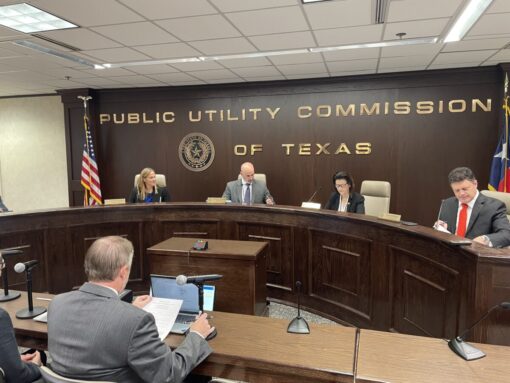
At a recent state hearing, dozens of parties, including landowners, contested electricity delivery company Oncor’s request to build an Extra-High-Voltage transmission line in the Permian Basin. Transcripts from the hearing reveal concerns by specialists about the project’s risk to oil pipelines and its costs.
Lawmakers originally authorized the project as a limited fix for a specific region, but the Public Utility Commission of Texas (PUCT) expanded the project into a broad new build‑out. The state agencies involved in the process expanded the project beyond its limits with minimal public input. Aside from Texans being burdened by increased costs, the expansion could lead to other large projects being launched with little direct accountability.
The hearing was held from March 2 to 4 at the State Office of Administrative Hearings before three administrative law judges: Amy Davis, Andrew Lutostanski, and presiding ALJ Cassandra Quinn.
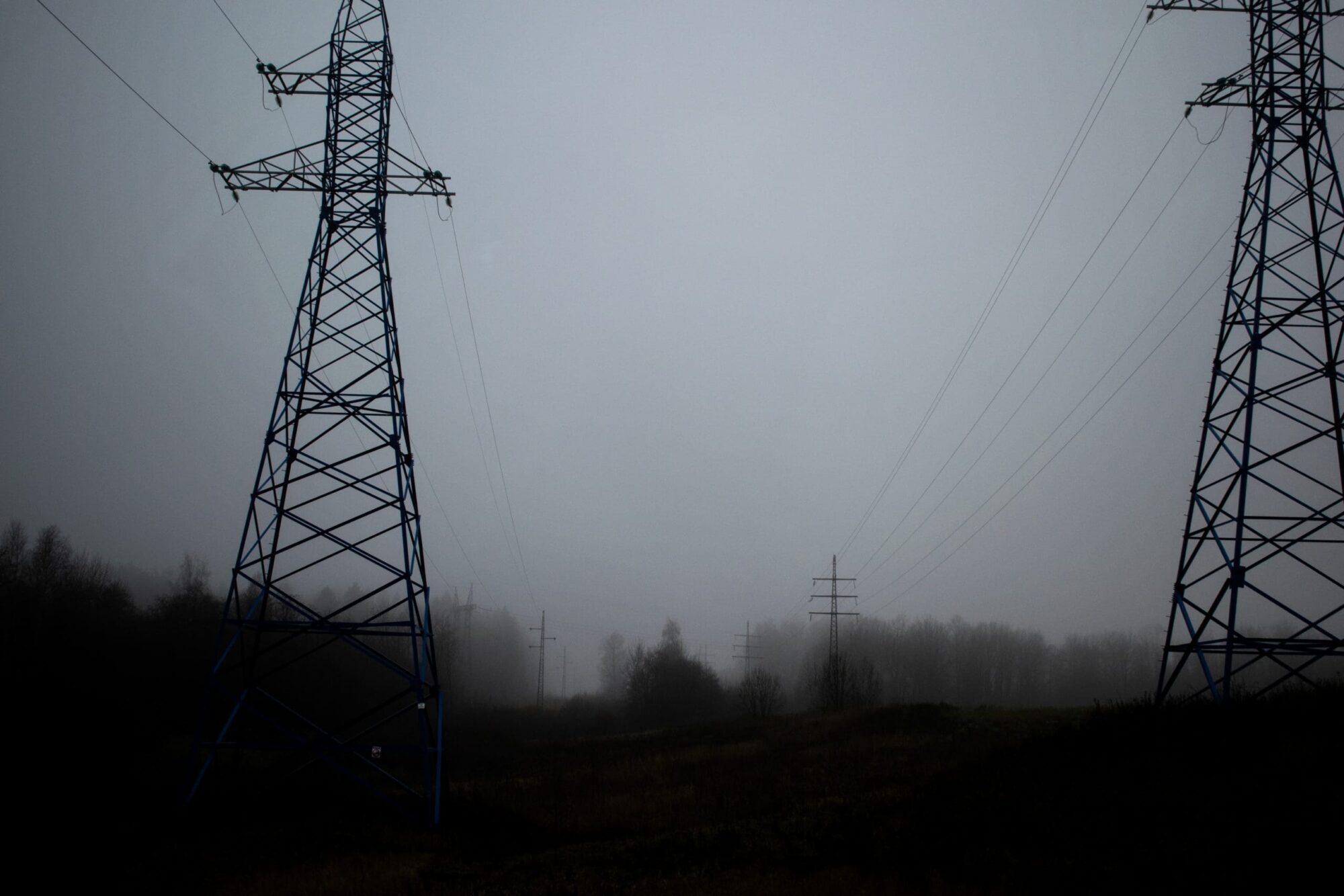
This proposed transmission line would be 765kV Extra-High-Voltage, running into the Permian Basin area. According to testimony in the transcript, it would run roughly 180 miles, depending on which one of the more than 20 possible routes Oncor picks. Corin Cooley, an Oncor engineer and one of its witnesses, admitted during cross-examination that Oncor has no experience constructing a 765-kV line.
Despite this, Cooley stated at the hearing that an assessment of the project having “no adverse impacts” on oil and gas pipelines was based on Oncor’s prior experience with transmission lines in the Permian Basin.
She admitted that Oncor hadn’t produced “any project-specific engineering study” on the impacts this proposed power line would have on oil and gas infrastructure. Cooley agreed that attorney Emily Meier, representing Delaware Basin Midstream, was correct that there was “no written analysis in the record that quantifies potential risks” to these pipelines for each alternative route and that they hadn’t given a “project-specific technical assessment” to support the transmission line having “no adverse impacts statement.”
As previously reported, critics have stated Oncor, with ERCOT and the PUCT’s blessing, has helped morph what lawmakers originally intended as a Permian‑only reliability fix into roughly a $33 billion statewide transmission build‑out, without new explicit legislative approval or broad public consent.
ERCOT is subject to oversight from the PUCT and state lawmakers. Gov. Greg Abbott appointed all four PUCT commissioners.
PUCT engineer Eduardo Acosta, when cross-examined by attorney Carly Barton, said he didn’t have any historical costs to reference and didn’t know exactly what the costs would be because transmission lines like this hadn’t been built before. Acosta had earlier testified that the “reasonableness” of the “final installed cost” will be determined during “a transmission cost-[of]-service proceeding” at a “future date.”
He said that while the cost estimate in the application “seems reasonable,” “during construction, there may be overruns.”
A December 2025 report from the Electricity Transmission Competition Coalition identified a cost overrun of more than 12 percent in a 765-kV transmission project spanning Texas and New Mexico. Two 345-kV projects, one in Minnesota and the other in Illinois and Indiana, showed overruns of 48.5 percent and 58.6 percent, respectively.
As previously reported, the broader Permian‑origin 765‑kV project is expected to burden Texas ratepayers for years—about $3 billion annually and more than $200 a year for a typical household under current cost‑allocation methods.
Barton represents a coalition of ranching and development landowners along the proposed line. Further, during cross-examination, Acosta agreed he was unaware of any PUCT discussions regarding the larger electromagnetic fields generated by the 765-kV lines’ larger voltage.
Whether the administrative law judges will allow this project expansion to continue remains to be seen. According to past case history, the ALJ’s proposal for decision in a transmission CCN case is often issued six to eight weeks after the hearing, with a PUCT final order six to eight weeks after that.
Under Texas Utilities Code §37.057, the commission must approve or deny an application for a new transmission facility certificate no later than 180 days after it is filed.
If you are a citizen with information regarding bureaucratic overreach, please email scorecardtips@protonmail.com.