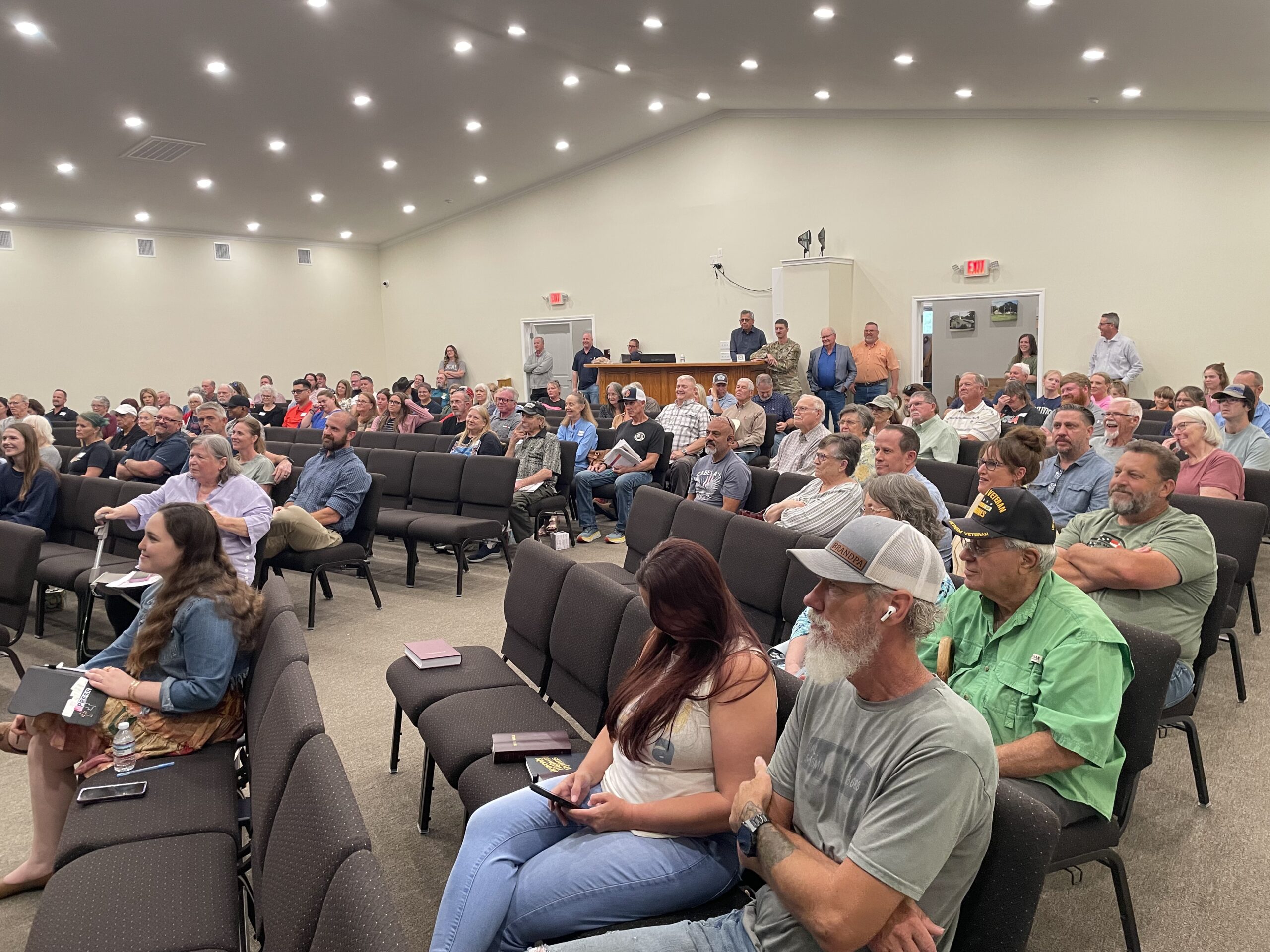
People in Central Texas gathered for a quickly assembled town hall on Thursday in Salado to protest a proposed power line running through their land. With a deadline of April 27 to intervene, organizers criticized the short time window they have to respond and the way in which they were notified.
State Rep. Brad Buckley (R–Salado), who represents the area, encouraged everyone in attendance to contact Gov. Greg Abbott’s office and get him involved.
Known as the Permian Basin Reliability Plan, lawmakers originally authorized the project as a limited fix for a specific region. Critics have said the Public Utility Commission of Texas, grid operator ERCOT, and electricity delivery company Oncor expanded it into a broader build‑out of 765-kV transmission lines with minimum public input, which a nonprofit estimated would cost $90 to $100 billion over its lifetime. Aside from Texans being burdened by increased costs, the expansion could lead to other large projects being launched with little direct accountability.
The Bell County East-Big Hill 765-kV line is one of three paths approved in the Permian Basin Reliability Plan. Thursday’s town hall, held at First Cedar Valley Baptist Church in Salado, was intended to help residents oppose this line running through their community.
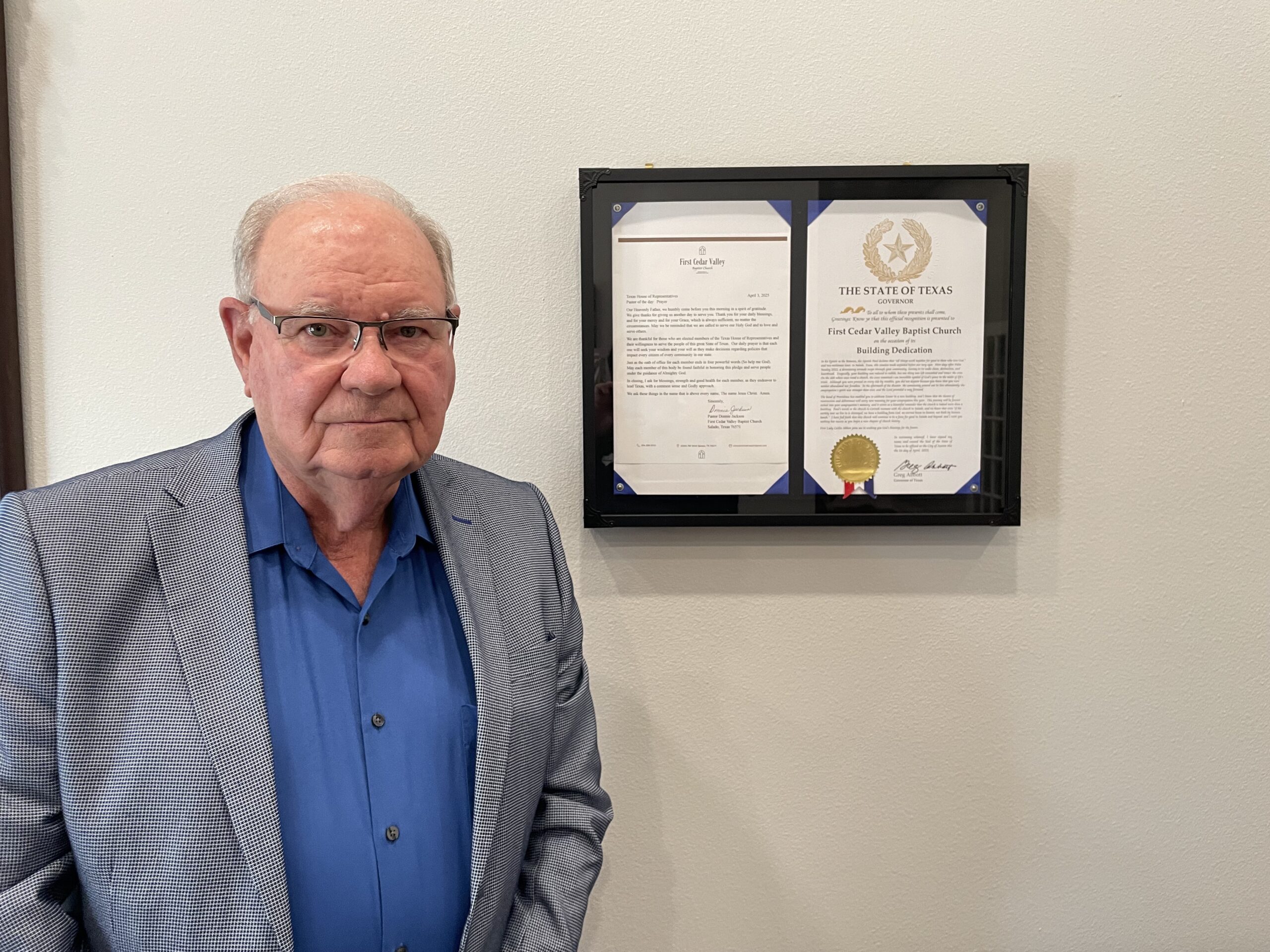
After a tornado destroyed the church building in 2022, Abbott personally commemorated the new building in April 2023 and said, “Now, this church can continue serving Jesus Christ and Salado for generations to come.”
Pastor Donnie Jackson said he found out three weeks ago that one of the preferred routes for the 765-kV line would place it roughly 200 feet from the church.
“I’m 81 years old. I have a pacemaker that’s going to be affected by that. That much power would affect a lot of older people that have heart devices like that,” he said. “We’re just now rebuilding, and a lot of people around this church have gone through all these years of rebuilding, and now we have something like this that’s encroaching on us, and our livelihood, [and] our health.”
Dr. Matt Altman, a family doctor from Salado with training in Occupational and Environmental Medicine, also expressed health concerns about the proposed transmission line. He said studies from the United Kingdom showed that even at about 650 feet, there was a roughly 70 percent increase in cancer rates in children.
“The reality is, we don’t know if it’s safe, and the problem is, they’re asking us to intervene,” he told attendees. “They are the ones that are demanding this happen, and they are the ones that need to be showing us that this is safe.”
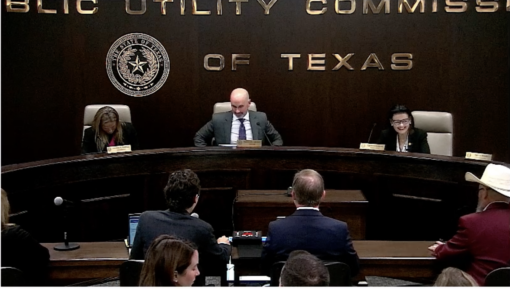
In a response to Texas Scorecard’s request for comment, Public Utility Commission of Texas (PUCT) Chief Press Officer Ellie Breed wrote that commissioners consider multiple factors when deciding a final route for this project, including environmental integrity, the number of affected habitable structures, and historical and aesthetic values.
Pastor Jackson learned that his personal property, which has been in his family for more than 150 years, is also targeted by this proposed line. He said he didn’t receive notification until three weeks ago in the mail. He and his neighbors have until April 27 to respond by filing as intervenors.
Kevin Kennedy, a landowner from the Mahomet area who is also fighting the extra-high-voltage lines, encouraged attendees to file as intervenors so that “you have a stake” in the upcoming administrative law hearing.
“To be an intervenor … you have to be able to say that this project affects you in a way that’s greater than the average Texan,” he said. “My advice is: define that broadly … If they don’t like your answer, all they do is move you over to a protester. It doesn’t cost you anything.”
Breed wrote the commission “strongly encourages Texans to fully participate” in this process.
Requests to intervene must be filed within 30 days of the application being filed with the PUCT, per §22.104. Per state law, the PUCT has 180 days from the date an application is filed to review and approve, modify, or deny it. The Bell County East to Bill Hill transmission line application was filed with the PUCT on March 26, 2026, which means all members of the public have until Monday, April 27 to file a request to intervene.
The purpose of Thursday’s town hall was to help walk residents through the filing process to meet the April 27 deadline.
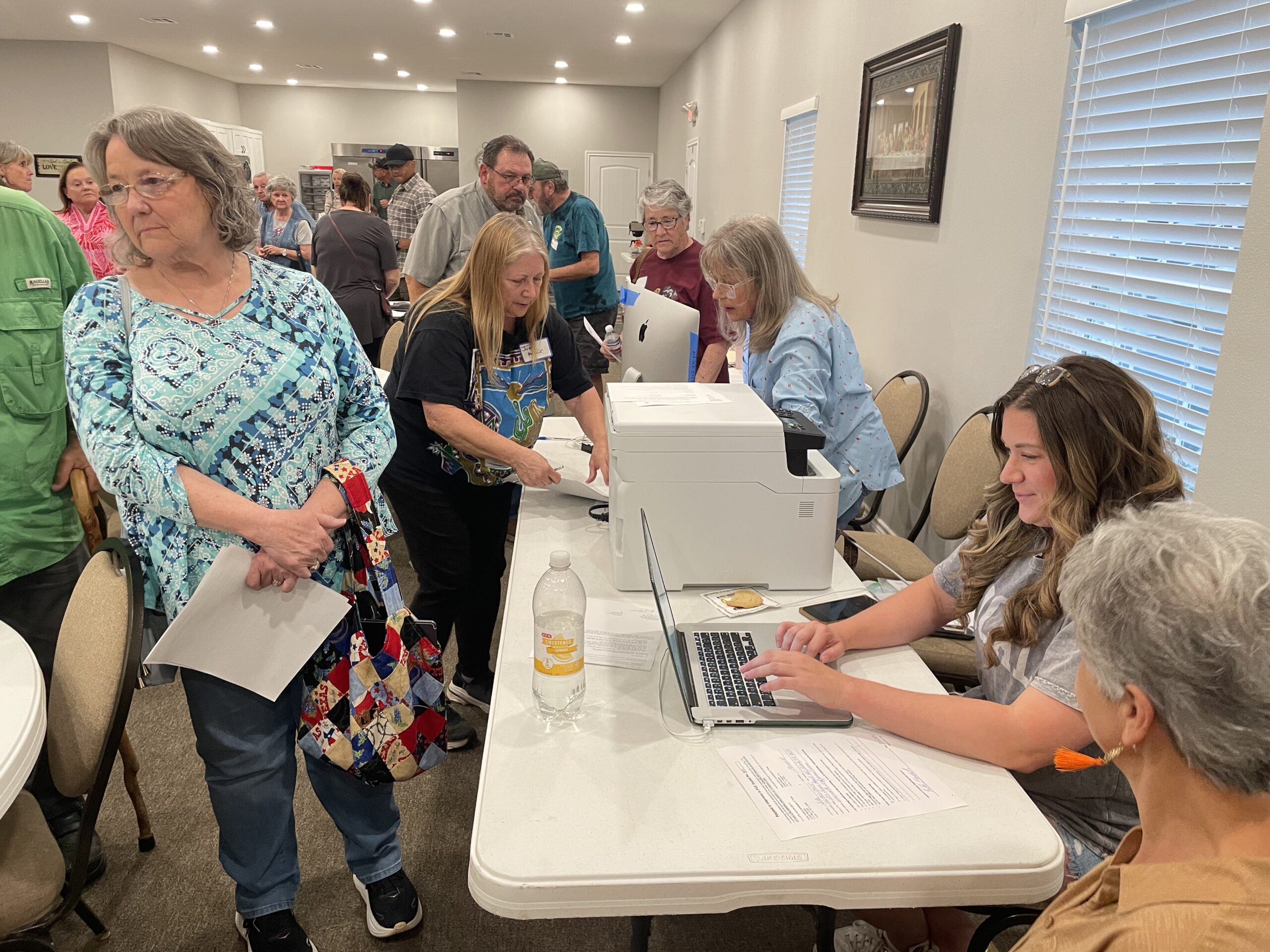
John Burrow, one of the town hall’s organizers, criticized the short time frame. “This has been ongoing for approximately eight to nine months. Other landowners had received their packets at that time,” he said. “We have just a matter of weeks to defend ourselves.”
Erik Gulbranson, another organizer, criticized the packet Oncor mailed to notify him. He said it was filled with vague maps that didn’t show property lines or parcel numbers.
“It’s not clear,” he said. “You have to go to Oncor or the Lower Colorado River Authority’s website to find their interactive maps.” Gulbranson also said the packet doesn’t explain how to go through the process of filing as an intervenor.
Burrow noted that landowners are notified only if their land or house is roughly within 500 feet of the proposed line. But even if it’s farther, he said, “it will still impact you … the lack of notification is really criminal, to be honest with you.”
Breed addressed the notification process in PUCT’s statement. “Per PUCT rules, public and landowner notification is the responsibility of the utility that applies for a Certificate of Convenience and Necessity (CCN) for a new transmission line,” she wrote.
Any notification materials a landowner or member of the public receives are from the utility managing the project, and questions about specific routes should be directed to the utility. PUCT Rule §22.52 outlines the specific notice requirements utilities must meet in detail. Utilities must host public informational meetings and invite affected landowners, publish notice in newspapers in affected counties, and notify all affected landowners by mail on the date the application is filed.
While others fighting proposed routes elsewhere in Texas have hired attorneys, Burrow said he and his neighbors can’t. “We’ve just been notified that any attorney in the state of Texas that specializes where we are in this process has already been hired,” he said. “We have no ability to obtain legal representation from legal experts within this area.”
Buckley encouraged everyone at the town hall to file as intervenors, and to elevate the issue. “We need to contact the governor’s office … Greg Abbott loves this community, I promise you,” he said. “What has occurred here, with this route, is beyond the scope of anything anyone imagined.”
Abbott appointed all five commissioners who oversee PUCT. He also appointed Chief Administrative Law Judge Kristofer Monson, who oversees the State Office of Administrative Hearings, where the transmission line hearings will take place.
Buckley said he’s heard concerns from other state lawmakers about these proposed extra-high-voltage transmission lines, with one from the energy-rich Permian Basin area asking why power generation isn’t being built there.
For Buckley, more reliable generation is the answer to Texas’ power needs. “We don’t need windmills, we don’t need solar, we need natural gas plants making electricity for Texas,” he said.
If the line goes through, Burrow isn’t certain he’ll stay in Texas. “People move to Texas for liberty, for freedom, for property rights,” he said. “We were looking at allowing our kids to build houses out on [our] property, and now that’s all going to be taken away from us.”
Jackson encouraged everyone to act, and to put their faith in Christ. “We’re to do everything we can do, but when it’s out of our hands, we need to put it into His,” he said.
The filing deadline for the Bell County East to Big Hill transmission line is April 27. Kennedy pointed attendees to StopThisLine.com to learn how to get involved. The next stage of the process is filing testimonies by May 13. Burrow and Gulbranson have planned a May 7 town hall at Andice Baptist Church in Florence to help residents do just that.
A spokesman for Abbott redirected a question about the transmission line affecting First Cedar Valley Baptist Church to PUCT.
“All transmission projects under the Permian Basin Reliability Plan follow the PUCT’s standard application and review process,” Breed wrote. She added that residents can learn how to participate by going to the Permian Basin Reliability Plan website, request assistance from the PUCT’s Office of Public Engagement, and personally address PUCT commissioners during the public speaking portion of its regularly scheduled meetings.
By statute, the PUCT has 180 days from the date an application for a transmission project is filed to review the application, which includes proposed routes, and approve, modify, or deny it. This process involves a full legal hearing before the State Office of Administrative Hearings (SOAH), where participating parties can introduce evidence, provide testimony, and cross-examine witnesses.
If you are a citizen with information regarding bureaucratic overreach, please email scorecardtips@protonmail.com.