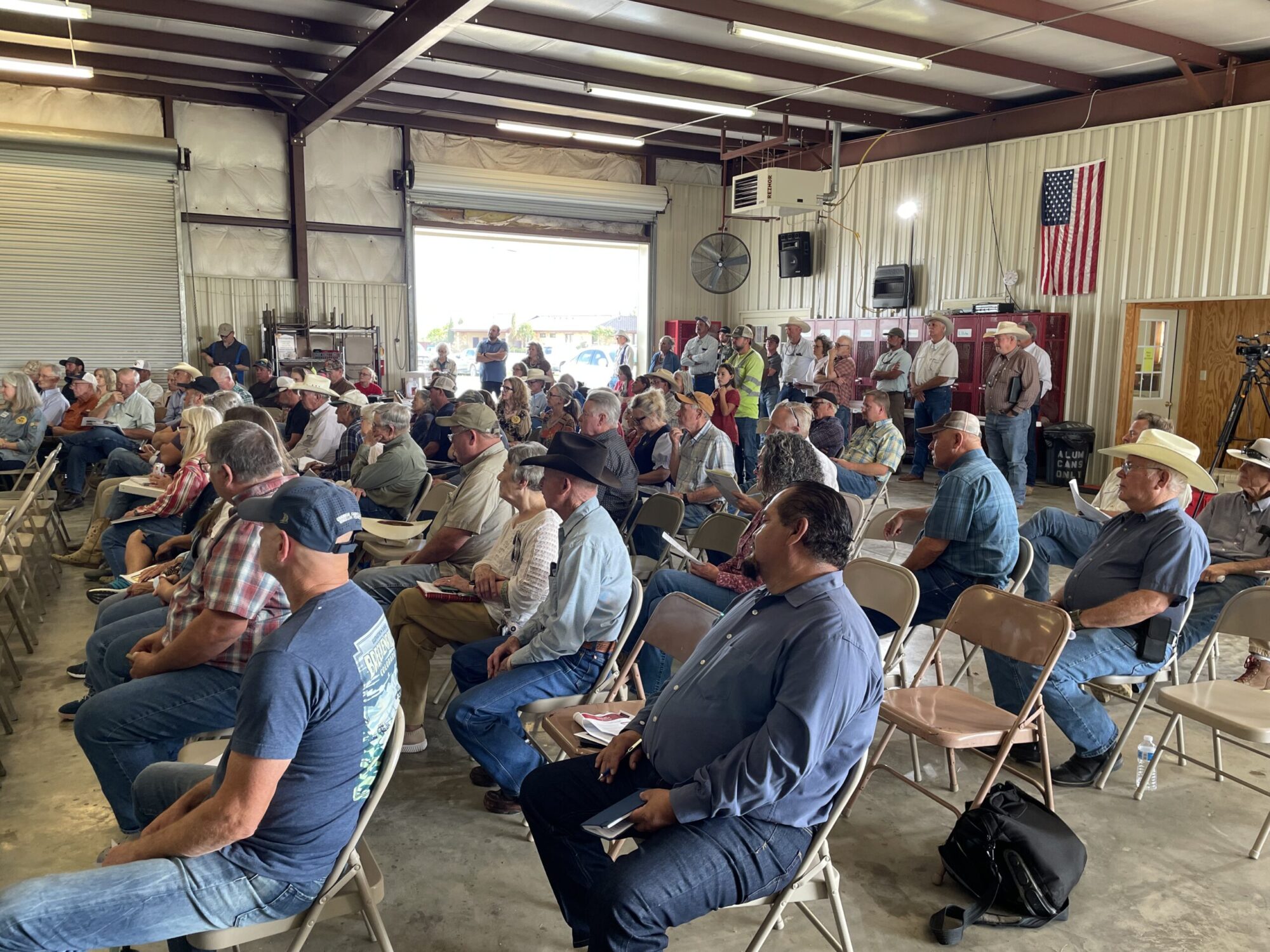
West Texans gathered in Fort McKavett’s volunteer fire station on April 16 to organize against the proposed extra-high-voltage transmission line that could run through their land.
“We want to send a message to Austin,” Kevin Kennedy, one of the speakers, told the packed hall. Looking into the camera livestreaming the event, the crowd shouted, “Governor Abbott, stop this line!”
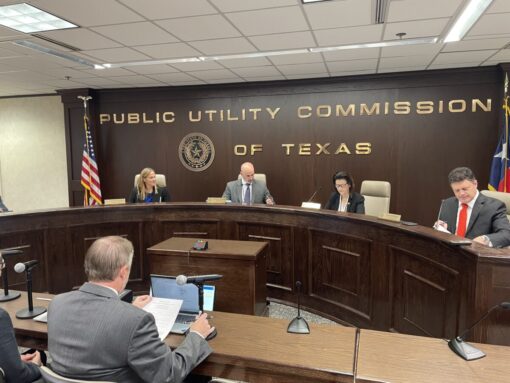
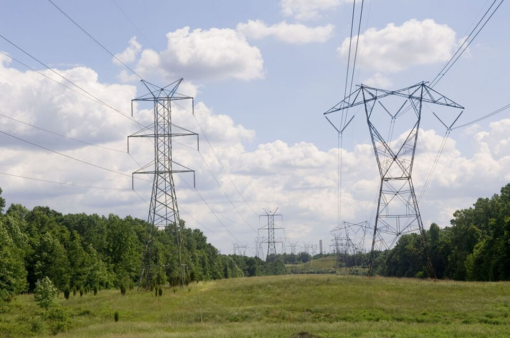
Known as the Permian Basin Reliability Plan, lawmakers originally authorized it as a limited fix for a specific region. Critics have said the Public Utility Commission of Texas, grid operator ERCOT, and electricity delivery company Oncor expanded it into a broader build‑out of 765 kV transmission lines with minimum public input, which a nonprofit estimated would cost $90 to $100 billion over its lifetime. Aside from Texans being burdened by increased costs, the expansion could lead to other large projects being launched with little direct accountability.
The town hall was organized by the Edwards Plateau Alliance.
Kennedy, whose wife Lisa now calls him “Kilowatt Kevin,” lives near Mahomet and is one of the landowners affected by the proposed 765 kV Bell County East to Big Hill transmission line. He expressed concern about the line consuming several thousand acres of Texans’ land. “That’s your land; it’s my land; it’s your neighbor’s land that they want to put that scar through.”
The Bell County East to Big Hill transmission line would run through Bell, Burnet, Concho, Lampasas, Mason, McCulloch, Menard, San Saba, Schleicher, Tom Green, and Williamson counties.
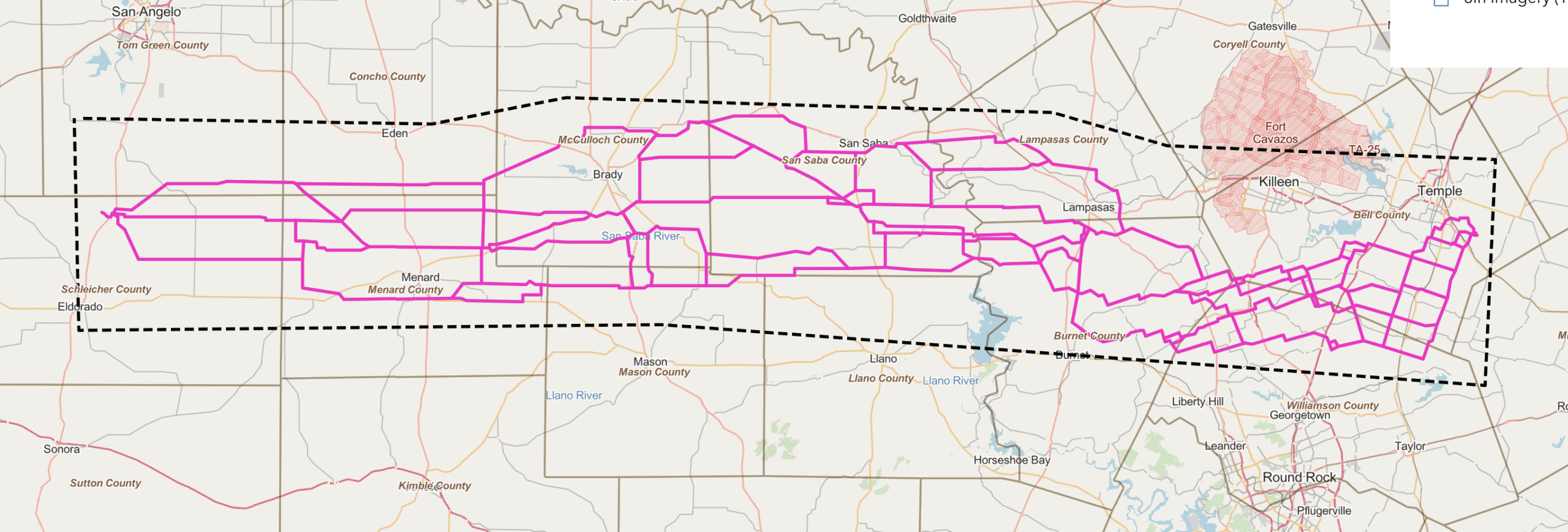
This is one of seven proposed lines. Pro-property rights group American Stewards of Liberty stated that the Texas government is planning to take “4,000 linear miles” to build three of them.
In a statement, Brent Bennett of the Texas Public Policy Foundation (TPPF) wrote that the lifetime cost for this project will be between $90-$100 billion, with an annual cost of more than $3 billion. TPPF estimates this could cost the typical Texas ratepayer from more than $100 to more than $200 per year.
“Paying for transmission lines is a bit like entering into a 30-year mortgage for a house; in order to fully pay it off, you end up paying out a lot more than just the purchase price,” Bennett told Texas Scorecard.
There’s also concern about how many Texans whose land would be affected are aware of the proposed line. Sandra Pfeuffer said her neighbor was notified by a letter that looked like “junk mail.”
Meredith McCall, a landowner affected by the proposed Big Hill to Sand Lake line as well as the proposed Dinosaur to Longshire line, said that out of the 1,000 property owners on the docket for this line, only 35 intervened. “We tried to sound the alarm, but the speed of the 180-day process outran our ability to mobilize.”
According to American Stewards of Liberty, state lawmakers shortened the timeline from 365 days to 180 in cases like these with House Bill 5066. This is the same law that proposed a regional solution to rising power demand in the energy-rich Permian Basin, which state agencies have taken as license to push this massive statewide transmission expansion.
Pfeuffer is concerned about how the proposed line will affect the local environment. “These transmission lines, when they come through, they spray a bunch of toxic chemicals … our cattle are grazing there,” she said.
Then there’s the local water supply. She’s worried that when drilling starts, it could destroy their aquifer. “It’s a very fragile system out here,” she said, noting her property already has sinkholes from a drop in aquifer pressure.
Mia Sarot of the Hill Country Land & Legacy Alliance encouraged landowners to get informed, be mindful of possible misinformation, and get on the record by either protesting or intervening in the cases. Each of the 765 kV import‑path projects is or will be processed through a Public Utility Commission certification case that is referred to the State Office of Administrative Hearings (SOAH).
The filing deadline for the Bell County East to Big Hill transmission line is April 27. Sarot pointed to her website to find information on how to get involved. The Edwards Plateau Alliance also provides information on joining the opposition.
She also asked everyone to organize around more than just one transmission line. “Silence is often interpreted as consent,” she said. “Do not assume that your neighbors know about this project. Call them and talk to them.”
With the November General Election approaching, one candidate for statewide office showed up in this deeply Republican area to address the crowd. Democrat candidate for agricultural commissioner Clayton Tucker spoke about his family’s fight against a prior proposed transmission line through their farm. “We didn’t exactly win. They put a smaller line instead. Still kind of ruined the place. But you know, it was a little victory,” he said.
In response to a request for comment, GOP agriculture commissioner candidate Nate Sheets wrote to Texas Scorecard that “Texas farmers, ranchers, and land owners deserve fair treatment, full transparency, and a meaningful voice in any project that impacts their land and livelihood. I will always stand for strong property rights while supporting the reliable infrastructure needed to keep our grid strong and our state growing. We can have a Texas where agriculture and technology both thrive.”
Those at the town hall are wanting Gov. Greg Abbott, who appointed the commissioners of the Public Utility Commission and the Chief Administrative Law Judge at the State Office of Administrative Hearings, to step in.
“We have been screaming at Gov. Abbott and he will not listen to us,” Pfeuffer said.
As previously reported, an Abbott spokesman wrote in an April 9 statement that the governor will keep investing in diverse power sources and a strong grid to deliver reliable, affordable electricity for the next century.
If you are a citizen with information regarding bureaucratic overreach, please email scorecardtips@protonmail.com.