Sharia-compliant finance firms operating in Texas may have ties to global Islamist movements and foreign governments, according to testimony before a Texas House committee late last week.
Texas Public Policy Foundation Senior Fellow Sam Westrop told representatives on the House Committee on Homeland Security, Public Safety and Veterans’ Affairs that the state should take a closer look at how these networks are funded and regulated.
“Over a dozen Sharia finance firms with links to foreign Islamist movements such as Jamaat-e-Islami, Qutbists, Deobandis, Salafis, as well as the governments of Malaysia and Iran, operate across Texas, wielding billions of dollars of financing and services that serve to strengthen Islamist control over a diverse variety of prosperous Muslim communities,” said Westrop.
Westrop explained that the history of Sharia-based financing began in Texas with Yahia Abdul-Rahman, who established the first Sharia-compliant bank and stock portfolio in North America and is often referred to as the “father of Islamic banking.”
Today, Westrop said that TPPF has tracked several banking groups with ties to Islamist extremist groups such as Hamas that enforce Sharia-based banking systems without any oversight from the public.
The Islamic Development Bank (ISDB) has provided millions of dollars in financing for “radical organizations” such as the Council on American-Islamic Relations as well as mosques and schools, according to Westrop. CAIR has been designated a foreign terrorist organization by Gov. Greg Abbott.
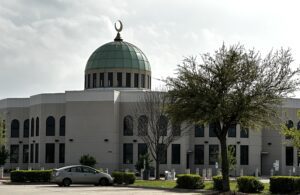
“The ISDB also financed the $3.5 million expansion of the Austin Peace Academy, which is operated by the Islamic Center of Greater Austin. The mosque’s imam, Dawood Yasin, is a former recruit of Tablighi Jamaat, a global Deobandi missionary movement linked by security services to numerous terrorism and radicalization cases. In 2024, Yasin hosted the pro-Hamas activist Sami Hamdi, who presented conspiracy theories about ‘Zionist’ power over the American political system. An official at the Department of Homeland Security later referred to Hamdi as a ‘terrorist sympathizer who cheered on Hamas following its October 7 terrorist attack,’” Westrop stated.
“At the federal level, the 501(c) system is ill-equipped to address the challenges posed by Sharia finance,” said Westrop, noting that organizations can also hide behind the non-profit 501(c) status to conceal foreign fundraising and loans from the public.
“Financial exchange with the Muslim world works both ways. Significant amounts of money raised in Houston end up in South Asia, moved through an array of 501(c) nonprofits, businesses, and an enormous remittance system. Speaking at a recent event in Houston organized by the Council on American-Islamic Relations, the Islamist activist Tom Facchine explained [that] ‘[p]eople in the diaspora send money back home. That’s what a remittance is. And when it comes to the flows of remittance … from Texas in particular to Pakistan, it’s a lot of money. It’s a lot of money. And so Pakistan’s very dependent on remittances. They’re very dependent on that flow. So for those of us who are in diaspora, you need to leverage that. That needs to be leveraged,’” stated Westrop.
Additional transparency laws may be necessary to combat these concerns at both the state and federal levels.
While designating groups like CAIR as a terrorist organization and blacklisting them was a controversial move met by lawsuits, Westrop argued that doing so has lessened their influence, with several groups in Houston now refusing to host them.
With this knowledge, Westrop suggested “the creation of a state-level sanctions and transparency list targeting individuals and organizations tied to corruption, extremist activity, terrorist networks, or hostile foreign influence. The seven major Islamist networks operating in Texas, along with the Sharia financial institutions that propel their advance, can be pushed back.”